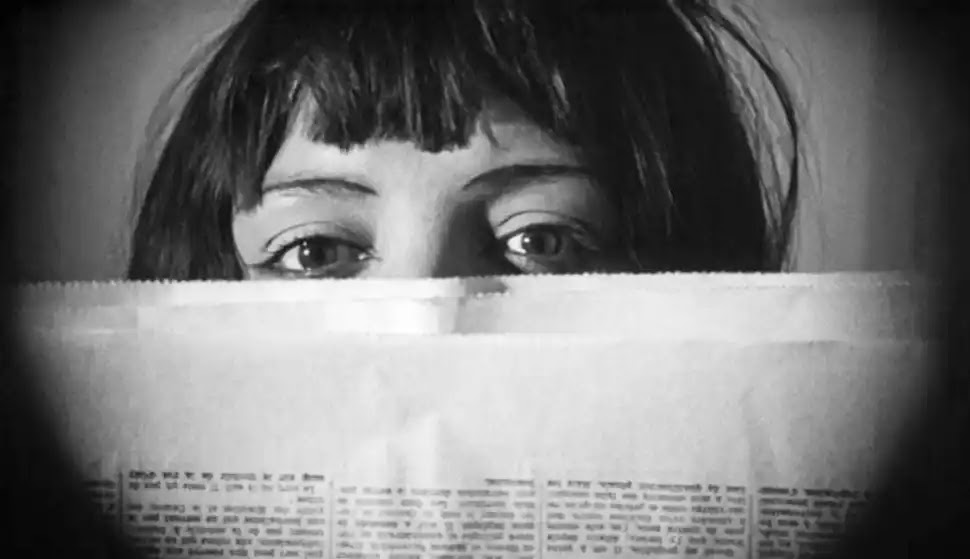
Saturday, September 02, 2023

Kuolleet lehdet / Fallen Leaves (third viewing, Telluride 2024, American premiere in the presence of Jussi Vatanen)


Aki Kaurismäki: Kuolleet lehdet / Fallen Leaves (FI 2023) with Jussi Vatanen and Alma Pöysti.

Made possible by a donation from Elizabeth Redleaf.
Le Pierre, Telluride Film Festival (TFF), 1 Sep 2023.
In the presence of Jussi Vatanen.

Larry Gross (TFF 2023): " For more than 30 years, Aki Kaurismäki (DRIFTING CLOUDS, LE HAVRE) has crafted lucid fables about marginalized outcasts. He’s portrayed artists, laborers and immigrants with a detached tragi-comic tenderness: these are his people. Kaurismäki’s latest, a masterful distillation of prior themes, emerges as a somber romantic comedy. The down-on-his-luck Holappa (the acclaimed actor Jussi Vatanen) and the sensitive supermarket cashier Ansa (the radiant Alma Pöysti), two quiet loners, spot each other in a bar and then go to a movie together (it’s, of all things, Jim Jarmusch’s macabre THE DEAD DON’T DIE, which Ansa considers a comedy). Accidents, alcohol and their own vulnerabilities keep them apart. Will the persistence of desire draw them back together? The cinematographer Timo Salminen, a longtime Kaurismäki collaborator, paints the film’s bars, factories and rain-drenched streets in memorably saturated colors; Pöysti’s clear-eyed, sensitive gaze takes the movie straight into our hearts. " –LG (Finland, 2023, 81 m)

Festival premiere: 23 May 2023 Cannes Film Festival.
American festival premiere: 31 Aug 2023 Telluride Film Festival.
Finnish premiere: 15 Sep 2023.


The American festival premiere of Fallen Leaves takes place at Telluride, where it is screened four times. Jussi Vatanen introduces the film with grace, dignity and humour. The venue today is Le Pierre, named after Pierre Rissient, the Grand Ambassador of cinema and a very big Aki Kaurismäki buff, as was Tom Luddy.

Also in America, Aki Kaurismäki is one of the most beloved artists of world cinema. The audience is looking forward to the new film, is highly rewarded and the movie gets great buzz. The general atmosphere is that of a happy reunion with an old friend.

As a Finn, watching this in Colorado, the experience is different from my Finnish viewings. I am observing familiar Helsinki landscapes from a foreign viewpoint. As always, the vision is the antithesis of tourist propaganda. They used to say that Kaurismäki nullifies a half a century of the efforts of the Finnish Tourist Board. Indeed, it was amusing to register at the time that guests such as Ulrich Gregor and David Bordwell were amazed that Helsinki did not look like a Kaurismäki movie.

It is also entirely beside the point. It is not the duty of an artist to create picture postcards. Although the exteriors are shot on location, they are not meant to build a city symphony. They are about a worldview and soulscape with personal and universal resonance.

I found myself observing the audience to such an extent that my personal response was delayed. Watching this film, every time I cry, triggered by the performance of the Maustetytöt duo, during which for the only time the full gravity of the undercurrent becomes explicit. 

Back in Helsinki, on Thursday 7 September 2023 (online 5 September 2023), I read from the print issue of Helsingin Sanomat an Aki Kaurismäki interview with Vesa Sirén, with the headline "Alcohol Destroyed My Life". An exceptionally candid and surprising interview.

On Monday 11 September 2023 Yle the Finnish Broadcasting Company releases an equally frank interview by Janne Sundqvist with Aki Kaurismäki.

...

On the third screening I realize errors in my Filmihullu review based on two screenings only. One should always see a film three times before writing a review (which is why I don't call my blog entries reviews but rough notes). There was reportedly no screener available in the summer.

Seeing Kuolleet lehdet in America I register more sharply how absolutely the Kaurismäki world is a Gegenbild, counter-image, to the notion of Finland as "the happiest country in the world". 

More profoundly, on repeated viewings it becomes clearer how Aki Kaurismäki's sonority has grown. Everything resonates more richly.

...

P.S. 1 Jan 2024: visiting cafés and restaurants and doing shopping I sense a new kind of quiet unrest among the staffs. Perhaps the pandemic has increased pressure. Work burdens grow while living gets harder and wages lag behind. Every day we read news reports about an increasingly obscene inequality in a world where the rich get richer and the poor ones get less.

And there is The Question: is there a future? Maybe Aki Kaurismäki taps into such global unrest in Fallen Leaves. As do Maustetytöt, now on an international tour.

Friday, September 01, 2023

The Holdovers (world premiere in the presence of Alexander Payne)


Alexander Payne: The Holdovers (US 2023) with Dominic Sessa (Angus), Paul Giamatti (Paul) and Da'Vine Joy Randolph (Mary).

Made possible by a donation from Matthew H. & Natalie Bernstein.
Palm, Telluride Film Festival (TFF), 1 Sep 2023.

Larry Gross (TFF 2023): " Paul (Paul Giamatti), an aging classics professor at an elite New England prep school, is at odds with his students. His rigidly judgmental teaching methods are, to say the least, outdated. When he is thrown together for a long Christmas break with Angus (Dominic Sessa), a smart, charismatic and self-destructive teen, and Mary (Da’Vine Joy Randolph), the school’s grieving cook, we enter territory that reminds us of John Hughes’ THE BREAKFAST CLUB … but David Hemingson’s nuanced script has much more in its mind. Giamatti is effortlessly commanding from the start, and Sessa and Randolph are outstanding. In ABOUT SCHMIDT, SIDEWAYS and NEBRASKA, director Alexander Payne proved himself a master in depicting isolated people forced to confront their fears and illusions. Here, his uncanny grasp of the minute particulars of everyday conflict reaches new depths of both comedy and pain, in a blend reminiscent of Hal Ashby’s finest works. " –LG (U.S., 2023, 133 m) In person: Alexander Payne

Festival premiere: 31 Aug 2023 Telluride Film Festival.

AA: Alexander Payne is at his best in The Holdovers, a character-driven drama set in a New England elite school. The film milieu is a compendium of location shooting in five different schools. It takes place at Christmastime in 1970, and the timeframe continues beyond the New Year celebration in 1971.

Written by David Hemingson, the well-plotted movie is gratifying in psychological wisdom. The cast of characters is gradually reduced to a trio of "holdovers", the professor (Paul Giamatti at his very best), Angus (Dominic Sessa in a remarkable feature film debut) and Mary (the talented comedienne Da'Vine Joy Randolph expanding her scope to drama and tragedy, proving again that a great comedian is great also in tragedy).

Paul has been punished to stay at the school for the duration of the Christmas holiday because he has refused to tweak grades for a son of a prominent donor. Everybody hates Paul who is undiplomatic and crass. But his sense of integrity is high. He sees his essential contribution to the future of his students in asking them to try their best. In the engrossing climax Paul stands up against the headmaster to defend the problem student Angus whose unique character and talent he has learned to admire during their Christmastime adventure.

Angus the problem student is first seen as a rich spoiled kid, but during the holiday weeks we learn new, disturbing features of his Werdegang, shatteringly in a forbidden "field trip" to Boston. There Angus takes us to a nursing home to meet his despondent father who has lost his mental balance. In each successive scene we register more clearly how little we know about his family situation.

Mary, the Black head cook of the school, has lost her beloved son Curtis, killed in action in the Vietnam War. She has decided to remain at the school because it is her memorial for the high hopes she had had of a better future for her talented son. Because of their lack of financial means, Mary had not been able to send Curtis to college, and thus he did not have student deferment unlike his classmates. The Holdovers is the second remarkable film I have recently seen about the theme of inequality in American higher education: it was also central in James Gray's Armageddon Time.

The excellent cinematography is by Eigil Bryld, subtle and rich in the colour world of wintertime Massachusetts. Music is essential: the composer Mark Orton creates a score finely expressing the humour and the emotion of the narrative. The soundtrack is also a "greatest hits of Christmas tunes", appealing without evading the obvious. Paul's character is evident in the diegetic music: the slow movement of Beethoven's fifth piano concerto and Händel's "Ombra mai fu". An amusing feature is Mary being the disc jockey at the Christmas party, stubbornly avoiding contemporary pop hits.

Among the strengths of the film is a deeply felt authenticity in the university world. It is also an offbeat but profound celebration of the study of the classical Antiquity. And a vision of America during wartime.

Wildcat (world premiere in the presence of Ethan Hawke)


Ethan Hawke: Wildcat (US 2023) starring Maya Hawke as Flannery O'Connor.

Palm, Telluride Film Festival (TFF), 1 Sep 2023.
Introduced by Ethan Hawke, hosted by Julia Huntsinger.

Larry Gross, TFF 2023: " Maya Hawke stars in and co-produced this imaginative depiction of crucially formative moments in the life of Flannery O’Connor, one of 20th century America’s most celebrated novelists and short-story writers. Writer-director Ethan Hawke and co-screenwriter Shelby Gaines entertainingly dramatize scenes from O’Connor’s admired stories—The Life You Save May Be Your Own, Revelation, Good Country People and Everything That Rises Must Converge—placing them in the poignant context of O’Connor’s intense religious concerns, and her struggle with the dire illness that threatened to overwhelm her. Ms. Hawke triumphantly embodies the artist’s unmatched combination of bitter humor, incisive intelligence and spiritual vulnerability. Touching support is provided by Philip Ettinger as O’Connor’s distant but admiring friend, the poet Robert ‘Cal’ Lowell, and by Laura Linney as Flannery’s mother Regina, who barely comprehended her daughter’s genius but was heroically dedicated to keeping her alive. "  –LG (U.S., 2023, 105 m) In person: Ethan Hawke

Festival premiere: 1 Sep 2023 Telluride Film Festival.

AA: Ethan Hawke's Wildcat is a character-driven, performance-driven and nonlinear Bildungsroman of the author Flannery O'Connor, master of the Southern Gothic. O'Connor lived in Georgia; the location shooting was conducted in Kentucky.

Wildcat is a labour of love for Maya Hawke, the star and the co-producer and her father the director. O'Connor's world is covered in its many aspects including a profound affiliation with the Catholic church and a vivid interest in birds, particularly peacocks. Males provide an endless series of disappointments - and grotesque material for stories. "A good man is hard to find". Indeed. Life in the 1940s is marked by racism, open and implicit, confronted by O'Connor. She does not shrink away from freaks and lunatics.

O'Connor is a loner and a stranger. In the South, her loving mother and nearest circle do not understand her literary calling. They would expect another Gone With the Wind rather than dark stories published in Partisan Review. In Northern literary circles there is a chilling distance to her Southern legacy. Her early contacts with the book publishing world are discouraging, but she does not give up her urge to write a new kind of novel.

O'Connor falls lethally ill with lupus / SLE, like her father (lupus originally means "wolf"). She catches a cold in an unheated train. She loses a leg and moves with the help of a prosthesis and crutches. Eventually she commits herself to her study and produces an impressive body of work despite her illness. The film ends on the brink of O'Connor's literary breakthrough. In end captions we learn how the wolf finally came to claim Flannery O'Connor.

Religion in its many manifestations fascinates O'Connor. Kitsch Jesus figures, bleeding tattoos covering an entire back, sacred spaces of churches. In a particularly moving scene a priest (Liam Neeson) visits the suffering O'Connor on her sickbed. Religion has an unusual relationship to artistic calling. "Creativity is nature manifest in us". O'Connor's whole parcours appears as a Calvary.

The performance of Maya Hawke is daring and extraordinary. Laura Linney is also exceptional as Flannery's mother. This is not a regular "illustrated classics" kind of biopic. The pain and the passion is evident everywhere. All other performances are also pitched to the highly charged wavelength. Scenes are relentlessly driven to a high level of impact. Mental imbalance is not ignored; it is flaunted.

The inspired and original cinematography by Steve Cosens and the haunting music by Latham Gaines and Shelby Gaines are essential in Hawke's Gesamtkunstwerk. The parts are formidable, but I fail to be fully moved by the whole. There is the issue of the indescribable secret core, the inner drive, the underlying urge that could create an irresistible current from the beginning to the end.

P.S. 9 September 2023. I have been aware of Flannery O'Connor for decades but never read her. I have only seen John Huston's powerful film adaptation Wise Blood. In Telluride, inspired by Wildat, I bought two Flannery O'Connor volumes, including the complete stories, at the Between the Covers bookstore.

Anselm - Das Rauschen der Zeit / Anselm (3D) (American premiere in the presence of Wim Wenders)


Wim Wenders: Anselm (DE 2023) featuring Anselm Kiefer. The finale.

Wim Wenders: Anselm (DE 2023) featuring Anselm Kiefer.

Le Bruit du temps, Anselm Kiefer.
Finnish premiere, 28 June 2024.
Sheridan Opera House, Telluride Film Festival (TFF), Thursday 31 Aug 2023.

Larry Gross (TFF Program Catalog 2023): " For 50 years, Anselm Kiefer’s unflinching, unrelenting, often monumental paintings, photographs and sculptures have interrogated the tragic nature of modern German history. “Brutal and exquisite,” the critic Peter Schjeldahl wrote in description, “operatic and hushed.” Now friend Wim Wenders, who began his career at the same time, has crafted a hauntingly beautiful study of Kiefer’s astounding accomplishments. Working again with cinematographer Franz Lustig (PINA), Wenders creates a sensuous 3D immersion into the vast factory-studio spaces where Kiefer works. The film takes its libretto from Paul Celan’s Holocaust-themed poetry as it patiently reconstructs German history, and clarifies the artistic and cultural forces that formed Kiefer’s life-long obsessions. The film feels collaborative; the most moving moments demonstrate the love, understanding and respect of one artist for another." –LG (Germany, 2023, 93 m) In person: Wim Wenders "

Languages: German and English.
Festival premiere: 17 May 2023 Cannes Film Festival.

AA: A visionary documentary film on Anselm Kiefer with enactments starring Anton Wenders as the child and Daniel Kiefer as the young man Anselm.

Wim Wenders is at his best in Anselm, which instantly ranks among the greatest films about an artist, to be compared with Le Mystère Picasso, Lust for Life, Andrei Rublev and Nran guyne / Sayat Nova. The cinema of Wim Wenders finds new horizons thanks to Kiefer, and Kiefer's art acquires a new domain thanks to Wenders.

We are immersed in the art worlds of Kiefer. At the same time, the film is a classical documentary of Kiefer's studio-factories which invite comparisons with the bottegas of the Renaissance as well as The Factory of Andy Warhol. This is industrial-artisanal work using factory equipment, but flowing from a compelling source of creativity.

Kiefer's work is a coming to terms with history. The scope is monumental, but monuments emerge as ruins. Kiefer's landscape art is a vision of the destruction of total war. His human figures are often mere clothes without heads. 

Two poets are central, and both also appear in historical inserts, reciting their poems: Paul Celan ("Todesfuge") and Ingeborg Bachmann ("Exil"). A major fellow artist in historical footage is Joseph Beuys ("Rettet den Wald"). A mystery figure is Martin Heidegger whose Sein und Zeit is a major influence but whose silence about the Nazi past remains incomprehensible.

André Bazin noted about Le Mystère Picasso that it is not a film about paintings but painting. Likewise, Anselm is a film about the artist at work, the act of painting - indeed, action painting in a special and powerful sense. Anselm Kiefer burns the surface of his works and uses tools of arts and crafts to forge and twist them. Boundaries between painting, sculpture, environmental art and installation art vanish. Kiefer is a master of abstract expressionism, but his work has a strong representational drive, harrowingly twisted.

Kiefer's mission is historical, and his memory project runs parallel with Germany's Vergangenheitsbewältigung (coming to terms with the past) project.

Kiefer sees himself as a mythological artist, who is also redeeming myths from Nazi abuse. The final image (see above) is an expression of the Icarus myth.

Kiefer's cosmology of destruction keeps being updated in various countries, significantly in the United States, but also in venerable premises in Venice, where the Renaissance parallel is devastating.

The cinematography in 6K digital, Academy and 3D is extraordinary with multiple superimpositions, epic visions and combinations of historical and newly shot footage. The 3D experience is superior to Wenders's previous overture in the technology, the Pina Bausch documentary.

Wenders's visionary approach to destruction has affinities with Tarkovsky's films such as Stalker. Wenders has always had a special insight in the world of childhood, and in this movie it appears in affectionate sequences starring children of both artists' families, Wenders and Kiefer. The world of childhood emerges as a Gegenbild (counter-image) to the destruction.

One of the best films of the year. After the film started I soon knew that I want to see it again.

A Tribute to Wim Wenders (Telluride Film Festival 2023)


Wim Wenders. Photo: Telluride Film Festival.

Sheridan Opera House, Telluride Film Festival (TFF), Thursday 31 Aug 2023.
A Tribute to Wim Wenders.
Evening opened by Jason Silverman.
Hosted by Rajendra Roy (MoMA).
"50. Silver Medaillon Tribute" clip show of Wim Wenders's films.
Silver Medaillon given by Werner Herzog.
Made possible by a donation from Katrine & Bill Formby.

TFF 2023 program note: " It says something essential about Wim Wenders that, at 78, he’s bringing two new films to Telluride this year. One, the feature PERFECT DAYS, is a work of penetrating stillness, quiet as a meditation, while the other—his documentary ANSELM—uses cutting-edge, 3D, 6K technology to swoop around the monumental provocations of the German artist Anselm Kiefer. The first was shot in 16 days, with a handheld camera, often without rehearsals and picking up images along the way; the other required more than two years of work with cameras mounted on drones and platforms. PERFECT DAYS, unfolding entirely in Japanese, radiates a beautiful simplicity beyond the reach of words; ANSELM centers around a contemporary and compatriot of the director, one known for doing furious battle with the highly specific details of his German past. "

" In both works, however, Wenders is giving us images of a life well lived and the possibility of change. He’s reminding us that we don’t have to be hostage to a world of fluff and distraction and that art can give us the medicine we urgently need. This blend of hopefulness and realism has been his signature through more than fifty years of films such as PARIS, TEXAS, WINGS OF DESIRE and THE BUENA VISTA SOCIAL CLUB: he transports us into heartbreaking stories of fractured families and people living on the streets, and yet he’s constantly offering portraits of others—worried angels, the musicians of Cuba, the global photographer Sebastião Salgado, Pope Francis—who dedicate their lives to trying to relieve the pain. "

" Wenders was, famously, one of the creators of the New German Cinema movement in the 1970s, with his often existential road movies; his examination of loneliness and dreams has taken him from aboriginal Australia to Lisbon. He has worked with some of the leading musicians of our time, given us the transcendent dance performances of Pina Bausch, made films on fashion and architecture, uncovered the soul of Berlin and Tokyo. "

" But all his wide-ranging explorations have ultimately been lit up by a profound concern with our spiritual well-being. He is—to use a word that he has invoked—a “Menschenfreund,” or friend of all humanity. Hirayama, the heart of PERFECT DAYS, offers an almost saintly vision of steadiness and self-erasure; Anselm Kiefer is among the most combative and even swaggering of artists, ensuring we don’t look away from reality. Both, however, refuse to give in to a world of thoughtlessness and carelessness; each has his own way of finding something disciplined and true. In the end, Wim Wenders is one of our greatest singers of possibility. "

–Pico Iyer (TFF 2023)

The program includes a selection of clips, the presentation of the Silver Medallion and an on-stage interview, followed by ANSELM shown in its entirety on Thursday (see opposite page) and PERFECT DAYS (see opposite page) shown in its entirety on Friday. (TFF 2023 program note)

Language: English only.

AA: The deeply moving tribute evening started with an eloquent selection of clips from Alice in den Städten, Der amerikanische Freund, Paris, Texas, Der Himmel über Berlin, The Buena Vista Social Club, Pina, Das Salz der Erde and Alice in den Städten once again.

Werner Herzog and Wim Wenders reminisced their first meeting at the film school where Wim was a student while Werner had already made films, including Lebenszeichen. The lesson that remained from Werner: "break the rules".

The discussion led to Tom Luddy (1943-2023). Wim had bought a hat in order to bare his head in honour of him. Tom introduced Wim to the West, arranged an early Wenders retrospective with two films only, and guided him to get a car and travel to Telluride via Monument Valley. "Paris, Texas would not exist without him". At Moscow Film Festival, Wim was invited to present Paris, Texas in a giant cinema for 1500. The hosts desperately wanted to welcome a big American female star. There was none. Tom found a solution: his wife Monique Montgomery was there, took the stage and received a tremendous applause. Nobody noticed that she does not appear in the movie.

Wenders loves photography, but "nothing escapes painting". Anselm Kiefer and Wenders are agemates, both born in 1945, by the Rhine, on opposite sides. They shared the same childhood experience of reconstruction after the war. 

Thursday, August 10, 2023

Kuolleet lehdet / Fallen Leaves (revisited in a press screening)


Aki Kaurismäki: Kuolleet lehdet / Fallen Leaves (FI 2023) with Alma Pöysti (Ansa) and Jussi Vatanen (Holappa).

REVIEW FOR FILMIHULLU MAGAZINE 4/2023 (SODANKYLÄ SPECIAL, MIDNIGHT SUN FILM FESTIVAL 2023 ISSUE)

KUOLLEET LEHDET
Antti Alanen

Kuolleet lehdet on Aki Kaurismäen välitilinpäätös ja yhteenveto. Se on myös uudelleenarvio ja päivitys uudelle sukupolvelle. Päätähdet ovat uusia. Mukana on avaus nuoreen muusikkopolveen. Alkoholismi on pääteemana uusi. Ja uusi näkökulma on se, että aktiivinen, positiivinen päähenkilö on nainen.

Kieltämättä Kaurismäki toistaa itseään, näin se vain on, ja samassa mielessä kuin Yasujiro Ozu toisti. Osa puitteista on tuttuja, osa uusia. Erot eivät ole pieniä. Kaurismäen viimeisimmän tuotannon jokaisessa elokuvassa on nähty näkökulman, lähestymistavan ja samastumisrakenteen muutos. Kuolleet lehdet on alusta asti saanut katsojilta, myös nuorimmilta, poikkeuksellisen lämmintä vastakaikua, mutta ehkä antoisin se on niille, jotka tuntevat Kaurismäen aikaisempaa tuotantoa.

Kaurismäki kutsuu elokuvaansa ”työläistrilogian neljänneksi osaksi”, kuten Spede Pasanen kutsui Häpy endkö? -elokuvaa ”Turhapuro-trilogian neljänneksi osaksi”. Kuolleissa lehdissä työläistrilogia päivitetään prekariaatin aikakaudelle. Siinä on yhtymäkohtia myös Kaurismäen Suomi-trilogiaan ja viimeistä osaa vailla olevaan satamatrilogiaan.

Hufvudstadsbladetin elokuvakriitikko Hans Sundström (1950–2017) kirjoitti yhtenä viimeisistä arvosteluistaan parhaan kritiikin Kaurismäen edellisestä elokuvasta Toivon tuolla puolen. Siinä hän kiteytti ohjaajan ominaislaadun: "Kaurismäkiland är ett universum som finner sin egenart i den rätta skärningspunkten vad närhet och avstånd till verkligheten beträffar." Lause on vaikea suomentaa, mutta se tarkoittaa suurin piirtein: ”Kaurismäkimaa on maailmankaikkeus, jonka ominaislaadun määrittää oikea leikkauspiste todellisuuskuvauksen ja todellisuuspaon välillä.”

Päähenkilö on muukalainen, sivullinen, fiktion suurella linjalla Dostojevskista eksistentialismin kautta Bressoniin ja Scorseseen. Hän on työtön, syrjäytynyt, yksinäinen, lainsuojaton, rikollinen, muistinsa menettänyt, Syyrian pakolainen, lapsi tai boheemi taiteilija. Vieras tässä maailmassa, paitsi marginaalissa ja periferiassa. Nyt päähenkilöt ovat prekariaattiin kuuluvia työläisiä. He sinnittelevät pätkätöiden armoilla, aina vaarassa pudota turvaverkkojen ulkopuolelle.

Alkoholi on ollut aina näkyvä osa Kaurismäen maailmaa. Kuolleissa lehdissä se on ensi kertaa pääteema, ja käsittely on vakavaa. Se ei ole helppoa. Olen ammatiltani sekä journalisti että elokuvaihminen. Koko ikäni olen nähnyt kollegojeni kummallakin alalla tuhoutuvan alkoholiin. Alkoholi on elefantti olohuoneessa ja työpaikalla, ja sitä peittää valheen ja elämänvalheen suojamuuri. Teeskentelemme, ettei sitä ole, ja autamme salaamaan sen muilta.

Kaurismäki on kuvannut irtautumista alkoholista aikaisemminkin. Elokuvassa Kauas pilvet karkaavat kokki Lajunen (Markku Peltola) kuntoutetaan puliukkojen remmistä töihin uuteen ravintolaan. Kuolleissa lehdissä alkoholistin pelastaa rakkaus ja Nainen. Teemana ei ole ”miksi naiset rakastuvat renttuihin”, päinvastoin. Huomattuaan Holapan alkoholismin Ansa toteaa: ”Isä kuoli viinaan, samoin veli. Äiti kuoli suruun. En huoli juoppoa”.

Alkoholisti Holappana on Suomen rakastetuimpiin näyttelijöihin kuuluva Jussi Vatanen, ensi kertaa Kaurismäen elokuvassa. Hän sulautuu siihen täydellisesti ja tuo samalla uuden tulokulman. Alkoholismi on suuri mysteeri, jonka taustasta saamme vain aavistuksia. Se liittyy masennukseen, yksinäisyyteen ja ujouteen. Se vain pahentaa niitä. Se on tapa nopeuttaa kuolemaa. Holappa saa potkut töistä ja pakit naiselta. Sammunut on altis pahoinpitelylle, ryöstölle ja tapaturmalle. 

Vatanen on profiloitunut sekä koomisissa että traagisissa rooleissa. Jo Napapiirin sankarit -sarjan pitkäaikaistyötön Janne tuli lähelle Kaurismäen maailmaa. Vuoden 2017 Tuntemattomassa sotilaassa Vatanen näytteli suomalaisen fiktion ihailluinta mieshahmoa, Koskelaa, ja teki kolmesta filmatisoinnista parhaan tulkinnan, tuoden siihen uutta, kouraisevaa syvyyttä.

Naispääroolissa Ansana on Alma Pöysti, joka tunnetaan sekä Suomessa että Ruotsissa, sekä Peppi Pitkätossuna että Tshehov-näyttelijänä, sekä Tove Janssonina että August Strindbergin Neiti Juliena. Suurin tuuletus Kaurismäkilandiassa on se, että ensi kertaa primus motor, aktiivinen, positiivinen päähenkilö, on nainen. Kati Outinen on ollut päärooleissaan tasavertainen, ja kun hän on ollut ensisijainen päähenkilö, kyseessä on ollut Tulitikkutehtaan tytön kostotragedia. Alma Pöysti on saanut toisenlaisen roolin, ja hänellä on rikas ilmaisurekisteri, jossa on herkkyyttä ja lujuutta, sisua ja oikeustajua. Ansa ei ole naiivi, mutta pettymyksistä huolimatta hän on säilyttänyt elämänuskonsa. Hänellä on sydämessään auringonpaistetta, joka on ratkaisevan tärkeä vastavoima olemassaolon taistelussa.

Aki Kaurismäen maailmassa on ollut elokuvakoiria vuosikymmenien varrella useassa sukupolvessa, ja Kuolleissa lehdissä esiintyy Alma, roolinimenään Chaplin. Nimikuuluin on Karkkilan elokuvateatterille nimensäkin antanut Laika. Se oli saanut nimensä maailman ensimmäisestä avaruuskoirasta. Kaurismäen kaikki koirat ovat avaruuskoiria. Ne ovat fyysisiä ja metafyysisiä. Ne tuovat taivaasta viestin ehdottomasta ystävällisyydestä.

Kuolleissa lehdissä ei jää epäselväksi, että se tapahtuu sota-ajan Euroopassa. Vladimir Putinin Feldzug Ukrainaan on radiouutisten pääaihe. Sodan raakuus välittyy hälyttävänä pelkän äänen välityksellä, ilmiö, jota kutsuisin Claude Lanzmann -paradoksiksi. Miksi Shoah on väkevin holokaustielokuva? Koska julmuuksia ei nähdä, niistä vain kuullaan.

Kaurismäen aloittaessa elokuvantekijänä elettiin glasnostin ja vuosina 1989–1991 vapautumisen aikaa. Aki Kaurismäen ainoa eepos on Total Balalaika Show, dokumentti kylmän sotan päättymisen juhlasta Senaatintorilla. Mauri Sumén kertoi minulle, että elokuvaa esitettiin laajasti Venäjällä Puna-armeijan kuoron lentokatastrofin jälkeen vuonna 2016. Mieleen tulee myös Pidä huivista kiinni, Tatjana, jossa Tatjana (Kati Outinen) kiteytti ironisesti ja silti tosissaan: ”Varmasti tuttavuus kansojemme välillä on lujittunut näinä päivinä”. Mutta nyt eletään aikaa, joka on kylmää sotaa pahempi, pahinta sitten toisen maailmansodan.

Aki Kaurismäen ja hänen luottokuvaajansa Timo Salmisen kuvallinen runous ilmenee neljällä tavalla. Sisäkuvissa värimaailma on rohkean maalauksellista ja koloristista kuin Pedro Almodóvarilla. Ulkokuvissa, mahtavan laajoissa kaukokuvissa Kuolleet lehdet kasvaa upeaksi Helsinki-elokuvaksi. Näyt ovat tuttuja (päärautatieasema) ja silti omaperäisiä. Helsinki kasvaa ja muuttuu silmiemme edessä suurilla rakennustyömailla Hakaniemen sillan ja Ympyrätalon tienoilla. Nostokurjet työmailla ja telakoilla ovat toistuva kuva-aihe. Sielukkaissa lähikuvissa Kaurismäki on edelleen mestari Griffithin, Dreyerin ja Bressonin perinteessä. ”Älä näyttele – ajattele” (Griffith). Kasvojen kartta on päätähtien lisäksi kauttaaltaan mieleenpainuva. Kuvailmaisu on nasevaa myös erityisissä kuva-aiheissa kuten lasagneen sulanut muovi (Ansa) ja särkynyt peili (Holappa).

Kerronta on näennäisyksinkertaista. Meidät kutsutaan melodraaman, sadun, nostalgian, moritaatin ja kiiltokuvan taikapiiriin. Melodraaman volyymia kohotetaan juonenkäänteiden rajuudella ja musiikin ylilyönneillä, ja sitä sordinoidaan näyttelijätyön minimalismilla ja dialogin pelkistyksellä, joka on kuin lukuharjoitusta. Kaurismäen teokset ovat kuin mykkäelokuvia, joissa on puhutut välitekstit. Ylettömyyden ja pelkistyksen samanaikaisuus poistaa tutun ja turvallisen tunteen. Naivismi leikataan vieraannutuksella, absurdismilla ja eksistentialismilla. Olemme liukuvalla asteikolla, kaltevalla pohjalla, psykologisen ja yhteiskunnallisen realismin tuolla puolen. Ylevä kohtaa naurettavan. 

Ilmaisukeinoilla Kaurismäki laskee leikkiä. Teemat hän ottaa vakavasti: rakkaus ja kuolema, oleminen ja katoavaisuus.

Elokuvasta Toivon tuolla puolen elokuvaviitteiden mosaiikki puuttui. Kuolleissa lehdissä sitä on jälleen roppakaupalla. Viitteiden vyyhti ei ole vain filmihullujen tietovisabongailua vaan itsessään nykymaailman todellisuutta / virtuaalitodellisuutta, seikka, jonka oivalsi ensimmäisenä Jean-Luc Godard (1930–2022). Esimerkki: pariskunnan ensimmäinen deittielokuva on Jim Jarmuschin zombietarina The Dead Don't Die, jota voi verrata Taksikuskin ja Frank Drebinin (The Naked Gun) katastrofaalisiin ensitreffivalintoihin.

”Lempeä tragikomedia” on Kuolleiden lehtien virallinen genreluonnehdinta. Siinä puhutaan suurista, vakavista asioista, mutta ”jos kerrot ihmisille totuuden, saa heidät nauramaan, muuten he tappavat sinut”, kuten George Bernard Shaw sanoi (ainakin sanonta on merkitty hänen nimiinsä). Suurin esikuva on Charles Chaplin, joka teki komediaa ihmissyönnistä (Kultakuume), työttömyydestä (Kaupungin valot) ja Hitleristä (Diktaattori). Kaurismäen maailmankuva on chaplinmainen, mutta lakoninen, ilmeetön deadpan-näyttelijätyyli muistuttaa Buster Keatonia. Jussi Vatasen olemuksessa on myös yhtymäkohtia Stan Laureliin, ”koomikoiden koomikkoon”.

Kaurismäki-komiikan perusteisiin kuuluu anakronismi, jonka hän on jalostanut taiteen lajiksi. Yhteismitattomuuksiin kuuluvat lankapuhelin, internet-kahvila, transistoriradio, Nokian vintagepuhelin ja käteinen raha. Kalenterissa lukee vuosiluku 2024, mutta internetiä ei melkein ole, ei lainkaan mobiilinäyttöjä, ja treffit ovat Tinderin antiteesi. Holappa lukee Teräsmies-sarjakuvalehtiä (lakkasi ilmestymästä 1992) ja ehkä viittauksena Napapiirin sankareihin Marko Tapion Arktista hysteriaa (1968). Anakronismi on koominen aikakone. 

Aikahyppyjä tarjoaa myös musiikkimaailma, joka perustuu jälleen jukebox / levyraatiaatteeseen, ja uutuutena karaokeen. ”Suomalaiset eivät näytä tunteitaan – he laulavat karaokea” on tunnuslause Einari Paakkisen elokuvassa Karaokeparatiisi (2022), josta Kaurismäki on nostanut elokuvaansa karaoken supermummon Evi Salmelinin. Tämä on kiertänyt koko Suomen vanhalla Skodallaan vanhainkodeista baareihin, kuten elokuvan tiedote kiteyttää.

Tshaikovskin kuudes sinfonia (Pateettinen) soi jälleen, kuten Tulitikkutehtaan tytössä ja muutamassa muussakin Kaurismäen elokuvassa. Paljaimmin koskettavat musiikkiraidat kuullaan elokuvan jälkipuolella, jolloin leikinlasku vaimenee, draama kohoaa ja kuvamaailma jykevöityy. Holapan saatua potkut kuullaan ”Aamuöiseen sateeseen”, Gordon Lightfootin (1938–2023) klassikon tulkitsijana Rauli Badding Somerjoki, maailman parhaiden veroinen. Surrealistinen aikakone-jukebox tarjoilee myös ”Arpiset haavat” Badding-tulkintana.

Elokuvan syvimpään ytimeen johdattaa Maustetytöt, Spice Girls -antiteesi. En tunne nykymusiikkikenttää (oma häpeä), mutta Lost Boys -elokuvan lopputeksteissä kuulemani ”Tein kai lottorivini väärin” iski voimakkaasti, ja olin häkeltynyt Maustetyttöjen ja Agentsin ”Salatusta surusta”, joka palautti mieleen Brahenkentän luisteluradalla vuonna 1966 soitetun Dannyn ja The Renegadesin version: Maustetyttöjen tulkinta on ylivertainen. Kuolleissa lehdissä Maustetytöt esittää baarikeikalla”Syntynyt suruun, puettu pettymyksiin”. He ovat kalman enkeleitä, haamuja tulevaisuudesta. Me tiesimme kaiken emmekä tehneet mitään, vaan elimme kuin viimeistä päivää ja tuhosimme tulevaisuuden. Itkin koko ajan.

Kuolleet lehdet kertoo surusta, pettymyksestä ja kuolemasta mutta myös rakkaudesta, ystävyydestä ja solidaarisuudesta. Tunnuslaulussa rakkaus on kuollut mutta muistoissa ikuinen. Elokuvan tarinamaailmassa merkitys on muuttunut ja kiteyttää syrjäytymisteemaa.

Loppukuvan Nykyaika-kunnianosoituksessa Ansa ja Holappa taluttavat Chaplin-koiraansa kohti auringonlaskua Olavi Virran laulaessa tunnussävelen. Kuvauspaikka on Meripuisto, suuntana Eira, Calamari Unionin myyttinen määränpää. Jos katsoja haluaa jatkaa kävelyä siitä, mihin elokuva päättyy, hän näkee oikealla Engelinaukiolta katselevan kirjailijapatsaan, Juhani Ahon, jonka Juhan Kaurismäki on filmannut. Vasemmalla palaa hukkuneiden merimiesten muistoksi ikuinen tuli.

...
HÖSTLÖV SOM FALLER
Les Feuilles mortes
Jacques Prévert's lyrics translated into Swedish by the poet Lars Huldén (1926-2016).

Höstlöv som faller och förenas
Med minnen för jag glömmer ej
Höstlöv som faller och förenas
Med längtan och din sång för mej

Du sjöng en sång, en sång om livet
Och kärleken vi hade då
Det var den gång jag tog för givet
Det skulle alltid bli vi två

Men tiden skiljer sakta banden
Sakta och tyst på vägen bort
Och stegen plånas ut i sanden
Stegen där Kärleken har gått

Det var en sång, en sång om livet
Och kärleken vi hade då
Det var den gång jag tog för givet
Det skulle alltid bli vi två

Men livet skiljer sakta banden
Sakta och tyst på vägen bort
Och stegen plånas ut i sanden
Stegen där du och jag har gått

Höstlöven faller och förenas
Med minnen för jag glömmer ej
Höstlöven faller och förenas
Med längtan efter dej
Med min längtan efter dej

PRESS KIT

Aki Kaurismäen lempeä tragikomedia KUOLLEET LEHDET kertoo kahden yksinäisen, sattumalta Helsingin yössä toisensa kohtaavan ihmisen (Alma Pöysti ja Jussi Vatanen) yrityksestä löytää elämänsä ensimmäinen, ainoa ja viimeinen rakkaus.  
 
Kuolleet lehdet on Kaurismäen näyttävä paluu parrasvaloihin. Cannesin elokuvajuhlien tuomariston palkinnolla palkittu elokuva saapuu elokuvateattereihin kautta maan 15.9.2023. 
 
Tekniset tiedot 
Suomi–Saksa 2023, 81 min, 1:1.85, colour, Dolby Digital 5.1, 4K DCP 
Kansainvälinen nimi: Fallen Leaves 
Ruotsinkielinen nimi: Höstlöv som faller 
Puhutut kielet: suomi 
Tekstitys saatavilla: suomi, ruotsi, englanti, suomi heikkokuuloisille 
Kuvailutulkkaus: on 
Ikäraja: 7 (väkivalta) 
 
Työryhmä 
Käsikirjoitus ja ohjaus  Aki Kaurismäki 
Kuvaus  Timo Salminen 
Lavastus  Ville Grönroos 
Puvustus  Tiina Kaukanen 
Leikkaus  Samu Heikkilä 
Äänisuunnittelu  Pietu Korhonen 
Tuotanto  Aki Kaurismäki / Sputnik, Misha Jaari & Mark Lwoff / Bufo, Reinhard Brundig / Pandora Film 
Rahoittajat  Suomen elokuvasäätiö, Filmförderungsanstalt,  Film- und Medienstiftung NRW 
Yhteistyössä  Yle, ZDF Arte 
Kansainvälinen myynti  The Match Factory 
Levitys Suomessa  B-Plan Distribution  
 
Synopsis 

Kuolleet lehdet kertoo kahden yksinäisen, sattumalta Helsingin yössä toisensa kohtaavan ihmisen (Alma Pöysti ja Jussi Vatanen) yrityksestä löytää elämänsä ensimmäinen, ainoa ja viimeinen rakkaus. Heidän tietään kohti tätä kunnioitettavaa päämäärää varjostavat miehen alkoholismi, kadonneet puhelinnumerot, tietämättömyys toistensa nimistä tai osoitteista ja elämän yleinen taipumus asettaa esteitä onneaan etsivien tielle. Tämä lempeä tragikomedia on jo kadonneeksi luultu neljäs osa Aki Kaurismäen työläistrilogiaan (Varjoja paratiisissa, Ariel ja Tulitikkutehtaan tyttö). 
 
Kuolleet lehdet palkittiin toukokuussa Cannesin elokuvajuhlilla Prix du Jurylla eli tuomariston palkinnolla.  
 
Palkinnot  

Cannesin elokuvajuhlat 2023, pääkilpasarja: Prix du Jury (tuomariston palkinto) 
Cannesin elokuvajuhlat, 2023, Palm Dog Awards: Grand Jury Prize (tuomariston palkinto Alma-koiralle)
Münchenin elokuvajuhlat 2023, pääkilpasarja: Bayern 2 & SZ Audience Award (yleisöpalkinto) 
 
Otteita kansainvälisistä arvioista 

“Klassista Aki Kaurismäkeä parhaimmillaan. Hohtaa kuin jalokivi”  –David Rooney,  The Hollywood Reporter 
”Elokuva, jolla on suuri sydän” –Peter Bradshaw, The Guardian 
”Kauniisti näytelty elokuva. Hohkaa lämpöä”  –Jonathan Romney, Screen Daily 
”Todellinen helmi” –Pete Hammond, Deadline 
”Pelkistettyä ja älykästä” –Marta Balaga, Cineuropa 
”Kaurismäki on pokerikasvoisen melankolian kuningas” –David Calhoun, Time Out  
”Pöysti ja Vatanen ovat unelmakaksikko” –Martyn Conterio, The London Economic 
 “Jälleen kerran upea tragikoominen farssi suomalaismaestro Aki Kaurismäeltä” –David Jenkins,  Little White Lies
 
Elokuvassa esiintyvät 

Alma Pöysti esittää elokuvassa Ansa-nimistä itsepintaista kauppa-apulaista. Pöysti (s. 1981) on tehnyt kattavan uran niin teatterin kuin elokuvan parissa sekä Suomessa että Ruotsissa. Pöysti sai Jussi-palkinnon vuonna 2021 siihenastisen uransa merkittävimmästä roolityöstä Tove Janssonina (Tove, ohj. Zaida Bergroth), ja helmikuussa 2023 hänet palkittiin Göteborgin elokuvajuhlien parhaan naispääosan palkinnolla roolistaan Selma Vilhusen elokuvassa Neljä pientä aikuista. Pöysti tullaan pian näkemään myös Fares Faresin ohjaaman A Day and a Half -elokuvan pääosassa sekä Pirjo Honkasalon uudessa elokuvassa Orenda. 
 
Jussi Vatanen näyttelee elokuvassa viinaan menevää hiekkapuhaltajaa nimeltä Holappa. Vatanen (s. 1978) on yksi Suomen tunnetuimmista ja pidetyimmistä näyttelijöistä. Hän tuli suurelle yleisölle tutuksi Napapiirin sankarit -elokuvista ja on sittemmin tehnyt merkittäviä roolitöitä mm. Tuntematon sotilas- ja Metsäjätti-elokuvissa (jälkimmäisestä Jussi-ehdokkuus), Cannesin pääkilpasarjassa kilpailleessa Huone 301 -sarjassa sekä Mies joka kuoli -sarjassa. Vatanen muistetaan myös valtaisaan suosioon yltäneen Kimmo-sarjan pääosasta. 
 
Merkittävissä sivuosissa nähdään Kaurismäen aiemmistakin elokuvista tutut Janne Hyytiäinen Huotarin roolissa sekä Nuppu Koivu Liisan roolissa. 
 
Elokuvassa esiintyvät myös muun muassa Matti Onnismaa, Martti Suosalo, Sakari Kuosmanen ja Alina Tomnikov. Sekä tietysti Alma-koira, joka palkittiin Cannesin elokuvajuhlilla Palm Dog -gaalan tuomariston palkinnolla. 
 
Musiikilla on tunnetusti ollut suuri rooli Kaurismäen elokuvissa. Kuolleet lehdet on saanut inspiraationsa Joseph Kosman säveltämästä ja Jacques Prévertin sanoittamasta Les feuilles mortes -kappaleesta (suomeksi Kuolleet lehdet). Elokuvassa nähdään musiikkiesitys Maustetytöt-yhtyeeltä. 
 
Ohjaajan sana 

”Vaikka olenkin tähän asti luonut kyseenalaisen maineeni tekemällä lähinnä tarpeettomia väkivaltaelokuvia, päädyin lopulta, kaikkien turhien ja rikollisten sotien ahdistamana, kirjoittamaan tarinan niistä aiheista, joiden kautta ihmiskunnalla saattaisi olla tulevaisuus: rakkauden kaipuu, solidaarisuus, toivo ja kunnioitus toista ihmistä, luontoa ja mitä tahansa elävää tai kuollutta kohtaan. Sillä varauksella, että kohde ansaitsee sen. 

Nostan elokuvassa ohimennen liian pientä hattuani kotijumalilleni Bressonille, Ozulle ja Chaplinille, mutta olen silti yksin vastuussa tästä katastrofaalisesta epäonnistumisesta.” 
 
Aki Kaurismäki 
 
Ohjaaja Aki Kaurismäki 
Käsikirjoittaja, ohjaaja, leikkaaja ja tuottaja 
Syntynyt 4.4.1957  
Filmografia ohjaajana: 
1981  Saimaa-ilmiö (ohj. yhdessä Mika Kaurismäen kanssa) 
1983  Rikos ja rangaistus 
1985 Calamari Union 
1986 Varjoja paratiisissa 
          Rocky VI (lyhytelokuva) 
1987 Hamlet liikemaailmassa 
          Thru the Wire (lyhytelokuva) 
1988 Ariel 
1989 Leningrad Cowboys Go America 
          Likaiset kädet (Yleisradiolle) 
1990 Tulitikkutehtaan tyttö 
          I Hired a Contract Killer 
1992  Boheemielämää 
          Those Were the Days (lyhytelokuva) 
          These Boots (lyhytelokuva)         
1994  Pidä huivista kiinni, Tatjana 
          Leningrad Cowboys Meet Moses 
          Total Balalaika Show 
1996  Kauas pilvet karkaavat 
1999  Juha 
2002  Mies vailla menneisyyttä 
          Dogs Have No Hell (lyhytelokuva) 
2006 Laitakaupungin valot 
2007 Valimo (lyhytelokuva) 
2011 Le Havre 
2012 Juice Leskinen & Grand Slam: Bluesia Pieksämäen asemalla (lyhytelokuva) 
          Tasqueiro (lyhytelokuva) 
2017  Toivon tuolla puolen 
2023 Kuolleet lehdet 
 
Tuotantoyhtiöt 

Kuolleet lehdet -elokuvan on tuottanut Kaurismäen oma Sputnik-yhtiö yhdessä tuotantoyhtiö Bufon kanssa. Elokuvan yhteistuottajana on toiminut Pandora Film Saksasta.  
 
Sputnikin ja Bufon yhteistyö on jatkunut tiiviinä Kaurismäen Toivon tuolla puolen -elokuvasta lähtien. Vuonna 2007 perustettua tuotantoyhtiö Bufoa vetävät tuottajat Mark Lwoff ja Misha Jaari. Bufon nimekkäimpiin tuotantoihin lukeutuvat muun muassa Khadar Ayderus Ahmedin lukuisia kansainvälisiä palkintoja pokannut ja Cannesin elokuvajuhlilla ensi-iltansa saanut Guled & Nasra sekä Pirjo Honkasalon Betoniyö. Tällä hetkellä Bufo työstää Pirjo Honkasalon uutta elokuvaa Orenda, jonka pääosissa nähdään Alma Pöysti ja Pirkko Saisio.  
 
Pandora Film on Sputnikin pitkäaikainen ja läheinen yhteistyökumppani, joka on ollut mukana Kaurismäen elokuvissa sekä yhteistuottajana että Saksan levittäjänä jo kolmen vuosikymmenen ajan. Kaurismäen lisäksi Pandora on luonut pitkäikäisiä yhteistyösuhteita useiden merkittävien arthouse-ohjaajien kuten Jim Jarmuschin kanssa. 

Kuolleet lehdet
Joseph Kosma
Jacques Prévert
Kullervo
Olavi Virta

Kuin ikävyys
Mi kauniin muiston
Voi synnyttää
Vaik' suru jää

Hetken lehdet nuo
Vielä hehkuu
On loisto tuo
Jo viimeinen

Ovat muistojemme
lehdet kuolleet
Ne mennessään
vie tuulonen

Ovat muistojemme
lehdet kuolleet
Ne mennessään
vie tuulonen

Toivoisin sinunkin muistelevan
Päiviä kesämme kaunehimman
Aurinko hymyili suloisemmin
Rinnallas armahin kun astelin

Kauan tuo kesämme
kestänyt ei
Halla sen kukkaset vei
Kesästä jäljelle jäi muisto vain

Hetken lehdet nuo
Vielä hehkuu
On loisto tuo
Jo viimeinen

Ovat muistojemme
lehdet kuolleet
Ne mennessään
vie tuulonen

Ovat muistojemme
lehdet kuolleet
Ne mennessään
vie tuulonen

Polttava kaipuu
nyt on rinnassain
Ken muistoja
mielessään kantaa
Paljon hän voi omistaa
Ei niitä voi toiselle antaa
Ne syömmeen kätkeä saa

Hetken lehdet nuo
Vielä hehkuu
On loisto tuo
Jo viimeinen

Ovat muistojemme
lehdet kuolleet
Ne mennessään
vie tuulonen

Friday, July 21, 2023

Oppenheimer


Christopher Nolan: Oppenheimer (GB/US 2023) with Cillian Murphy as J. Robert Oppenheimer. 

GB/US © 2023 Universal Pictures. Data in the official production information:

" UNIVERSAL PICTURES Presents
A SYNCOPY Production
In Association with ATLAS ENTERTAINMENT
A Film by CHRISTOPHER NOLAN

CILLIAN MURPHY
EMILY BLUNT
MATT DAMON
ROBERT DOWNEY JR. 
FLORENCE PUGH
JOSH HARTNETT
CASEY AFFLECK
with RAMI MALEK
and KENNETH BRANAGH

Executive Producers
J. DAVID WARGO
JAMES WOODS
THOMAS HAYSLIP

Produced by
EMMA THOMAS p.g.a
CHARLES ROVEN p.g.a.
CHRISTOPHER NOLAN p.g.a.

Based on the book 
American Prometheus: The Triumph and Tragedy of J. Robert Oppenheimer 
by KAI BIRD and MARTIN J. SHERWIN

Written for the Screen and Directed by 
CHRISTOPHER NOLAN 

THE SYNOPSIS
Written and directed by CHRISTOPHER NOLAN, Oppenheimer is an IMAX®-shot epic thriller that thrusts audiences into the pulse-pounding paradox of the enigmatic man who must risk destroying the world in order to save it. 
The film stars CILLIAN MURPHY as J. Robert Oppenheimer and Golden Globe winner EMILY BLUNT as his wife, biologist and botanist Kitty Oppenheimer. Oscar® winner MATT DAMON portrays Leslie Groves, director of the Manhattan Project, and Oscar® nominee ROBERT DOWNEY, JR. plays Lewis Strauss, a founding commissioner of the U.S. Atomic Energy Commission. 
Academy Award® nominee FLORENCE PUGH plays psychiatrist Jean Tatlock; JOSH HARTNETT plays pioneering American nuclear scientist Ernest Lawrence; Oscar® winner CASEY AFFLECK plays Boris Pash, chief of Army counter-intelligence at the Presidio in San Francisco; Oscar® winner RAMI MALEK plays David Hill, an associate experimental physicist; and Oscar® winning filmmaker and actor KENNETH BRANAGH plays Nobel Prize winning physicist Niels Bohr.  
Also starring are BENNY SAFDIE (Licorice Pizza) as theoretical physicist Edward Teller, DYLAN ARNOLD (Halloween films) as Frank Oppenheimer, Robert’s younger brother; GUSTAF SKARSGÅRD (Air) as Manhattan Project member Hans Bethe; DAVID KRUMHOLTZ (The Ballad of Buster Scruggs) as Nobel Prize winning physicist Isidor Rabi; MATTHEW MODINE (The Dark Knight Rises) as Vannevar Bush, head of the U.S. Office of Scientific Research and Development; DAVID DASTMALCHIAN (Dune: Part One) as William Borden, a zealous advocate for U.S. nuclear superiority; and Oscar® nominee TOM CONTI (The Dark Knight Rises) as Albert Einstein. 
The cast includes, as members of the Manhattan Project, Emmy nominee MICHAEL ANGARANO (Haywire) as Robert Serber, JACK QUAID (Logan Lucky) as Richard Feynman, JOSH PECK (Red Dawn) as Kenneth Bainbridge, OLIVIA THIRLBY (Juno) as Lilli Hornig, DANE DEHAAN (Valerian and the City of a Thousand Planets) as Kenneth Nichols and DANNY DEFERRARI (Shiva Baby) as Nobel Prize winner Enrico Fermi.
ALDEN EHRENREICH (Solo: A Star Wars Story) appears as a Senate Aide; JEFFERSON HALL (Tenet) plays Haakon Chevalier, a friend of Oppenheimer; JASON CLARKE (Zero Dark Thirty) plays special counsel Roger Robb; JAMES D’ARCY (Dunkirk) plays Patrick Blackett, Oppenheimer’s head tutor at Cambridge; and TONY GOLDWYN (King Richard) plays Gordon Gray, a former Secretary of the Army who chaired the 1954 committee overseeing the security clearance hearing of Oppenheimer.  
The film is based on the Pulitzer Prize-winning book American Prometheus: The Triumph and Tragedy of J. Robert Oppenheimer by KAI BIRD and the late MARTIN J. SHERWIN. The film is produced by Oscar® nominee EMMA THOMAS p.g.a. (Dunkirk, Inception), for Atlas Entertainment by Oscar® nominee CHARLES ROVEN p.g.a. (The Dark Knight trilogy, American Hustle), and CHRISTOPHER NOLAN p.g.a.  
Nolan’s films, including Tenet, Dunkirk, Interstellar, Inception and The Dark Knight trilogy, have earned more than $5 billion at the global box office and have been awarded 11 Oscars and 36 nominations, including two Best Picture nominations. 
Oppenheimer is filmed in a combination of IMAX® 65mm and 65mm large-format film photography including, for the first time ever, sections in IMAX® black and white analogue photography. 
The director of photography is Oscar nominee HOYTE VAN HOYTEMA ASC, FSF, NSC (Dunkirk, Tenet); the production designer is RUTH DE JONG (Us, Nope), the costume designer is winner ELLEN MIROJNICK (Fatal Attraction, Speed), the editor is JENNIFER LAME ACE (Black Panther: Wakanda Forever, Tenet); and the music is by Academy Award® winner LUDWIG GÖRANSSON (Black Panther films, Tenet). " (Oppenheimer: Production Information, 2023)

    Shot and finished on film.
    Loc: New Mexico (Ghost Ranch, Santa Fe).
    180 min
    French premiere: 11 July 2023 (Paris), 19 July 2023 (wide)
    British premiere: 13 July 2023 (London), 21 July 2023 (wide)
    US premiere: 17 July 2023 (New York City), 21 July 2023 (wide)
    Finnish premiere: 21 July 2023 - released by Finnkino - Finnish / Swedish subtitles: Juho Lähde / Frej Grönholm.
    Viewed as regular D-Cinema: DCP 2,20:1.
    Viewed at Finnkino Strand 1, Iso Kristiina, Lappeenranta, 21 July 2023

AA: Today is "Barbenheimer Day" and we embark on the full double bill experience. Barbie and Oppenheimer could not be more different, but both are films for a general audience made without insulting anyone's intelligence. Both are highly cinematic and full of wit.

Oppenheimer is Christopher Nolan's second epic about the Second World War. Where Dunkirk was the drama of a major operation, Oppenheimer's scope is infinitely larger: it is about the making of the atom bomb, an invention that changed the world irrevocably. For the first time, there was a doomsday machine capable of ending all life on Earth.

Ingeniously, Nolan conveys the fabula of the three hour movie on several time levels. There are two parallel trials which help condense action in thrilling flashbacks. We follow key passages and visionaries in quantum physics. A large cast of characters covers many of the "who is who" in the field. Everyone is individual and memorable. There is no hero worship. We learn about the complex private life of Oppenheimer.

The moral question is the greatest of all: the fate of mankind. Many experts oppose the Manhattan Project. Others pursue it because otherwise the enemy will get the atom bomb first.

Oppenheimer is also in a most profound way a tale relevant to the Jewish experience (and existence). Hitler is also pursuing an atom bomb project, under the leadership of Werner Heisenberg. But Oppenheimer is confident that America will be first. Why? "Because of antisemitism. For Hitler, quantum physics is Jewish science".

After the war, the drama turns to J. Edgar Hoover and Joseph McCarthy territory because of the Communist past of J. Robert Oppenheimer. Yet Oppenheimer is always an American patriot, committed to the New Deal agenda of President Franklin D. Roosevelt, but unhappy with Harry S. Truman, the vice president who became President after Roosevelt's sudden death. 

In a final anagnorisis, a revelation puts everything into a new light. Lewis Strauss, founding commissioner of the U.S. Atomic Energy Commission, seemingly Oppenheimer's main supporter, turns out to have been his secret enemy all along. The motive: envy, in a dramatic set-up that reminds us of Mozart and Salieri in the Pushkin play. Pushkin reversed the true story, but I have no idea whether Nolan's plot is faithful to the truth.

In his previous films, Nolan has explored the subject of time in new and ingenious ways. I discuss this in my notes on Tenet. Oppenheimer is also relevant to that preoccupation since it is about the birth and development of quantum physics.

Nuclear threat has been previously visualized by Nolan in The Dark Knight Rises. The theme grows to full cosmic grandeur in Oppenheimer, one of the greatest artworks about the nuclear age.

...

PS 24 July 2023.

Oppenheimer would be worthy of an entire series of essays. One of them could be dedicated to the great cast. The doomsday saga is about a man's world, but "it would be nothing" without the women. Oppenheimer requires Los Alamos to be family friendly and women to have employment. They are not token women. Emily Blunt as Kitty Oppenheimer and Florence Pugh as Jean Tatlock create complex, full-dimensional characters. Without them Robert would be nothing.

Hoyte Hoytema's cinematography is stunning and powerful. In this DCP screening, the distinction of the acclaimed 65 mm black and white cinematography (on film stock manufactured specially for this movie) was not in evidence, lost in the transfer to digital. There was a slightly flat quality in the black and white definition. I look forward to a true IMAX film screening in 1.43:1 with a full range of contrast.

PS 27 July 2023.

Oppenheimer enjoys huge success at the box office. Perhaps even more was expected. One possible reason for some audience loss: Oppenheimer is rated R - because of Jean Tatlock's nudity. The nudity has been digitally covered in large territories but not in the US. A thought-provoking situation: in an epic about the nuclear holocaust and the end of mankind, the reason for a high rating is nudity. Especially for a viewer from Finland. Finland is a sauna country where nudity is innocent. It still has the aura of Paradise before the Fall. In Finland, nudity has never been a cause for rating.

BEYOND THE JUMP BREAK: MORE DATA FROM THE PRODUCTION INFORMATION:

Barbie (2023)


Greta Gerwig: Barbie (US 2023) with Margot Robbie (Barbie) and Ryan Gosling (Ken).

US © 2023 Warner Bros. Entertainment Inc.
    Data from Wikipedia:
Directed by Greta Gerwig
Written by Greta Gerwig, Noah Baumbach
Based on Barbie by Mattel
Produced by David Heyman, Margot Robbie, Tom Ackerley, Robbie Brenner
Starring Margot Robbie, Ryan Gosling America Ferrera, Kate McKinnon, Issa Rae, Rhea Perlman, Will Ferrell
Cinematography Rodrigo Prieto
Edited by Nick Houy
Music by Mark Ronson, Andrew Wyatt
Production companies: Heyday Films, LuckyChap Entertainment, NB/GG Pictures, Mattel Films
Distributed by Warner Bros. Pictures
114 minutes
Language English
Budget $145 million

    US premiere: 9 July 2023 (Los Angeles, Shrine Auditorium), 21 July 2023 (wide)
    Finnish premiere: 21 July 2023 - Warner Bros. Finland - Finnish / Swedish subtitles by Timo Porri / Hannele Vahtera
    Viewed at Finnkino Strand 4, Iso Kristiina, Lappeenranta, 21 July 2023

IMDb synopsis: " Barbie suffers a crisis that leads her to question her world and her existence. "

Wikipedia: " Barbie is a 2023 American fantasy comedy film directed by Greta Gerwig from a screenplay she wrote with Noah Baumbach. Based on the Barbie fashion dolls by Mattel, it is the first live-action Barbie film after numerous computer-animated direct-to-video and streaming television films. The film stars Margot Robbie as Barbie and Ryan Gosling as Ken, who go on a journey of self-discovery after their expulsion from the utopia Barbieland, alongside a large ensemble cast that includes America Ferrera, Simu Liu, Kate McKinnon, Issa Rae, Rhea Perlman, and Will Ferrell. "

AA: I did not know what to expect and was totally amazed by Barbie. Greta Gerwig's Barbie is both a toy movie and a meta-reflection, brilliantly aware of the many levels of the world of game and play. For Aristotle, the human was the most mimetic being, and it all starts in child's plays, including with dolls and other toys. They are our early mediators between our interior and exterior worlds. That is the very subject of Gerwig's movie, here under the names "Barbieland" and "the Real World", separated by a portal, the destiny of which is a theme in finale of the film.

The same kind of level of wit and insight has been the hallmark of Pixar's The Toy Story series. All these films remind me of one of my favourite books, which I discuss in my note about Toy Story 3: Yrjö Hirn's Barnlek / Leikkiä ja taidetta [Child's Play / Play and Art, 1916]. Hirn argued that in children's games and toys there is a profound, noble and even sacred background that can be traced back to ancient forms of culture. 

It starts in Barbieland, an even-coloured world (like that of Asteroid City), however with associations of "the air-conditioned nightmare", where "the best day is every day". Dreams have come true. Barbieland is a matriarchy where Ken is a minor character. There are girls' nights only. Female agency rules.

But the real world reverberates into Barbieland with dystopian dreams of a "Death Barbie" and "Cellulite Barbie", although the portal is supposed to be closed ("never the twain shall cross"). "Who is playing with me?" In the finale, further Barbies are proposed, including a "Self-Effacing Barbie".

On the other side, Barbie discovers scathing dismissal of her entire world and existence as "a professional bimbo" and "capitalist stereotype", and Ken learns patriarchy. There is a revolution. Barbieland turns to Kenland and Kendom. But women take back agency in a counter-revolution.

I would not have expected in a Barbie movie dialogue about "Proustian flashbacks" and "cognitive dissonance". 

And I'm happy to rediscover the long-lost, ultimate dimensions of the American musical here. The dialectics of dream and reality. The play of identity best expressed in musical numbers where the sublime meets the ridiculous. Simple and fundamental dialogue such as "I don't know who I am without you" and "I only exist in the warmth of your gaze".

Such a grandeur in the horizon of the musical dreamland has hardly been achieved since the masterpieces of Jacques Demy. 

The reincarnated spirit of Ruth Handler (creator of Barbie at Mattel) becomes a major character, discussing death. "Humans have only one ending. Ideas live forever".

MORE DATA FROM WIKIPEDIA:

Friday, July 14, 2023

Return to Reason (2023 restoration)

 
Man Ray: Le Retour à la raison (FR 1923) featuring Kiki de Montparnasse.

LOVE & ANARCHY: HELSINKI INTERNATIONAL FILM FESTIVAL (HIFF) 2023

AA: My program note for HIFF 2023 catalog (print and online):

Pariisin villillä 1920-luvulla Man Ray ohjasi neljä avantgarde-elokuvan merkkipaalua Kiki de Montparnassen innoittamana. 100-vuotisjuhlan kunniaksi ne on restauroitu, ja Jim Jarmusch ja Carter Logan ovat luoneet niihin visuaalista musiikkia kuin kyseessä olisi kokonaisteos.

Man Ray (1890-1976), maalari ja valokuvaaja dadaismin ja surrealismin ytimessä, oli ohittamaton ja luokittelematon, myös oman tekniikkansa perustaja. Rayogrammeilla tarkoitetaan ilman kameraa suoraan negatiiville luotuja kuvia.

Vuonna 1921 Man Ray kohtasi lumoavan Alice Prinin (Kiki de Montparnasse), joka oli Pariisin legendaarisen 1920-luvun keskushahmoja taiteilijana ja mallina. He olivat yhdessä kahdeksan vuotta, ja sinä aikana syntyivät Man Rayn neljä kuuluisinta elokuvaa Le Retour à la raison (1923), Emak-Bakia (1926), L’Étoile de mer (1928) ja Les Mystères du Château de Dé (1929). Ne ovat rakkausrunoja. Kysymys ”mieskatseesta” on surrealistien kohdalla epäilemättä aina aiheellinen. Mutta Kiki de Montparnasse on naissubjekti. Hän katsoo ja haastaa meitä.

Kuvarunoissaan Man Ray näyttää meille taivaan merkit. Niissä on tähtitaivas ja meritähti. Niissä on tulikukkia ja vauhdin hurmaa. Niissä kiihottavat naisen muodot ja peilautuvat katseet. Ne ovat kineettistä taidetta, jossa on monivalotuksia, päällekkäiskuvia, abstrakteja valoilmiöitä, geometrisiä muotoja, negatiivikuvia, 360 asteen panorointeja ja tietenkin rayogrammeja. Mutta myös tanssin ja transsin hurmiota. Niistä kasvaa elävä virta, tajunnanvirta, matka ulkoiseen ja sisäiseen.

Man Rayn elokuvat ovat innoittaneet taiteilijasukupolvia sadan vuoden ajan. Tänä vuonna sai Cannesin elokuvajuhlilla ensiesityksensä neljän mykkäklassikon uusi digitaalinen esityskokonaisuus. Restaurointi on tyylikäs, ja kuvia siivittää Sqürlin (Jim Jarmuschin ja Carter Loganin) musiikki. Man Rayn elokuvat on tuotu nykypäivään tavalla, joka houkuttelee palaamaan niihin seuraavat sata vuotta. "

Antti Alanen (HIFF 2023)

...

MATERIAL FROM PREVIOUS 2023 FESTIVALS

Return to Reason is a 100th anniversary restoration of Man Ray’s cinematic œuvre, restored for the first time in 4K. All four films were inspired by Kiki de Montparnasse. Now they have inspired Jim Jarmusch and Carter Logan to create visual music as if they were forming one unique piece.

BOLOGNA: IL CINEMA RITROVATO 2023

RETURN TO REASON: ORIGINAL SHORT FILMS
In 1923, Man Ray improvises his first film. This movie, boldly surrealist, is called Le Retour à la raison. Subsequently, he renews the experience with Emak Bakia in 1926, L’Étoile de mer in 1928 and Les Mystères du château de Dé in 1929.

Le Retour à la raison deconstructs cinema in all its aspects. On the one hand, Man Ray emphasises the fragment, or series of fragments, denying any sense of unifying wholeness (independently of the principle of unity: story, theme, style). He explains his choices in a piece published in “Close Up” in 1927: “You can appreciate the abstract beauty of a classical work much better through a fragment than the whole; in a similar fashion, this film attempts to reveal the essential elements of contemporary cinema”. However, the film also negates the fundamental components of the medium itself: its material base and the use of light. Instead of filming, we have the “rayogram”, a direct printing/impression on the negative; there is no division between individual frames, but rather a violation of the tiny gaps that are normally rendered invisible during projection, and there is a deliberate lack of respect for the chemical nature of the celluloid base. Moreover, movement is not recorded but deliberately constructed, and the traditional boundaries of the representation of space and objects are overturned (high/ low, the tidy organisation of the frame, proportionality, perpendicular framing, and a prism-effect that duplicates the same shot in a single image). Similar violations are also applied to the treatment of time (repetition) and the notion that the various elements should be coherently linked (heterogeneity of the successive images). François Albera, Avanguardie, Il Castoro, Milan 2004

LE RETOUR À LA RAISON
Director: Man Ray
Year: 1923
Country: Francia
Scen.: Man Ray. Int.: Kiki de Montparnasse. DCP. D.: 3’. Bn

EMAK-BAKIA
Director: Man Ray
Year: 1926
Country: Francia
Scen.: Man Ray. Int.: Kiki de Montparnasse. DCP. D.: 19’. Bn

L’ÉTOILE DE MER
Director: Man Ray
Year: 1928
Country: Francia
Scen.: Man Ray. Int.: Kiki de Montparnasse. DCP. D.: 27’. Bn

LES MYSTÈRES DU CHÂTEAU DE DÉ
Director: Man Ray
Year: 1929
Country: Francia
Running time: 27'
Scen.: Man Ray. Int.: Kiki de Montparnasse. DCP. D.: 27’. Bn

...

CANNES CLASSICS 2023

In 1923, Man Ray improvises his first film. This movie, boldly surrealist, is called Le Retour à la raison. Subsequently, he renews the experience with Emak Bakia in 1926, L‘Étoile de mer in 1928 and Les Mystères du château de Dé in 1929.

In 2023, Jim Jarmush and Carter Logan, the founding members of the group Sqürl, compose a soundtrack to the four films as if they were forming one unique piece.

Return To Reason celebrates the 100th anniversary of Man Ray’s cinematic Œuvre, restored for the first time in 4K. Il reveals the unique dialogue between two multitalented artists, and creates an undefinable object, a piece of visual music that resonates through its modernity and poetry.

Directed by : Man RAY
Year of production: 2023
Country: France
Duration: 70

When Jim Jarmusch and Carter Logan, founders of the alternative rock group Sqürl, encounter Man Ray. In Return to Reason, screened at Cannes Classics in their presence, the New York duo puts into music four short films in a row from the surrealist photographer to celebrate the centenary of his work.

After their collaboration on the feature film Only Lovers Left Alive (2013), selected at Cannes in 2013, Jim Jarmusch and Carter Logan are bacck with a musical cinematographic project in the form of a sonic exlporation.

The American director and producer have reformed their duo, Sqürl, to take on Man Ray’s cinematic work. Jim Jarmusch and Carter Logan have imagined the music of four of the photographer’s silent films: Le Retour à la raison (1923, 19 minutes), Emak Bakia (Leave Me Alone, 1926, 19 minutes), L‘Étoile de mer (The Starfish) (1928, 17 minutes) andLes Mystères du château de dé (1929, 25 minutes).

The group brought together the four films as a single and unique artistic object and developed a semi-improvised score that relies on loops, synthesizers and effected guitars, in a vein that is deeply experimental, to create a visual, sonic and musical shock. The result also reveals an original dialogue between two multi-disciplinary artists and forms an unidentified object, a visual music that is affecting through its modernity and its poetry.

Produced by Womanray (Marieke Tricoire) and Cinenovo (Julie Viez). Films directed by Man Ray. Music composed and performed by Sqürl (Jim Jarmusch and Carter Logan).

Sunday, July 09, 2023

Susan Sontag: Under the Sign of Saturn (collection of essays, 1980)


Imprint: Penguin Classics
Published: 02/07/2009
ISBN: 9780141190082
Length: 224 pages
Dimensions: 196mm x 16mm x 130mm
Weight: 160g
Price: £12.00

Publisher's summary: " Susan Sontag's third essay collection brings together her most important critical writing from 1972 to 1980. In these provocative and hugely influential works she explores some of the most controversial artists and thinkers of our time, including her now-famous polemic against Hitler's favourite film-maker, Leni Riefenstahl, and the cult of fascist art, as well as a dazzling analysis of Hans-Jürgen Syberberg's Hitler, a Film from Germany. There are also highly personal and powerful explorations of death, art, language, history, the imagination and writing itself. "

Dedication: For Joseph Brodsky

Contents

"On Paul Goodman" (1972)
"Approaching Artaud" (1973)
"Fascinating Fascism" (1974) [on Leni Riefenstahl]
"Under the Sign of Saturn" (1978) [on Walter Benjamin]
"Syberberg's Hitler" (1979)
"Remembering Barthes" (1980)
"Mind as Passion" (1980) [on Elias Canetti]

Having read the irresistible Conversations with Susan Sontag in the spring I was caught in what has become a Susan Sontag project. I celebrated my first visit to the Librairie Galignani (depuis 1801, 224 Rue de Rivoli) by buying five volumes of Susan Sontag, and have just finished reading the last of them, Under the Sign of Saturn. But appetite grows while eating. I will also need to read Where the Stress Falls (her last essay collection published in her lifetime) and At the Same Time (posthumous 2022, with a preface by her son David Rieff). Further posthumous collections are being edited. This year Sontag's feminist writing was collected as On Women, and for October 2024 Sontag on Film is foreseen, edited by David Thomson and Tom Luddy (1943-2023).

The formidable essay "Approaching Artaud" now belongs for me to the seminal writings of Susan Sontag, together with "Against Interpretation", "The Aesthetics of Silence" and On Photography. They are art criticism and culture criticism on the highest level, where art meets philosophy, expanding the boundaries of understanding, and the limits of what art can be.

There are portrait essays on the kindred souls Paul Goodman, Roland Barthes and Elias Canetti, plus the title essay on Walter Benjamin, which interestingly enough is not among the author's best. Perhaps the subject was too close to Sontag, whose classic studies On Photography and Regarding the Pain of Others belong to the greatest achievements of Benjaminian inspiration.

There are two essays in this volume that are of more Benjaminian grandeur than the title essay: "Fascinating Fascism" (on Leni Riefenstahl) and "Syberberg's Hitler", both of which also belong to Sontag's greatest writings on the cinema. In the scathing Riefenstahl essay we do learn that Sontag does not suffer gladly fools of the Riefenstahl rehabilitation fashion. The Syberberg essay contains Sontag's assessment of the end of the golden age of film art.

Saturday, July 08, 2023

Les Enfants des autres / Other People's Children


Rebecca Zlotowski: Les Enfants des autres / Other People's Children (FR 2021). "The sandwich" made of Virginie Efira (Rachel Friedmann), Callie Ferreira-Goncalves (Leïla) and Roschdy Zem (Ali Ben Attia). 

Muiden lapset / Andra människors barn.
    FR © 2021 Les Films Velvet / France 3 Cinéma. P: Frédéric Jouve.
    D+SC: Rebecca Zlotowski. Cin: George Lechaptois – colour – 2,39:1 – released on DCP. PD: Katia Wyszkop. Cost: Bénédicte Mouret-Cherqui. Makeup: Amélie Bouilly. Hair: Rudy Marmet. M: Robin Coudert. Co-composer: Gael Rakotondrabel. M supervisors: Lucas de Moidrey, Jeanne Trellu. S: Thomas Desjonquères. ED: Géraldine Mangenot. Casting: Christel Baras.
    C: Virginie Efira (Rachel Friedmann), Roschdy Zem (Ali Ben Attia), Chiara Mastroianni (Alice), Callie Ferreira-Goncalves (Leïla), Yamée Couture (Louana Friedmann), Henri-Noël Tabary (Vincent), Victor Lefebvre (Dylan Leklou), Sébastien Pouderoux (Paul), Mireille Perrier (Madame Roucheray), Frederick Wiseman (Le docteur Wiseman, le gynécologue), Antonia Buresi (Mia), Marlene Saldana (Soraya), Anne Berest (Jeanne), Marwen Okbi (Tarik).
    103 min
    In French and Hebrew.
    Film clip from: Les Liaisons dangereuses (FR/IT 1959, D: Roger Vadim).
    Soundtrack selections include:
– Antonio Vivaldi: Mandolin Concerto in C major, RV 425 I. Allegro
– Thelonious Monk: "Pannonica" perf. Thelonious Monk.
– "Cocaine Blues" (Gary Davis) perf. Dave Van Ronk
– "Again" (comp. Lionel Newman, lyr. Dorcas Cochran) perf. Doris Day
– "Les Eaux de Mars" ("Águas de Março") (comp. + lyr. Antonio Carlos Jobim, French lyr. Georges Moustaki) perf. Georges Moustaki
    Loc: – Paris: Tour Eiffel ; Métro Pereire, Paris 17. – Camargue. – April 2021.
    Festival premiere: 4 Sep 2022 Venice Film Festival.
    Sortie en France et Belgique: 21 Sep 2022.
    Premiere in Finland: 7 July 2023 – released by Cinema Mondo – Finnish / Swedish subtitles by Outi Kainulainen / Frej Grönholm.
    Viewed at Finnkino Strand 2, Iso Kristiina, Lappeenranta, 8 July 2023.

IMDb: " A childless woman forms a deep bond with her boyfriend's young daughter. "
    Press kit: " Rachel is 40 years old and childless. She loves her life: her high school students, her friends, her ex, her guitar lessons. When she falls in love with Ali, she becomes attached to Leila, his 4-year-old daughter. She tucks her into bed, cares for her, loves her like her own. But loving other people’s children is risky. "

AA: Au-delà de cette limite votre ticket n'est plus valable (Your Ticket Is No Longer Valid), the novel by Romain Gary about male impotence, inspired Rebecca Zlotowski to make this film, but she turned the protagonist from a man to a woman, who at age 40 recognizes the urge to become a mother. Alas, she does not succeed, but in a beautiful case of life inspired by art, the director herself became a mother during the production.

The theme is increasingly topical from both male and female viewpoints. I have just been reading an interview with Dr. Shanna Shaw about the falling sperm count worldwide, evidently caused by the use of plastic and toxic chemicals including phthalates and pesticides.

Rachel (Virginie Efira) is a teacher who meets the separated father Ali (Roschdy Zem) during a guitar lesson. They have a beautiful and passionate love affair, and Rachel also grows increasingly fond of Ali's 4-year-old daughter Leïla. But finally Ali decides to return to Leïla's mother Alice (Chiara Mastroianni) to raise the daughter together with her.

Les Enfants des autres belongs to the anti-melodramatic (even anti-dramatic) school of wisdom in French cinema, best known for the films of Claude Sautet. It is a contemporary family story set in the world of blended families, in this case leading to the restoration of the original nuclear family. 

The performances are convincing and deeply felt. Les Enfants des autres also records subtle shifts of perspectives in contemporary relationships. Although Ali's actions are decisive, and he is able to make or break the relationship with Rachel, he is not the traditional patriarchal male, but a sensitive and considerate modern man.

Les Enfants des autres is a sensual film. There is no shortage of frank and passionate love scenes. Again it is evident that women directors have greater talent in conveying them. There is a feeling of true arousal and consummation. In the extended shower sequence it is the clothed Rachel whose gaze is turned on the nude Ali.

Rachel Friedmann is Jewish, and Jewish life in Paris with its holidays and gatherings brings a particular rhythm to the narrative. The life-affirming approach of Jews to matters of love and family provides a warm social context. Ironically, Rachel's sister Louana becomes surprisingly pregnant and gives birth to a baby during Rachel's ordeal. The family gynecologist is played by Frederic Wiseman, the venerable 93-year old maestro of documentary film.

The film has been shot in Paris, but the "sandwich trio" of Rachel, Leïla and Ali also pay a weekend visit to the Camargue delta. The flamingos, the white Camarguais horses and the bullfights bring about a vivid change of scenery.

Speaking of the scenery, there has been a curious rehabilitation of the Eiffel Tower in recent French cinema. Even this film starts with a view of the landmark. There is a sense of it being so far beyond cliché that it can be reappropriated for a range of meanings, most importantly involving transcendence. Like church towers, also secular towers are about reaching for the beyond.

Virginia Efira has become an eloquent and versatile presence in recent films including Benedetta, Revoir Paris and Les Enfants des autres. Her presence is deeply moving as a committed teacher, a woman in love, a tender guardian of the child, a woman betrayed and a dignified lady in the epilogue.

"My time is up" was the original concept, but such a statement could not be farther from the truth in this story. "It takes a village to raise a child". Everyone can contribute to the education of the children and the young. A main character is the problem schoolboy Dylan who is about to be expelled and who fails miserably even in work training. Only thanks to the trust and commitment of Rachel and her colleagues he gets continued support, and in the epilogue there is a peripeteia at the restaurant between Rachel and the grown-up Dylan who has for years wanted to find Rachel in order to thank her.