Saturday, July 23, 2022

El buen patrón / The Good Boss


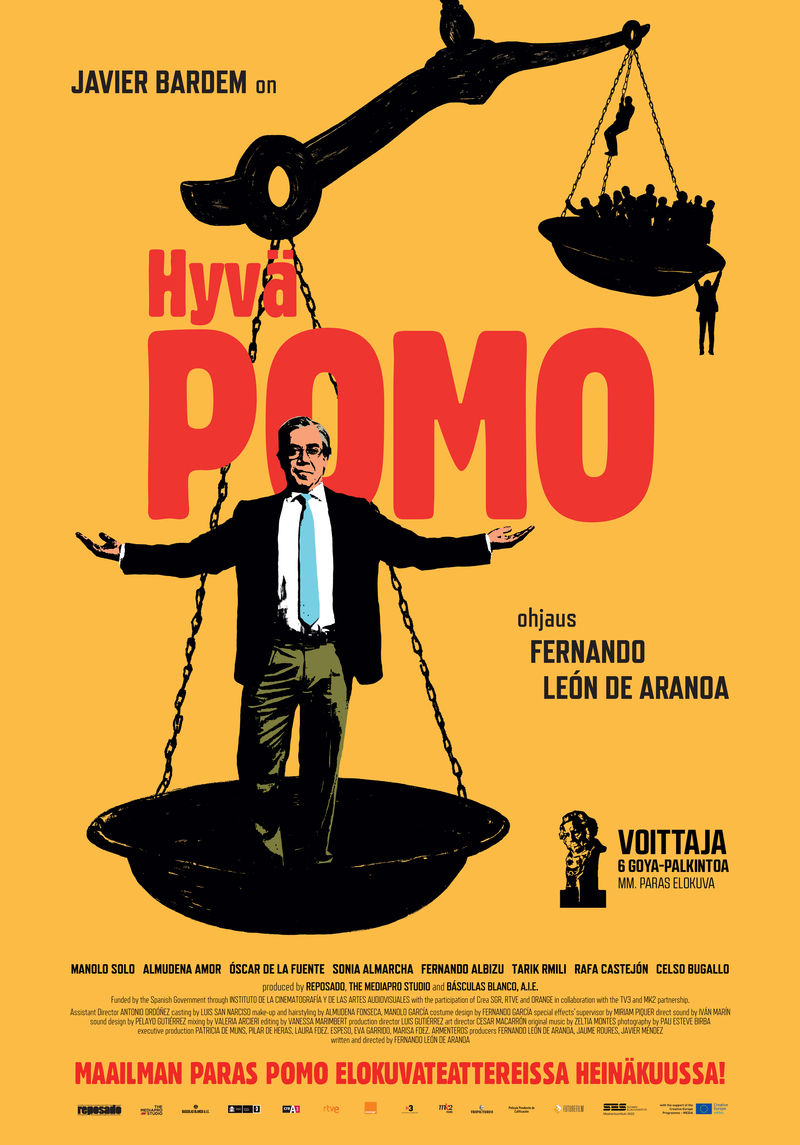
Fernando León de Aranoa: El buen patrón / The Good Boss (ES 2021) with Javier Bardem as Blanco.

Fernando León de Aranoa: El buen patrón / The Good Boss (ES 2021) on the Blanco Básculas shop floor with Tarik Rmili (Khalec) and Almudena Amor (Liliana).

Fernando León de Aranoa: El buen patrón / The Good Boss (ES 2021), the first tour of the interns on the Blanco Básculas shop floor with Almudena Amor (Liliana).

Fernando León de Aranoa: El buen patrón / The Good Boss (ES 2021), with Sonia Almarcha (Adela Blanco) and Almudena Amor (Liliana).

Hyvä pomo / Världens bästa chef.
    ES 2021. PC: Reposado Producciones Cinematograficas, S.L. ; Mediapro Cine, S.L.U. ; Basculas Blanco, A.I.E. Productor: Fernando León de Aranoa , Jaume Roures , Javier Méndez. Productor ejecutivo: Patricia de Muns , Pilar de Heras , Laura Fernández Espeso , Eva Garrido , Marisa Fernández Armenteros. Dirección de producción: Luis Gutiérrez
    Dirigido por: Fernando León de Aranoa. Ayudante de dirección: Antonio Ordóñez. Guión: Fernando León de Aranoa. Dirección de fotografía: Pau Esteve scope. Dirección artística: César Macarrón. Vestuario: Fernando García. Maquillaje: Almudena Fonseca Ferrandis , Manolo García. Peluquería: Almudena Fonseca Ferrandis , Manolo García. Efectos especiales: Miriam Piquer. Música: Zeltia Montes. Sonido directo: Iván Marín. Montaje de sonido: Pelayo Gutiérrez. Mezclas de sonido: Valeria Arcieri. Montaje: Vanessa Marimbert.
    Sergei Prokofiev: Overture to the ballet Romeo and Juliet (1936).
    "Feeling Good" (Anthony Newley, Lesley Bricusse, in 1964 for the musical The Roar of the Greasepaint The Smell of the Crowd), perf. Michael Bublé 2005.
    Intérpretes: Javier Bardem (Blanco) , Manolo Solo (Miralles) , Almudena Amor (Liliana) , Óscar de la Fuente Bellido (Jose) , Sonia Almarcha (Adela), Fernando Albizu (Román, the gatekeeper) , Tarik Rmili (Khalec) , Rafael Castejón (Rubio), Celso Bugallo (Fortuna) , Martín Páez Sánchez (Salva) , Yael Belicha (Inés) , Mara Guil (Aurora).
    Fecha de inicio de rodaje: 12/10/2020. Fecha de final de rodaje: 4/12/2020.
    Tipo de película: Cine Ficción. Género: Comedia drama. Etiquetas: Comedia , Drama. Relación de pantalla: DCP.
    Versión original: Castellano.
    116 min
    Estrenos: 14/10/2021.
Credits and synopsis from: I.C.A.A. (Instituto de la Cinematografía y de las Artes Audiovisuales): Catálogo de Cinespañol.
    Finnish premiere: 22 July 2022, released by Future Film with Finnish / Swedish subtitles by Sari Selander / Michaela Palmberg.
    Viewed at Finnkino Strand, Iso Kristiina, Lappeenranta, 23 July 2022.

Official synopsis: "Blanco, the charismatic owner of a family run factory, is under pressure as he covets a local award for business excellence. Everything needs to be perfect! But the veneer of the perfect company cracks as Blanco has to deal with a vengeful fired worker, a depressed supervisor, and an infatuated ambitious intern. To win the competiton, the manipulative “good boss” shamelessly meddles in his employees ́ private lives and crosses every line imaginable, unknowingly starting an explosive chain reaction with wild consequences."

AA: Carried by the intelligent screenplay and direction by Fernando León de Aranoa, a charismatic lead performance by Javier Bardem as Blanco and an overall excellent cast, The Good Boss is a witty satire about working life in a traditional patriarchal family-run factory, Blanco Básculas (Blanco Scales). The patrón type boss is like a father, and the employees are his family. This is, in fact, Blanco's explanation why he and his wife have no children.

The issues are interesting and León de Aranoa's approach is original. It starts with juvenile delinquency. Blanco is always eager to help even in private crises, and he takes care of a youngster because Fortuna (Celso Bugallo), his father, is an employee. Three young female interns get special attention since "you are like my daughters". Miralles the supervisor (Manolo Solo) acts chaotically because his private life is a mess, and Blanco starts to meddle. Jose (Oscar de la Fuente), a worker who has been fired, starts a media campaign on the wasteland in front of the factory.

The factory produces industrial scales in a provincial town, and the plot is about the factory's attempt to win an award for business excellence. The themes of the scales, balance and justice are central visually, literally and symbolically.

But with all the problems emerging everything seems be heading for disaster. Miralles keeps getting more and more erratic, the fired worker does not give up until the hooligans burn his place and he kills in self-defense Fortuna's son who has been protected by Blanco. Blanco lands into bed with the beautiful Liliana (Almudena Amor) before learning that she is the grown-up daughter of a close family friend.

Despite his reactionary and latently racist patriarchal disposition, Blanco is a smart businessman who cannot deny the abilities of Khalec (Tarik Rmili) who is promoted while Miralles if finally fired.

Liliana is smart, too, and it is interesting to figure out who is playing whom. While Blanco's watchword is balance, Liliana keeps reminding us of Heisenberg's uncertainty principle. Closeness of the observer to the observed can bring changes.

Against Liliana's better judgment, she is aroused in the vicinity of Blanco. It is not a simple case of boss taking advantage of young beautiful intern. When Blanco finds out who Liliana really is (he has, it turns out, known her since she was a baby), he immediately takes steps to send her elsewhere. Quietly, Liliana takes things into her own hands together with Khalec. Perhaps everything takes place with the complicity of Blanco's wife Adela (Sonia Almarcha).

In a last minute rescue, the company gets the award of the most quality conscious enterprise of the year. But tears are falling on Fortuna's cheek. The funeral of his son is the emotional climax of the tragi-comedy. El buen patrón succeeds as engrossing entertainment and as a thoughtworthy account of contemporary life.

The figure of the patriarchal boss reminds me of Japanese post-WW2 films, including those by Yasujiro Ozu such as Higanbana. The world is officially patriarchal, but women pull the strings and let men play boss.

Monday, July 18, 2022

Giuseppe Verdi: Aida (Savonlinna Opera Festival, 2022)


Olavinlinna, Savonlinna. Photos: Savonlinna Opera Festival.  Please click on the images to enlarge them.

Aida (Savonlinna Opera Festival, 2022). Helena Juntunen (in the forefront and in the background video projection) as Aida.

Aida (Savonlinna Opera Festival, 2022). The lamphouse wall and the video projection on the castle wall. Stage director: Philipp Himmelmann. Stage designer: David Hohmann. Lighting designer: Fabiana Piccioli. Video designer: Tieni Buchhalter.


Giuseppe Verdi: Aida. Opera in quattro atti
LIBRETTO: Antonio Ghislanzoni
Finnish translation: Leena Vallisaari
PREMIERE: First performed in Cairo, Khedivial Opera House, 24 December 1871
Finnish premiere: 1916
First performance at Savonlinna Opera Festival: 1986
CAST
AIDA ............................. soprano
1., 4., 6. & 22.7. ........... MICHELLE BRADLEY
12., 16., 18., 20. & 23.7 ..HELENA JUNTUNEN
RADAMÈS ................................ tenor
1., 4., 6., 18. & 22.7. .......... GASTON RIVERO
12., 16., 20. & 23.7. .......... MARTIN MUEHLE
AMNERIS ............................mezzo-soprano
1., 4., 6., 18. & 22.7. .... AGNIESZKA REHLIS
12., 16., 18., 20. & 23.7. . ÈVE-MAUD HUBEAUX
AMONASRO ................... baritone
..........................................TOMMI HAKALA
RAMFIS .....................................bass
1., 4., 6., 18. & 22.7. .. ALESSIO CACCIAMANI
12., 16., 20. & 23.7. ............. TIMO RIIHONEN
KING OF EGYPT ................. bass TAPANI PLATHAN
MESSENGER ................................. tenor JOHAN KROGIUS
PRIESTESS....................... soprano IRIS CANDELARIA
PERFORMANCES
1.7. premiere
4.7., 6.7., 12.7., 16.7., 18.7., 20.7., 22.7., 23.7.
Conductor ..........................................VILLE MATVEJEFF
Assistant conductor....................MARIA ITKONEN
Stage director ........................................PHILIPP HIMMELMANN
Assistant stage director ........ RIIKKA RÄSÄNEN
Choreography................................................ KRISTIAN LEVER
Stage designer .................... DAVID HOHMANN
Costume designer ...................................LILI WANNER
Lighting designer ..................FABIANA PICCIOLI
Video designer ........................... TIENI BURKHALTER
Chorus master ...................................... JAN SCHWEIGER
SAVONLINNA OPERA FESTIVAL CHOIR
Sung in Italian.
Finnish surtitles ............ SUSANNA CAROTENUTO
English surtitles .......................... JAANA KUORINKA
Live surtitling ......... SUSANNA CAROTENUTO JA LAURA VIERIMAA
The performance begins at 19 and ends at about 22.00. One interval.
Sets and props made jointly by students from Savonlinna Upper Secondary and Vocational College (SAMI).
Répétiteur ..........................HANS-OTTO EHRSTRÖM
Music managers ...ROOPE MÄENPÄÄ JA PAULIINA OKKONEN
Venue manager ..................LAURI AKKILA
Technical stage manager ...OLIVER EAGLE-WILSHER
Head of workshop .............AHTI JALKANEN
Production assistant ..........MIRVA KOIVUKANGAS
Make Up ...........................JANI KYLMÄLÄ
Head of wardrobe .............HELI ROININEN
Props .................................SANNA TYNKKYNEN
Technical producer.............JOONAS VÄKEVÄINEN
Head of productions ..........JUKKA POHJOLAINEN
SAVONLINNA OPERA FESTIVAL ORCHESTRA
Dancers:
RÉMI BENARD
PAOLO BUSTI
ADRIEN DELÉPINE
MERIT LAENGNER
CAROLINA MANCUSO
OLIVIER OMETZ
GRETA RODORIGO
ALESSIA RUFFOLO
Savonlinna Opera Festival, Olavinlinna / Olofsborg, Savonlinna, 18 July 2022.

AA: After three years, Savonlinna Opera Festival has reopened. I am just an accidental opera-goer, but always gratified when I go. Giuseppe Verdi's Aida belongs to the most beloved core listening in the history of music, also for me. In Finland, Giuseppe Verdi, especially Nabucco, has also always resonated in a special way as a music of liberation, and he also inspired his contemporary Fredrik Pacius to compose the first Finnish opera in his spirit.

Seeing Aida performed is completely different. The acoustics of the Olavinlinna Castle (1475) is magnificent, and I marvel at the art of the performers, singers projecting arias without amplification in a huge space like this while the orchestra is playing and the choir is singing. It is a beautiful but cool evening. The record-breaking heat waves of Europe are bypassing us, but the enthusiastic audience brings its own heat with it.

In traditional interpretations such as Aida seen here in Savonlinna in 2012, it is lavishly set in Ancient Egypt, but in Philipp Himmelmann's direction and David Hohmann's stage design, it happens in a timeless, dismal now, reflecting Russia's war against Ukraine that started in February 2022. It is a welcome notion to break free from tradition and introduce a fresh interpretation. Myself, I also adore traditional concepts in classic works and think that talented directors and designers cannot help bringing thousands of fresh touches and emphases to them, as well. Aida is a devastating tragedy about the fate of love and humanity in wartime. I feel that a gloomy design is "more is more" and that a glorious, beautiful design could suggest a Gegenbild, a promise of hope, and evoke the better angels of our nature. The relentlessly sinister stage concept is a powerful statement about our time.

As it is, it changes the balance of the performance and guides us to focus to an exceptional degree on the music and the performances. As a musical experience this Aida is magnificent, in the legendary choruses, in the rousing epic passages and the tragic lyrical arias. The love theme in the stage direction feels superficial, emphasizing erotic titillation in a way that feels superfluous. But the grandeur of the passion in the music is too overwhelming for the stage direction to hamper.

Aida is a black princess of Ethiopia, traditionally performed in black body paint by the greatest sopranos in history. The use of black body paint has fallen under increasing criticism in recent years, and the tradition is about to be banned.

Colour-blind casting is increasingly the norm since Hamilton (2015), also in film adaptations of classics such as David Copperfield (2019). A "united colours" approach is an engrossing phenomenon of our global age, a promising signal of our progress beyond racism.

Aida in Savonlinna has double casting: first cast with the black soprano Michelle Bradley, the performances now continue with Helena Juntunen in paleface. Both are great, but for me, a snow white Aida is a jolting Verfremdung effect, consistent with the bleak stage design.

I understand the criticism and even the willingness to cancel black body paint, because it has often been used in a demeaning way of pejorative racial clichés. However, I don't think this is the whole truth. Great characters of tragedy such as Aida and Othello have always been performed with dignity and grandeur. They are us, we are them.

Aristotle said that the urge to play is the most distinctive character that separates humans from animals, ever since childhood. The human is the most playful animal. By playing we learn who we are and who others are. A play is also about learning about the other by becoming the other, the me in the other. The play brings us together. We dress in others' clothes and use masks and bodypaint. It is in our nature. But because this disposition has been abused, certain uses are becoming banned.

Clemente Fracassi: Aida (IT 1953). Sophia Loren as Aida in her first starring role (doppiatora originale: Renata Tebaldi, canto).

Maria Callas as Aida in 1951 in Mexico.

Sunday, July 10, 2022

Elvis (2022)


Baz Luhrmann: Elvis (AU/US 2022) starring Austin Butler.


Elvis / Elvis.
    AU/US © 2022 Warner Bros. Pictures. PC: Bazmark Films and The Jackal Group. P: Baz Luhrmann, Gail Berman, Catherine Martin, Patrick McCormick, Schuyler Weiss.
    D: Baz Luhrmann. SC: Baz Luhrmann, Sam Bromell, Craig Pearce, Jeremy Doner – story by Baz Luhrmann, Jeremy Doner. DP: Mandy Walker. PD: Catherine Martin, Karen Murphy. AD: Ian Gracie. Cost: Catherine Martin. SFX: Brian Cox. VFX: Lindsay Adams. S: Wayne Pashley. ED: Matt Villa, Jonathan Redmond. C from Wikipedia (a longer cast listing beyond the jump break):
    Austin Butler as Elvis Presley
    Tom Hanks as Col. Tom Parker, Elvis' manager
    Olivia DeJonge as Priscilla Presley (née Wagner), Elvis' wife
    Helen Thomson as Gladys Presley (née Smith), Elvis' mother
    Richard Roxburgh as Vernon Presley, Elvis' father
    Kelvin Harrison Jr. as B. B. King
    Xavier Samuel as Scotty Moore
    David Wenham as Hank Snow
    Kodi Smit-McPhee as Jimmie Rodgers Snow
    Luke Bracey as Jerry Schilling
    Dacre Montgomery as Steve Binder
Principal photography took place in Australia.
159 min
Festival premiere: 25 May 2022 Cannes Film Festival.
US premiere: 24 June 2022.
Finnish premiere: 29 June 2022, released by SF Studios Finland with Finnish / Swedish subtitles by Timo Porri / Saliven Gustavson.
Viewed at Finnkino Strand, Iso Kristiina, Lappeenranta, 10 July 2022.

TRACK SELECTIONS INCLUDE (MORE COMPLETE LISTS BEYOND THE JUMP BREAK):
Sung by Elvis Presley: “Suspicious Minds,” “Edge Of Reality,” “Cotton Candy Land,” “That’s All Right,” “An American Trilogy,” “Are You Lonesome Tonight?,” “Fever,” “Let’s Forget About the Stars,” “Love Me, Love The Life I Lead,” “Shake, Rattle And Roll,” “I’m Comin’ Home,” “Hound Dog,” “Blue Suede Shoes,” “Heartbreak Hotel,” “Can’t Help Falling in Love,” “A Little Less Conversation,” “Viva Las Vegas,” “Bossa Nova Baby,” “Here Comes Santa Claus,” “I Got a Feelin’ in My Body,” “Up Above My Head,” “Let Yourself Go,” “Guitar Man,” “Tiger Man,” “Any Day Now,” “Power of My Love,” “Polk Salad Annie,” “Burning Love,” “It’s Only Love,” “Unchained Melody,” “Without a Song,” “In the Ghetto,” “Men With Broken Hearts” and “Summer Kisses, Winter Tears.”
    Sung by Austin Butler: “I’ll Fly Away,” “That’s All Right,” “Baby, Let’s Play House,” “Blue Suede Shoes,” “Heartbreak Hotel,” “Working on the Building” (with Yola), “Hound Dog,” “Are You Lonesome Tonight?,” “Trouble,” “Crawfish,” “Here Comes Santa Claus,” “If I Can Dream,” “Suspicious Minds” and “Can’t Help Falling in Love.”
    First end credits song: "In the Ghetto (World Turns Remix)" – Elvis Presley & Nardo Wick
    Second end credits song: “The King And I” – Eminem and CeeLo Green
    Third end credits song: "Tupelo Shuffle" – Swae Lee & Diplo
    Fourth end credits song: "If I Can Dream" – Måneskin
I thank Asko Alanen for the soundtrack listings which were not easily available at the time of blogging.

AA: I did not expect this, but this is the best Elvis movie I have seen. It is also the finest achievement of the director Baz Luhrmann.

About Baz Luhrmann I have always had mixed feelings, but I have been positively surprised by his The Great Gatsby adaptation, and I also remember fondly his vivid and engrossing Romeo + Juliet.

Luhrmann has a passion for excess, and in Elvis Presley he has found an ideal subject. Excess is so inherent in the story of the legendary performer that Luhrmann does not need to emphasize it. Instead, he can focus on enriching and deepening the treatment in different ways.

The Elvis family story is central and emotionally appealing, a heartfelt foundation also for Presley's musical career.

Elvis as a performer brings together in a radical way the white traditions of country & western and the black roots of rhythm & blues. He is also capable of uniting sacred and profane musical traditions in a profound manner.

These themes are central in all Presley biopics, but Luhrmann integrates them in an original fashion. What is distinctive is the central role of Colonel Tom Parker, with whom Elvis signs a Faustian pact. A Faustian pact was a favourite theme in the American cinema of the 1940s, of which I have recently seen William Dieterle's The Devil and Daniel Webster and John Farrow's Alias Nick Beal. Tom Hanks's Mephisto incarnation can be compared with Walter Huston and Ray Milland in the above-mentioned movies.

Luhrmann integrates even the Faustian story with the family story. When Elvis's mother, his greatest love, dies, there is a transference of love to Colonel Parker, his new "mother". Tom Hanks interprets the role extravagantly which is how it is meant to be. Colonel Parker is a carnival hustler who happens to sign the world's greatest performer. Elvis is always at his best when he follows his own way, defying Parker's trite and conventional demands. But because of his docile side, he never breaks free, and this is the root of the tragedy of Elvis.

Actors almost inevitably fail when trying to interpret legendary performers, but Austin Butler belongs to the outstanding exceptions. He radiates charisma and excitement and excels even in performing many of the songs himself. The magic of Elvis was his unique connection with his audience. He loved to perform, and he was great until his very last performance, from which we see some touching documentary footage. Baz Luhrmann and Austin Butler convey this connection in a special way. The ecstasy of the female part of the audience is conveyed tenderly, without the usual and condescending clichés. We see the members of the audience as individuals, as does Elvis who wants the audience to be lit at the end of the show.

There are ups and downs in Elvis's life and career. The great turning-point is the 1968 comeback concert in which we witness the generation clash between Colonel Parker and Steve Binder. Elvis is devastated by the assassinations of Martin Luther King and Robert Kennedy in 1968. Elvis wants to be in touch with the times and express his support for the civil rights movement, immortalized in songs such as "If I Can Dream" (in homage to Martin Luther King and his "I Have A Dream" speech) and "In The Ghetto".

The queer dimension in the Elvis story is expressed matter-of-factly and with a greater sense of liberation than in earlier decades.

The soundtrack of the movie has been edited with devotion and imagination, avoiding clichés and conveying the versatility and the life force of the indefatigable performer. The selection of new talent helps build bridges across generations. It is a labour of love.

PS. This blog entry is in memory of Jouni Suomalainen who let me listen to his collected LP's of Elvis Presley in December 1984. Until the end he pursued another passion of his, street photography, exhibiting in his hometown Uppsala in Sweden where he recently died, but not of Covid.

PS2. My favourite Elvis tracks include "Mystery Train" (1955), "Reconsider Baby" (1960), "If We Never Meet Again" (1960) and "Trying To Get To You" (the 1968 comeback interpretation). None of them are in this movie. "Mystery Train" is also on my shortlist of all great music of all times.

BEYOND THE JUMP BREAK: LONGER OFFICIAL NOTES, CAST AND SOUNDTRACK LISTINGS:

Friday, July 01, 2022

Apache Drums (2021 restoration Universal Pictures)


Hugo Fregonese: Apache Drums (US 1951) poster with Stephen McNally (Sam Leeds) and Coleen Gray (Sally).

Hugo Fregonese: Apache Drums (US 1951) poster with Stephen McNally (Sam Leeds).

La rivolta degli Apaches / Kuoleman rummut / Dödstrummorna.
    US 1951. D: Hugo Fregonese. Sog.: Harry Brown. Scen.: David Chandler. F.: Charles P. Boyle. M.: Milton Carruth. Scgf.: Bernard Herzbrun, Robert Clatworthy. Mus.: Hans J. Salter. Int.: Stephen McNally (Sam Leeds), Coleen Gray (Sally), Willard Parker (Joe Madden), Arthur Shields (reverendo Griffin), James Griffith (tenente Glidden), Armando Silvestre (Pedro-Peter), Georgia Backus (signora Keon), Clarence Muse (Jehu). Prod.: Val Lewton per Universal-International Pictures Co., Inc. DCP. 75’. Col.
    Restored in 4K in 2021 by Universal Pictures in collaboration with The Film Foundation at NBC Universal StudioPost laboratory, from a 35 mm nitrate 3-strip original negative preserved by UCLA.
    From NBC courtesy of Park Circus.
    Il Cinema Ritrovato 2022: The Drifter's Escape: Hugo Fregonese.
    Viewed at Cinema Jolly, Bologna, 1 July 2022.

Dave Kehr (Il Cinema Ritrovato 2022): "One of Fregonese’s most completely realized projects, Apache Drums was also the last film of the creative producer Val Lewton (The Cat People), who died a few weeks before its release in 1951. The film follows the fast-talking gambler and gunman Sam Leeds (Stephen McNally), perhaps Fregonese’s most rootless protagonist, after being kicked out of a mining town in the New Mexico desert that is on the verge of becoming respectable. Sent into exile, Sam comes across the bodies of the dance hall girls massacred by a band of Mescalero warriors. He reluctantly returns to town to warn the residents of the impending threat. Even when convention requires Sam to become a hero and lead the townspeople to safety, Fregonese continues to emphasize his weakness and vanity – he’s far more interested in looking like a hero than in actually becoming one, and his flamboyance and impulsiveness leads to disaster. The final siege sequence is one of the most remarkable passages in American cinema. Throughout, Fregonese has developed a visual motif of low ceilings (indeed, some of the interiors seem like shots from a lost Orson Welles western) and cantilevered porticos that give a sense of constraint and claustrophobia even to the exteriors (the locations, mostly in California’s Mojave Desert, are themselves quite dramatic and unusual). When the action enters the hall, the camera goes along with it; there are no exterior views to establish the mounting presence of the Apache warriors, but only the pounding rhythms of the war dance (the music, apparently authentic, was supplied by an indigenous musicologist). One feels the influence of Lewton in the mounting suspense focused on an unseen menace, but the release is startlingly original – warriors suddenly diving through the upper windows, their bodies painted in primary colors and bathed by matching pinspots, an audacious concept that looks forward to the bold stylization of Mario Bava." Dave Kehr

AA: I entered the screening of Apache Drums at 20.30. It was my fifth film today. I fell into dreams of my own. I have to see properly this most highly expected film of the Fregonese retrospective. The colour in the 2021 restoration looks gorgeous.

Monday, June 27, 2022

Kahdeksan surmanluotia / Eight Deadly Shots (2022 restoration The Film Foundation's World Cinema Project)


Mikko Niskanen: Kahdeksan surmanluotia / Eight Deadly Shots (FI 1972) with Tarja-Tuulikki Tarsala and Mikko Niskanen.

Introducing Eight Deadly Shots at Cinema Jolly, 27 June 2022: Anna von Bagh and Cecilia Cenciarelli. To the left: AA, Satu Kyösola, Liselott Forsman, Mark Lwoff. Foto Max Borg.

Introducing Eight Deadly Shots at Cinema Jolly, 27 June 2022: Antti Alanen and Cecilia Cenciarelli. To the left: Liselott Forsman, Anna von Bagh, Satu Kyösola, Mark Lwoff. Foto Max Borg.

FI 1972. D+Scen.: Mikko Niskanen. F.: Mikko Niskanen, Juhani Sarro, Seppo Immonen, Kimmo Simula, Juhani Voutilainen. M.: Jyrki Rapp. Scgf.: Jorma Lindfors. Mus.: Erkki Ertappa. Int.: Mikko Niskanen (Pasi), Tarja-Tuulikki Tarsala (Vaimo), Tauno Paananen (Tanu), Paavo Pentikäinen (Reiska), Elina Liimatainen (Ellu), Ari Vainiontaus (Ari), Mauno Argillander (Manu), Sulo Hokkanen (Sulo Kokki). Prod.: Mikko Niskanen per YLE. 35 mm. Bn
    5 hrs 16 min
    Restored by The Film Foundation’s World Cinema Project, Yleisradio Oy, Fiction Finland ry e Cineteca di Bologna at L’Immagine Ritrovata laboratory. Funding provided by the Hobson/Lucas Family Foundation. Additional funding provided by the Finnish Ministry of Education and Culture, Tiina and Antti Herlin Foundation, Jane and Aatos Erkko Foundation.
    Il Cinema Ritrovato 2022: Cinemalibero.
    Print from Yle (Finnish Broadcasting Company)
    Introducono Antti Alanen (National Audiovisual Institute Finland) e Anna von Bagh - and Cecilia Cenciarelli and Liselott Forsman.
    Viewed at Cinema Jolly, Bologna, 27 June 2022

" Kahdeksan surmanluotia was originally broadcast in Finland as a four-part television series. The late film historian and filmmaker Peter von Bagh was a tireless advocate for this film’s restoration, which has inspired an entire generation of filmmakers, including Aki Kaurismaki. In order to honour Peter’s legacy and his wish to respect the specific aesthetic of the film, after different workflows were taken into consideration and several tests were performed it was eventually decided to opt for a combination of digital and analogue workflows. The 4K scan and restoration of the original 16 mm (A&B) was followed by a film-out onto a fine grain from which a new 35 mm was struck. The restoration, completed after almost three years, produced a new 35 mm internegative. "

Peter von Bagh: "Relatively little is known of Mikko Niskanen (1929-90), whose output of 14 features is highly uneven. The first three were about war, the following three about youth, and then came Kahdeksan surmanluotia, a 316-minute film made for television based on a 1969 news item about the killing of four policemen by farmer Tauno Pasanen. In Finland, the general public and film specialists agree that it is their national cinema’s masterpiece. It is compared by some to the work of Béla Tarr, while others, more classica ly, maintain that it is what the full nine hours of Greed might have been like."

"After finishing his sixth (and failed) feature, Niskanen had reached burnout. In his words, Pasanen’s story “energised my lifeless consciousness… The gunshots were an end to a long and logical chain of events… I didn’t choose this task, the task chose me.”

"This was the starting point for a shattering closeup of poverty, and of a man up against the wall, at the most basic level. Religion, education, morality, and sundry spiritual peculiarities of rural Finland’s social order exert a crushing force and also deal the hand that Niskanen’s protagonist, Pasi, has to play: one man becomes a policeman who defends the ideals of family, church, and property; another becomes a poor cottager. Both are given guns, both are victims. Niskanen doesn’t resort to false romanticism or the clichés of humanist cinema, nor does he appeal to pity, which would be to position himself at a remove from the material. The film concentrates strictly on the familiar elements of everyday life, yet seems to float in a strange realm of unknown dimensions, at once psychological, hallucinatory, and concrete, abounding in observations with a sharp and sometimes merciless anthropological edge. Surely this is an instance of cinema replicating the techniques of 19th-century French literature, as observed by Olaf Möller who described Kahdeksan surmanluotia as “Zola-esque”. The main character picks up his gun and is clearly responsible for his actions, but the specific case Niskanen depicts nevertheless has a kind of universal relevance, concrete and humane, combining the psychological, biological, and social facts into a clenched fist. The fatal shots are part of a chain of societal circumstances that can’t simply be reduced to a ‘crime’.
" Peter von Bagh, The Four Seasons of Drinking, “Encore”, 2012

ANTTI ALANEN: INTRODUCTION: EIGHT BULLET POINTS

ONE: We know Eight Deadly Shots as the favourite Finnish film of Peter von Bagh and Aki Kaurismäki.

TWO: Mikko Niskanen gives a great performance as an alcoholic – to be compared with James Mason in A Star Is Born, Albert Finney in Under the Volcano and Mads Mikkelsen in Another Round.

THREE: In Finland, Eight Deadly Shots was a national event. Even President Urho Kekkonen who did not care much about the cinema, asked to see it and gave a laudatory comment that helped promote the film. He had been born into such circumstances. These were his people.

FOUR: Eight Deadly Shots is an early instance of the phenomenon of a film-maker creating major work in the form of a television series. Mikko Niskanen did it before Ingmar Bergman directed Scenes from a Marriage, before Kieslowski’s Decalogue, Fassbinder’s Berlin Alexanderplatz and David Lynch’s Twin Peaks.

FIVE: Mikko Niskanen studied at the Finnish Theatre School in the 1940s, worked in the Finnish film industry in the 1950s and studied in Moscow for three years at the VGIK before debuting as a film director, at the same time as Tarkovsky, Shepitko and Shukshin. There are affinities in his work with neorealism, nouvelle vague, kitchen sink and direct cinema. But also with Vasili Shukshin, also an actor, writer and director. The call of the earth and the forest. The pain in the heart when atavistic tradition gives way to modernity. Something vital being lost forever.

SIX: In the 1950s most people in Finland still lived in the countryside. There were more horses than cars. The urbanization and the modernization was brutal and shocking. There was a big move to cities and Sweden. There was also a regional divide like in Italy between Mezzogiorno and the North. In Finland, the countryside was affluent in the south and the west. In the north and the northeast it was like in Eight Deadly Shots.

SEVEN: The great universal theme of the film is being out of time, obsolete. What happens when the world we knew suddenly vanishes. It is also a seismic blow to masculinity. The father is no longer able to sustain his family and loses respect and self-respect.

EIGHT: Eight Deadly Shots has always been popular with the audience and the critics. A short cinema version was edited, but while there is never a dull moment in the long version, the short version is dull all the way. The long version is available in telecasts, video, dvd and online, but previous transfers have failed to convey the bite and the edge of the cinematography.

At the Finnish Film Archive we used to screen in our cinema the original 16 mm print with a separate magnetic strip, but the Finnish Broadcasting Corporation no longer lets use it. For those who saw it, it was a revelation of the richness of the cinematography covering the four seasons of the countryside. The cinematography is both raw and subtle. The bite is powerful like that of a bear.

Why does it matter? It matters because in cases like this, form is substance. In scenes that are based on duration, the rich cinematography conveys the full intensity of the presence. It is not a formal distinction. It is about experiencing the full gravity of the work in a purely visual way.

Thanks to The Film Foundation’s World Cinema Project, Peter’s dream has come true and we can feel this strong bite on 35 mm for the first time.

Sunday, June 26, 2022

Émilie Cauquy: Victorin Jasset (1862–1913) – Le bureau des rêves perdus (Bologna, Il Cinema Ritrovato 2022)


Victorin Jasset: Zigomar, roi des voleurs (FR 1911) with Arquillière as Zigomar (right) and Charles Krauss as Nick Carter (left). Studios Éclair.

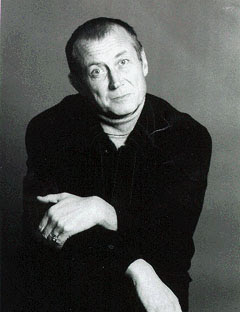
Victorin Jasset (1862–1913).

Émilie Cauquy's unabridged French language introduction to the Victorin Jasset retrospective at Il Cinema Ritrovato in Bologna (2022) is published here with the kind permission of the author.

Émilie Cauquy
Victorin Jasset (1862–1913) – Le bureau des rêves perdus
 
Même lorsqu’il a voulu imiter l’ancien monde, nature (ou théâtre), le cinéma a produit des phantasmes. Copiant la terre, il montrait l’astre.
Paul Eluard, Avant propos (in Images du cinéma français, Nicole Vedrès,1945)  
 
" “Nous le devinons plus que nous le connaissons”, dit Henri Langlois, tandis que Francis Lacassin écrit qu’il est “le génie de la lampe” ou Georges Sadoul “une trace semi-effacée”. Une bonne partie de l'œuvre de Jasset reste invisible, destin fatal lié à la funeste conservation de la production des studios Éclair première époque (1908–1918). En 1937, Langlois, au nom de la Cinémathèque française toute jeune de sa première année, accède à un lot de négatifs de la société tombée en faillite depuis avril 1920 : près de 1000 copies et 1700 négatifs peuvent être récupérés in extremis de la fonte, et malgré une négociation coup de maître, hélas, les éléments sont livrés par accoups et en vrac, ce qui pose un problème énorme d’identification et d’acquisition alors qu’il faut choisir vite. Par manque de moyens (30 000 francs), impossible d’acquérir tout le lot. Langlois citera régulièrement cet épisode tragique pour dépeindre l’archiviste en quête perpétuelle pour exercer sa mission de sauvetage d’un art en péril. C’est donc un miracle si nous pouvons voir aujourd’hui Protéa ou Zigomar contre Nick Carter."

"Déjà en 1937 pour Langlois, Éclair c’est Victorin Jasset, cinéaste mythique, mort prématurément en 1913. La fulgurance de sa carrière dévoile multiples talents et représente absolument la faible et fascinante frontière entre les arts de la scène et le cinéma des premiers temps, art en construction où est autorisé le grand écart entre le détail d’une peinture minutieuse sur éventail et la direction magistrale de plus d’une centaine de mercenaires romains prenant d’assaut Alésia pour une salle de plus de 4000 personnes : Jasset fut donc peintre, dessinateur, affichiste lithographe, créateur de costumes et de décors (premier dessinateur de la maison Landolf), metteur en scène de pantomime, chef de figuration, scénariste, metteur en scène de film (pour Gaumont avec Alice Guy dès 1905-1906, puis Pathé, Eclipse, Lux), et enfin directeur artistique de production pour Éclair. Il fut ainsi un pionnier avec d’excellents hommes de mains comme Georges Hatot ou Samama Chikli, habile auteur d'œuvres insolites, hétérodoxes, inventeur de l’aventure au féminin avec la triomphante Josette Andriot, et plus généralement du film d’action urbain codifié, du genre policier et du format de la série passant du journal à la pellicule, bague de fidélité pour public encore volage. Les lecteurs deviendront des spectateurs. Jasset ou le premier rictus, sadisme et horreur nécrophile comme par accident d’une vapeur de chloroforme, films griffonnés matière à vénération surréaliste, dix ans avant Feuillade, et comme l’écrit Nicole Vedrès, en punaisant Balaoo dans son Images du cinéma français en 1945 et par cette action inscrivant Jasset au mur des Inoubliables : “Tout ce que le théâtre -du moins un théâtre authentique-, tout ce que le roman et même la peinture lui refusaient, le public vint le demander au cinéma. Il avait eu l’absurde et le burlesque. Il lui fallut presque aussitôt le sang, l’horreur et la vraie mort. (...) C’était du crime à peine spectaculaire et presque quotidien, des cadavres auxquels on pouvait croire, des malheurs très possibles, des condamnations à mort, des exécutions capitales. Ils rassasiaient l’homme qui s’arrête dans la rue pour un accident.”

Emilie Cauquy
 
La hantise du relief ou l’art du costume chez Jasset.
Notes pour Le Joueur, La Fleur empoisonnée, Morgan le Pirate, Balaoo
.
 
C’était un type très calé, qui avait un bagage. (...) Il vous faisait des décors avec rien. Quand il drapait une femme, ça avait une allure formidable. Mais, quand il fallait faire jouer les acteurs, il n’y était plus. Nous nous complétions admirablement. Moi, j’avais la compréhension du jeu, et il avait une conception extraordinaire, quand il fallait habiller quelqu’un ou décorer quelque chose : c’était son métier. Jasset avait fait des choses épatantes : les maquettes de Vercingétorix, c’est splendide, de vrais petits chefs-d'œuvre. Ce spectacle-là a été une révélation pour tout le monde. Et si vous aviez vu ses défilés, ses mises en scène : il avait bien conçu quand il avait écrit cette pantomime, ce qu’il devait faire. 1180 personnes sur scène. (...) Jasset, par déformation professionnelle, avait la notion de la décoration, des costumes, des reconstitutions, c’était un malade.
Souvenirs de Georges Hatot recueillis par la Commission de Recherche Historique, sous la direction d’Henri Langlois, 15 mars 1948 (archives de la Cinémathèque française).
 
On évoque souvent le vérisme documentaire, à son insu, des premières vues. En 1910, Jasset fait figure de pionnier naturaliste en alternant décors réels extérieurs et studios, en imposant une grammaire de plans (inserts de plans rapprochés) et de mouvement des appareils (travelling latéral mis au point par Hatot), mais également en soignant ses costumes, l’ensemble au service de l’intensité du film, subtil et populaire à la fois. Le premier maillot noir du cinéma appartient à Protéa et c’est l’habit qui fabrique l’individu à l’écran, qui le codifie, idem pour la cape de Morgan le Pirate ou les pieds nus des gitanes de La Fleur empoisonnée. Dans les Zigomar, Jasset n’hésite pas à montrer le maquillage et le déguisement en temps réel, face caméra, ouvrant la voie à des transformistes de génie comme Lon Chaney. Chez lui, pas d’escamotage ou d’ellipse, Jasset prend soin de signaler trappes et murs pivots, le vieux truc de l’animation image par image permet de citer tendrement un tripot clandestin comme chez Robert Houdin ou des pas au plafond comme par magie chez Méliès. Inversement, Balaoo est présenté tel quel, naturellement singe grimé en homme, ce qui contribue habilement à son originalité. Sa nécro du 27 juin 1913 indique “mais où Jasset sut trouver le filon de ses meilleurs succès, ce fut dans la composition du costume théâtral. Là, sa science impeccable des styles historiques, sa richesse d’invention, sa luxuriante fantaisie trouvèrent un champ dignes d’elles”.
Emilie Cauquy

...

AA: I saw the unforgettable Studios Éclair retrospective in 1992 at Le Giornate del Cinema Muto in Pordenone, including an extensive sampling of films directed by Victorin Jasset.

It was amazing to register that one man during a career of just nine years became the pioneer of such fundamental phenomena of the film industry as the serial, the action hero and the action film serial (Nick Carter), the super villain (Zigomar), the superwoman / action heroine (Protéa) and the ape monster film (Balaoo), and equipping films with episode numbers.

Nick Carter was not the screen's first master detective. Sherlock Holmes films had been produced earlier. The killer ape from Edgar Allan Poe's Murders on the Rue Morgue had been introduced on the screen before Balaoo, but Jasset's ape, based on Gaston Leroux, was the first to receive monster star attention. Jasset launched the phenomenon of the creature feature.

Stunning as it was, the Pordenone retrospective was also heart-breaking, because the Studios Éclair legacy turned out to be in a parlous state. Frankly, it was a mess. It still is, but the Bologna 2022 retrospective was also a testimony to the impressive progress of international film reconstruction and restoration during the last 30 years.

In 1992 and again in 2022 it was eye-opening to realize that many of Gaumont's famous characters such as Judex, Fantomas and Irma Vep, directed by Louis Feuillade, had glorious predecessors in Studios Éclair productions directed by Victorin Jasset.

Having seen all these Jasset films I realize that I need to see Feuillade again to make clearer sense of the distinctions. My impression now is that in Jasset's films there may be a more lively charge in the staging of the action. Feuillade's blocking and mise-en-scène is more impressive and his use of locations more uncanny as fantasy figures emerge in real spaces.

A comparison may be impossible because the preservation status of Feuillade is excellent while that of  Jasset is miserable, although miracles have been achieved to enable a viewing experience that is so much superior to that of 30 years ago.

P.S. I don't know if this belongs to the many Éclair firsts, but the earliest fan mail I know is a love letter from a Helsinki woman to Nick Carter on 1 December 1909. It was published in the 1895 journal's fabulous Éclair 19071918 theme issue in Pordenone in 1992.

Saturday, June 25, 2022

Apenas un delincuente / Hardly a Criminal


Hugo Fregonese: Apenas un delincuente / Hardly a Criminal (AR 1949). To the left: Jorge Salcedo as José Morán.

Argentina 1949. Director: Hugo Fregonese. Scen.: Chas de Cruz, Hugo Fregonese, Raimundo Calcagno, José Ramón Luna, Tulio Demicheli. F.: Roque Giacovino. M.: Jorge Gárate. Mus.: Julián Bautista. Int.: Jorge Salcedo (José Morán), Sebastián Chiola (Rosatto), Tito Alonso (Carlos Morán), Josefa Goldar (Doña Emilia), Linda Lorena (Laura), Nathán Pinzón (619), Homero Cárpena. Prod.: Juan José Guthman, Hugo Fregonese per Interamericana. 35 mm. 88’. Bn.
    Print from UCLA Film & Television Archive
    Courtesy of Film Noir Foundation Collection
    In Spanish with English subtitles
    Il Cinema Ritrovato 2022: The Drifter's Escape: Hugo Fregonese.
    Viewed with e-subtitles in Italian at Cinema Jolly, Bologna, 25 June 2022.

Ehsan Khoshbakht: " Telling the real-life story of José Moran, a young employee of a Buenos Aires company who embezzles money and faces the tragic consequences, Fregonese uses a twofold approach. The mood and perspective is broken halfway into the film, moving from urban noir to prison-break drama – the latter also based on real-life events, though in fact unconnected to the first story. Fregonese mixes seemingly unrelated fragments of life, dramatic situations and cinematic language with a sense of bitter irony, while his grim fascination with the details of the individual’s downfall gives life to the film. "

" In its modes of production and genre conventions, the golden age of Argentinian cinema which dominated Latin American markets in the 1930s and early 1940s was partly inspired by Hollywood. Fregonese, who arrived on the scene as that golden age was already in decline, shared with the previous generation a passion for American films, here manifested in his effortless blend of styles; the Warner studio’s relentless visual minimalism (fast-cut newspaper headlines, pursued cars veering off the road) and Fox’s preference for realism and location shooting for crime dramas, as well as the use of voiceover. "

" Though American-style gangster films had existed in Argentinian cinema as early as 1937, this was not a pastiche but an attack on the idea of economic progress under President Juan Perón. Almost until the end of his career Fregonese approached money as an abstract concept, something that spreads like an infectious disease and changes the nature of relationships. He made films about men with bags full of neatly cut notes that would define their fate. If the director’s first attempts at securing a place in Hollywood, in 1937 and 1946, were deemed unsuccessful, Apenas un delincuente could only be realised at all precisely because of the interventionist policies of the Perón government. Ironically, it was the US that contributed to the end of Argentinian cinema’s golden age by imposing a politically motivated filmstock embargo, forcing Fregonese to drift back to the place where he had failed before; this time, in a double-irony, to make a film called One Way Street.
" Ehsan Khoshbakht

AA:

Contras' City / City of Contrasts (2021 The Film Foundation / World Cinema Project restoration)


Djibril Diop Mambéty: Contras' City (SN 1968).

Senegal 1968. Director: Djibril Diop Mambéty. Scen.: Djibril Diop Mambéty. M.: Jean-Bernard Bonis, Marino Rio. Mus.: Djimbo Kouyaté. Int.: Inge Hirschnitz, Djibril Diop Mambéty. Prod.: Kankourama. DCP. Col. 15 min
    This restoration is part of the African Film Heritage Project, an initiative created by The Film Foundation’s World Cinema Project, the FEPACI and UNESCO – in collaboration with Cineteca di Bologna – to help locate, restore and disseminate African cinema.
    French and Wolof version with English subtitles.
    From: The Film Foundation, Filmmakers for Film Preservation.
    Restored in 2021 by The Film Foundation’s World Cinema Project and Cineteca di Bologna at L’Immagine Ritrovata and L’Image Retrouvée laboratories. Funding provided by the Hobson/Lucas Family Foundation. The 4K restoration of Contras’ City was made from the internegative as well as the original sound negative provided by Teemour Mambéty and preserved at LTC Patrimoine. A vintage print of the film was used as reference for color grading.
    Il Cinema Ritrovato 2022: Cinemalibero.
    Introduced by  Cecilia Cenciarelli e Elena Correra
    Viewed with e-subtitles in Italian by Chiara Belluzzi et al. at Cinema Jolly, Bologna, 25 June 2022

Aboubakar Sanogo (Il Cinema Ritrovato 2022): " There is hardly any better way to enter the world of Djibril Diop Mambéty than through Contras’ City, his 1968 manifesto-like city symphony classic. In it, he literally offers the theory of his cinema and his theory of cinema: “The cinema is the art of making the contingent necessary, essential, inescapable, incontrovertible.” Indeed, Roland Barthes would have defined it as “The Cinema of the Punctum”, discernible primarily through the casting of the irreverent, playful and poetic gaze on the real. "

" Contras’ City is cast as an impressionistic and dialogical tour of Dakar, Senegal’s metropolis, in which Mambéty paints the contradictorily plural identities of his city through its arch tecture ([neo]classical colonial European through Islamic), hints at its politics caught between legacies of colonialism, reigning neocolonialism, and aspirations to emancipated subjecthood, reveals its cultures shaped by the forces of Negritude, Christianity, Islam and modern, secular and cosmopolitan worldliness. Like Dakar, the film is a tour de force, which carries multiple identity papers, partaking at once in registers of the poetic, the observational, the reflexive, the ironic/humorous/comedic, the interactive, the subjective, the class-conscious, in short, the essayistic.
" Aboubakar Sanogo

AA: A lovely, inspired, irreverent city symphony of Dakar, based on playful associations, satirical observations of the clash of cultures, and an irresistible joy of life conveyed in vivid colour and a panache in the soundtrack.

Ples v dežju / Dancing in the Rain


Boštjan Hladnik: Ples v dežju / Dancing in the Rain (YU 1961)

YU 1961. Director: Boštjan Hladnik. Sog.: from the novel Črni dnevi in beli dan (1958) by Dominik Smole. Scen.: Boštjan Hladnik. F.: Janez Kališnik. M.: Kleopatra Harisijades. Scgf.: Niko Matul. Mus.: Bojan Adamič. Int.: Duša Počkaj (Maruša), Miha Baloh (Peter), Rado Nakrst (Anton), Ali Raner (suggeritore), Joža Zupan (Magda), Arnold Tovornik (autista), Janez Jerman (direttore del teatro), Janez Albreht (cameriere). Prod.: Dušan Povh per Triglav film. 35 mm. 98’. Bn
    Print from Slovenska Kinoteka, courtesy Slovenski Filmski Center
    Slovenian version with English subtitles
    Il Cinema Ritrovato 2022: “Tell the Truth!” – A View Into Yugoslav Cinema.
    Viewed with e-subtitles in Italian by Underlight at Cinema Jolly, Bologna, 25 June 2022

Nerina T. Kocjančič: " In 1961, a peak year for European film modernism, and as Jean-Luc Godard was enjoying great success with A Woman Is a Woman, director Boštjan Hladnik also delved into the world of a woman and a love triangle in his debut Ples v dežju. "

" The film was first presented at the Pula Film Festival, Yugoslavia’s leading event dedicated to showing the country’s cinema and equally committed to championing the achievements of its constitutive republics. "

" Hladnik had shot the film after returning from Paris, where he had assisted Claude Chabrol and frequented the Cinémathèque. He stated that his film had been “made in a creative atmosphere similar to the one in France”. "

" Yet the atmosphere Hladnik found when he returned home was dark and pessimistic. This was perhaps the main reason he chose this novel by Dominik Smole – Črni dnevi in beli dan (Black Days and White Day), an impossible love story with no happy ending. The director himself called Ples v dežju a kind of “black melodrama”, involving a number of unhappy love relationships."

" We have the downcast painter Peter (Miha Baloh), unlucky theatre actress Maruša (Duša Počkaj), who loves Peter but is not wanted by him, and the shy, anonymous Prompter (Ali Raner) in love with Maruša. The fourth figure in the film is Mr Anton (Rado Nakrst), Peter’s elderly flatmate, who constantly spies on him. Present in the background is a young couple who perform the dance of ‘ideal’ lovers throughout the film. "

" The novel rejects convention and is written almost entirely in the associative manner. We can begin to appreciate how the text lends itself to Hladnik’s typically modernistic treatment, which elegantly interweaves the real with the imaginary. By further complementing the modernistic approach with classical film language, Hladnik shows his mastery of film art and confirms Ples v dežju among the unique works of cinema.
" Nerina T. Kocjančič

AA: Distinctions of Ples v dežju / Dancing in the Rain include striking imagery, a compelling dream mode, engaging performances by the actors, an appealing sensuality and vivid scenes of Slovenian life (school, theatre, the bustle of a big city, Ljubljana?). As indicated by the title, this is a rain movie, and the cinematic, oneiric possibilities of rain are fully understood. A basic tension arises from the fact that Maruša (Duša Počkaj) is a more mature woman, and the artist Peter (Miha Baloh) is having a hard time relating to that. The beginning of the film is exciting, but it does not proceed very much from the initial surface excitement to deeper and richer revelations.

Thursday, June 16, 2022

Babi Yar. Kontekst / Babi Yar. Context


Sergei Loznitsa: Бабин Яр. Контекст / Babi Yar. Context (NL/UA 2022).

Бабин Яр. Контекст / Babi Yar. Context
    NL/UA 2022. PC: Atoms & Void / Babyn Yar Holocaust Memorial Center.
Sergei LOZNITSA Director
Sergei LOZNITSA Script / Dialogue
Tomasz WOLSKI Film Editor
Danielius KOKANAUSKIS Film Editor
Sergei LOZNITSA Film Editor
Vladimir GOLOVNITSKI Sound
    A compilation film about the Holocaust in Ukraine.
    In black and white with some colour in Academy (1,37:1).
    121 min
    Languages: Ukrainian, Russian, German, Polish.
    Festival premiere: 11 July 2021 Cannes Film Festival
    Russian festival premiere: 12 Oct 2021 Moscow Jewish Film Festival
    Finnish festival premiere: DocPoint online 31 Jan 6 Feb 2022.
    Version with English credit sequences, intertitles and subtitles viewed at Lapinsuu, Midnight Sun Film Festival, Sodankylä, 16 June 2022.

Synopsis (Cannes Film Festival):

"On September 29-30, 1941, Sonderkommando 4a of the Einsatzgruppe C, assisted by two battalions of the Police Regiment South and Ukrainian Auxiliary Police, and without any resistance from the local population, shot dead in the Babi Yar ravine in the north-west of Kiev 33 771 Jews. The film reconstructs and visualises the historical context of this tragedy through archive footage documenting the German occupation of Ukraine and the subsequent decade. When memory turns into oblivion, when the past overshadows the future, it is the voice of cinema that articulates the truth."

AA: The more I read and watch about the Holocaust, the harder it gets.

Sergei Loznitsa's Babi Yar: Context is the strongest work I have read or seen about the massacre near Kiev in September 1941. The film is based on original documents. There are distant views, panoramic shots and tracking shots that document the epic scope of WWII in Ukraine. When Nazis occupy Kiev, Soviet partisans detonate much of the city centre. In revenge, Nazis organize a massacre of the Jews in Babi Yar.

Nazis attempt to erase all signs. Loznitsa conveys the massacre via several ways: the void itself, a montage of colour photographs of remaining objects, and documentation of a parallel massacres in Lviv and in Lubny (in Poltava) on 16 Oct 1941; those photographs are extraordinary. We get to read from Vasily Grossman's "In Ukraine There Are No Jews". We see the report given to American journalists after the liberation of Kiev. Most movingly we see witness statements from the actress Dina Pronicheva, one of the rare Babi Yar survivors, and one of the executioners, SS private Hans Isenmann. Like in Claude Lanzmann's Shoah, the voice testimony of those who were there makes us feel the presence of the unimaginable. There is a stunning sequence of the public hanging in Kiev of war criminals including Isenmann.

Besides Shoah, Loznitsa's film is equally about the context: the pervasive and persistent antisemitism in Ukraine and Russia. The persecuted Jews were not convincingly protected, and after the war, the Soviet Union tried to erase signs of the massacre. But: "The past is never dead. It's not even past" as William Faulkner wrote in Requiem for a Nun.

I have seen the first Babi Yar movie, Mark Donskoy's Nepokoryonnye / The Unvanquished (SU 1945). The Soviet Union was the first country to make films about Nazi death camps: Maidanek (about Lublin, 1944) and Auschwitz / Oswiecim (1945), both in Poland. Donskoy was the first to make a film about Holocaust in the USSR. These movies belong to the anti-fascist continuum in Soviet cinema, including films such as Professor Mamlock and The Oppenheim Family (both 1938) covering anti-Jewish persecutions in Germany. The trend had been launched during the earliest years of Soviet cinema. For instance Dziga Vertov in his early newsreels documented anti-fascist slogans in the First of May demonstrations of 1923. But there were macabre reversals, particularly during the Molotov-Ribbentrop pact and from the end of WWII till the death of Stalin.

Babi Yar was covered by bold poets like Yevgeny Yevtushenko (1961) and Ilya Ehrenburg (1944 / 1959) but not by film-makers. Mikhail Romm's Everyday Fascism (1965) was a key film of the Thaw in this respect, one of the Trojan horses of Soviet cinema: while officially about Hitler, it was equally about Stalin.

Sergei Loznitsa's movie contributes powerfully to the uneasy coming to terms with the past in Ukraine and Russia.

In a sidenote about Finland, Finnish volunteers in the Waffen-SS entered the front in 1941 and early 1942, in units of the SS Division Wiking. In July 1941 they participated in Operation Barbarossa in conquering Ukraine in Ternopil, along the Dnieper River, north of Rostov-on-Don, and along the Mius River. Having fought on the Caucasus front and Stalingrad they retreated across the Don back to Ukraine.

The official view in Finland during the Cold War was that Finnish SS men knew nothing, saw nothing and did nothing related to the Holocaust. There is even a Finnish SS movie, Aseveljeyden sankarit ([Heroes of the Brotherhood in Arms], FI 1943, free online on Elonet) which portrays Operation Barbarossa as warfare as usual, including in Ukraine in Husiatyn / הוסיאַטין‎ (Ternopil Oblast), Kremenchuk, Dnipropetrovsk, along the Dnepr and in Zaporizhzhia.

But for instance Heikki A. Reenpää (19222020), a giant in Finnish culture, reports in his memoirs Pojanpoika (1998) that he heard already in 1942 in a report on Ukraine from a Finnish SS veteran about mass executions, destructions of villages and houses in which inhabitants were burned alive. Images that we see in SS home movies in Loznitsa's film.

...

PS 24 June 2022

More about the context: from correspondence with a friend:

" The historical context of this massacre includes the horrific pogroms in Ukraine after World War I that killed at least 100,000 and inured the local population to genocidal violence against Jews. "

An article in The New York Review of Books this month covers three recent books on the topic:
Magda Teter, Rehearsal for Genocide 6/9/2022
https://www.nybooks.com/articles/2022/06/09/rehearsal-for-genocide-pogroms-magda-teter/

Magda Teter: " Approaching the history of World War I and its aftermath from three different vantage points, Bemporad, Granick, and Veidlinger each conclude that the shocking anti-Jewish assaults of 1918–1921 help to explain what would take place a generation later. The “unprecedented” scale of destruction and “the performativity of violence against Jews” can now be seen, Granick argues, as a “bridge” to the Holocaust. According to Veidlinger [Jeffrey Veidlinger, In The Midst of Civilized Europe: The Pogroms of 1918–1921 and the Onset of the Holocaust], the pogroms and what they stood for became “an acceptable response to the excesses of Bolshevism,” leaving a heritage of social tolerance for killing Jews. In 1941, therefore, when the Nazis invaded the territories of what is today Ukraine, they were able to mobilize the local population to do their dirty work, since it “had become inured,” he says, “to bloodshed and primed to target Jews in ethnic violence.” Furthermore, the connection between Bolshevism and Jews, as well as the nexus of anti-Semitism and opposition to Soviet rule discussed by Bemporad, made the atrocities of World War II less shocking. "

" In the end, of course, the Nazis did most of the killing, but it was in Ukraine and Poland that they first grasped (Veidlinger again) “that the physical extermination of the Jewish population need not remain a utopian fantasy but could actually be realized.” On September 29, 1941, Germans shot to death nearly 34,000 Jews in about thirty-six hours in a ravine in Kyiv called Babyn Yar (more commonly known by its Russian name, Babi Yar). The site, which as a lieu de mémoire has been claimed and contested by many groups, was damaged by a Russian missile on March 3, 2022. "
/…/
" The stories Bemporad, Granick, and Veidlinger tell in their very different books remind us how much our world is an heir to the violent legacy of World War I. Yet they also show, as the war in Ukraine underscores, that perhaps we do not have to be trapped in this past. Slava Ukraini is no longer a slogan of the perpetrators of anti-Jewish violence; it is a slogan of a country defending liberal democratic values, whose president is a descendant of Holocaust survivors. "

BEYOND THE JUMP BREAK: INFORMATION FROM ATOMS & VOID:

Yevgeny Yevtushenko: Babi Yar (a poem, 1961)


Yevgeny Yevtushenko (1933–2017). Photo: Remember.org.

PBS Auschwitz Learning Guides (2005): "Yevgeny Yevtushenko, a Russian poet born in 1933, wrote this poem in 1961 in part to protest the Soviet Union's refusal to identify Babi Yar, a ravine in the suburbs of Kiev, as a site of the mass murder of 33,000 Jews on September 29–30, 1941. Dmitri Shostakovich's “Thirteenth Symphony” is based, in part, on this poem."

" Source: The Collected Poems 1952–1990 by Yevgeny Yevtushenko. Edited by Albert C. Todd with the author and James Ragan (Henry Holt and Company, 1991), pp. 102–104. Used with permission of the author.
"

No monument stands over Babi Yar.
A drop sheer as a crude gravestone.
I am afraid.
            Today I am as old in years
as all the Jewish people.

Now I seem to be
                         a Jew.
Here I plod through ancient Egypt.
Here I perish crucified on the cross,
and to this day I bear the scars of nails.

I seem to be
            Dreyfus.
The Philistine
             is both informer and judge.
I am behind bars.
                        Beset on every side.
Hounded,
             spat on,
                         slandered.
Squealing, dainty ladies in flounced Brussels lace
stick their parasols into my face.

I seem to be then
                         a young boy in Byelostok.
Blood runs, spilling over the floors.
The barroom rabble-rousers
give off a stench of vodka and onion.

A boot kicks me aside, helpless.
In vain I plead with these pogrom bullies.
While they jeer and shout,
                                          'Beat the Yids. Save Russia!'
Some grain-marketer beats up my mother.

O my Russian people!
                                    I know
                                                you
are international to the core.
But those with unclean hands
have often made a jingle of your purest name.

I know the goodness of my land.
How vile these antisemites—
                                                without a qualm
they pompously called themselves
the Union of the Russian People!

I seem to be
                            Anne Frank
transparent
                            as a branch in April.
And I love.
                            And have no need of phrases.
My need
                            is that we gaze into each other.
How little we can see
                            or smell!
We are denied the leaves,
                                                         we are denied the sky.
Yet we can do so much—
                                                         tenderly
embrace each other in a darkened room.

They're coming here?
                                    Be not afraid. Those are the booming
sounds of spring:
                                    spring is coming here.
Come then to me.
                                    Quick, give me your lips.

Are they smashing down the door?
                                                            No, it's the ice breaking . . .
The wild grasses rustle over Babi Yar.
The trees look ominous,
                                    like judges.
Here all things scream silently,
                                                and, baring my head,
slowly I feel myself
                                     turning grey.

And I myself
                       am one massive, soundless scream
above the thousand thousand buried here.
I am
           each old man
                                   here shot dead.
I am
           every child
                                   here shot dead.

Nothing in me
                                   shall ever forget!
The 'Internationale,' let it
                                                          thunder
when the last antisemite on earth
is buried for ever.

In my blood there is no Jewish blood.
In their callous rage, all antisemites
must hate me now as a Jew.
For that reason
                        I am a true Russian!

Surprising Beginnings: Reading 1.4. Copyright © 2004-2005 Community Television of Southern California (KCET)
https://www-tc.pbs.org/auschwitz/learning/guides/reading1.4.pdf

Ilya Ehrenburg: Babi Yar (a poem, 1944)


Pablo Picasso: Ilya Ehrenburg, "pour Toi mon ami", 29 août 1948. From: Rupert Moreton, at Lingua Fennica, 10 Jan 2018.

What use are words and what’s a pen,
When on my heart this rock is weighing,
When like a convict’s ball and chain
Another’s burden I’m conveying?
I used to be a city-boy,
And life for me was full of pleasure,
But now in deserts without joy
The graves I dig are all my treasure.
Now every deep ravine I’ve seen,
And home to me is each ravine.
I have become this woman’s cherished –
Whose hand I kissed once years ago –
And yet on earth before I perished
This woman then I did not know.
My dear one! See my scarlet blushes!
And all the kin I cannot count!
Your screams my ears assault in rushes
From every pit their echoes mount.
Our strength we’ll gather, then ascending
With rattling bones we’ll start to knock –
Where breathe, with bread and fragrance blending,
The cities where still people flock.
Turn out the lights. Pull down flags’ dressing.
It isn’t us – ravines are pressing.

:::::::::::::::::::::::::::::::::::::::::::::::::::::::::::::::::::::

К чему слова и что перо,
Когда на сердце этот камень,
Когда, как каторжник ядро,
Я волочу чужую память?
Я жил когда-то в городах,
И были мне живые милы,
Теперь на тусклых пустырях
Я должен разрывать могилы,
Теперь мне каждый яр знаком,
И каждый яр теперь мне дом.
Я этой женщины любимой
Когда-то руки целовал,
Хотя, когда я был с живыми,
Я этой женщины не знал.
Мое дитя! Мои румяна!
Моя несметная родня!
Я слышу, как из каждой ямы
Вы окликаете меня.
Мы понатужимся и встанем,
Костями застучим – туда,
Где дышат хлебом и духами
Еще живые города.
Задуйте свет. Спустите флаги.
Мы к вам пришли. Не мы – овраги.

Ilya Ehrenburg, 1944, first published in Novyi Mir, this is the later version published in 1959. Only the later version was titled "Babi Yar".
Translation by Rupert Moreton, at Lingua Fennica, 10 Jan 2018.

Vasily Grossman: Ukraine Without Jews (1943) quote in Sergei Loznitsa: Babi Yar. Context


Vasily Grossman with the Red Army in Schwerin, Germany, 1945. From: Wikipedia. Source: Keith Gessen "Under Siege" (The New Yorker, 6 March 6, 2006). Fair use.

" In Ukraine there are no Jews. Nowhere—not in Poltava, Kharkov, Kremenchug, Borispol, not in Iagotin."

"You will not see the black, tear-filled eyes of a little girl, you will not hear the sorrowful drawling voice of an old woman, you will not glimpse the swarthy face of a hungry child in a single city or a single one of hundreds of thousands of shtetls. Stillness. Silence. A people has been murdered."

"Murdered are elderly artisans, well-known masters of trades: tailors, hatmakers, shoemakers, tinsmiths, jewellers, housepainters, furriers, bookbinders; murdered are workers: porters, mechanics, electricians, carpenters, furnace workers, locksmiths; murdered are wagon drivers, tractor drivers, chauffeurs, cabinet makers; murdered are millers, bakers, pastry chefs, cooks; murdered are doctors, therapists, dentists, surgeons, gynecologists; murdered are experts in bacte-riology and biochemistry, directors of university clinics, teachers of history, algebra, trigonometry; murdered are lecturers, department assistants, candidates and doctors of science; murdered are engineers, metallurgists, bridge builders, architects, ship builders; murdered are pavers, agronomists, field-crop growers, land surveyors; murdered are accountants, bookkeepers, store merchants, suppliers, managers, secretaries, night guards; murdered are teachers, dressmakers; murdered are grandmothers who could mend stockings and bake delicious bread, who could cook chicken soup and make strudel with walnuts and apples; and murdered are grandmothers who didn’t know how to do anything except love their children and grandchildren; murdered are women who were faithful to their husbands, and murdered are frivolous women; murdered are beautiful  young women, serious students and happy schoolgirls; murdered are girls who were unattractive and foolish; murdered are hunchbacks; murdered are singers; murdered are blind people; murdered are deaf and mute people; murdered are violinists and pianists; murdered are three- year-old and two-year-old children; murdered are eighty- year-old elders who had cataracts in their dimmed eyes, cold transparent fingers and quiet, rustling voices like parchment; murdered are crying newborns who were greedily sucking at their mothers’ breasts until their final moments. All are murdered, many hundreds of thousands, millions of people."

"This is not the death of individuals at war who had weapons in their hands and had left behind their home, family, fields, songs, books, customs and folktales. This is the murder of a people, the murder of homes, entire families, books, faith, the murder of the tree of life; this is the death of roots, and not branches or leaves; it is the murder of a people’s body and soul, the murder of life that toiled for generations to create thousands of intelligent, talented artisans and intellectuals. This is the murder of a people’s morals, customs and anecdotes passed from fathers to sons; this is the murder of memories, sad songs, and epic tales of good and bad times; it is the destruction of family homes and of burial grounds. This is the death of a people who had lived beside Ukrainian people for centuries, labouring, sinning, performing acts of kindness, and dying alongside them on one and the same earth.
"

Vasily Grossman: "Ukraina bez evreev" ("Ukraine Without Jews"), Eynikayt 25 Nov + 2 Dec, 1943. Translated by Polly Zavadivker, Jewish Quarterly 58, 1 [2011], p. 13. Quote in: Sergei Loznitsa: Babi Yar. Context (2021).