Tuesday, August 25, 2020

Rvanye bashmaki / [Torn Boots]


Margarita Barskaja: Рваные башмаки / Rvanye bashmaki / [Torn Boots] (1933).

Margarita Barskaja: Рваные башмаки / Rvanye bashmaki / [Torn Boots] (1933). The children play doctor, using a toy horn as stethoscope.
 

Рваные башмаки
    SU 1933. D: Margarita Barskaja. 83 min
    Scen.: Margarita Barskaja. F.: Georgij Bobrov, Sarkis Gevorkjan. Scgf.: Vladimir Egorov. Mus.: Vissarion Šebalin.
    Int.: Michail Klimov (professore d’istruzione religiosa), Klavdija Polovikova (cieca), Ivan Novosel’cev (padre di Walter), Vladimir Ural’skij (spia), Vera Alechina, bambini da un anno e tre mesi a tredici anni.
    Prod.: Mežrabpom-Film. 35 mm. Bn.
    Unreleased in Finland.
    Bologna: Il Cinema Ritrovato 2020: Early Women Directors in the Soviet Union.
    Print: La Cinémathèque francaise.
    Original version in Russian with e-subtitles in English and Italian.
    Introducono Irène Bonnaud and Bernard Eisenschitz
    Viewed at Cinema Jolly, 25 Aug 2020.

MARGARITA BARSKAYA

Irène Bonnaud and Bernard Eisenschitz (Il Cinema Ritrovato 2020): "Born in Baku in 1903, Margarita Barskaya grew up with two sisters and her divorced mother, a would-be artist who made ladies’ hats. She took theatre classes in Azerbaijan and joined a troupe in Odessa. On a visit to the city’s studios, she met the veteran of Tsarist cinema, Pyotr Chardynin, 30 years her senior. She went on to become his wife, leading lady and assistant-director. She appeared in Aleksandr Dovzhenko’s first film, Yagodka lyubvi (Love’s Berries, 1926), but had little interest in acting. She left Chardynin and moved to Moscow, where, in 1929, she opened a dramatic arts studio for children and published numerous articles where she laid out her idea of cinema “by children, for children and about children”. In 1930, she filmed an educational documentary about bread-making: a narrow-minded peasant realises that he needs agricultural tools and tractors, in short that he needs the working class to be able to increase production. Kto vazhneye – Chto nuzhneye (Who’s More Important, What’s More Necessary), long believed to be lost, was identified in the archives of documentary film and photography (RGAKFD) by Natalia Miloserdova in 2008. Poetic and humorous, despite its mandatory didacticism, the film mixes animation and live action. Following praise for this success, Barskaya was able to make her first feature film, Rvanye bashmaki (1933). It depicts the rise of Nazism in an industrial German town, shown from the perspective of children. Convinced that her young actors wouldn’t be able to post-synchronise their dialogue s, she filmed them with direct sound, allowing them to react without having learned a script by heart. She also built a tripod to set up the camera at their height. The film was a triumph, both in the USSR and abroad. Gorky declared he was staggered to see “a young boy expressing a range of emotions that are only seen in the greatest actors”. Famous by the age of 30, Barskaya eventually persuaded Boris Shumyatsky to entrust her with a production unit dedicated to children’s films. But what she had envisioned as an experimental venture, in the summer of 1936 became a major studio, Soyuzdetfilm, jealously controlled by the Party’s youth organizations. In September the arrest of Karl Radek, whom she had been close to, made her situation worse. While the screenplay of her second feature film, Otets i syn (1936), had been accepted, the film was attacked, re-edited and finally banned. Barskaya refused to fall in line and protested; she refused to testify against Radek. A violent campaign was unleashed against her. She began a new project with the pedagogue Anton Makarenko, but his death brought this to an end. On 23 July 1939 she killed herself by jumping from the fifth floor of a building." Irène Bonnaud and Bernard Eisenschitz (Il Cinema Ritrovato 2020)

Irène Bonnaud and Bernard Eisenschitz (Il Cinema Ritrovato 2020): “A real masterpiece… The best talking film from the Soviet Union”, wrote Henri Langlois of Rvanye bashmaki in 1936. Working with children led Barskaya to create superb direct sound and an inspired style of shooting. Don’t look for conventional cinematic syntax here. The film is chaotic in the way that Soviet films still knew how to be, and Langlois couldn’t help but be seduced by its rebellious spirit, its anarchy and love of children, comparable to Vigo’s Zero de conduite."

"As well as being a film made with and for children, it offers a complex take on Western society. Pre-Nazi Germany is not named as such but is carefully reconstructed, possibly under advice from Karl Radek, and children offer a playful reflection of class struggle – doubly excluded, as proletarians and as minors. “They play in the same way that they live”, one intertitle says. The interaction between their comical games and the yet more ludicrous ones played by adults is developed on several levels. The first shot quotes M: children are playing, one of them is excluded from the circle. As with Fritz Lang, this is one of the keys to the film’s meaning, but it leads to another moral message. Foremost here is the depiction of daily life: soup, the unemployed father, poverty and the work born of poverty. Barskaya had seen Dudow and Brecht’s Kuhle Wampe. Gradually the country’s situation becomes visible. Class hostility at school and in the factory; a portrait of Hindenburg presiding over the classroom; the appearance of one and then many swastikas worn by older students; conflict that starts with the nationalist chants to which Rotfront marschiert responds; rebellion in the classroom, then on the streets; police firing at children… Until the obligatory marches and well-ordered parades, where Communist leader Ernst Thälmann is glimpsed. But this is not the real end: ultimately it is the children, like Lang’s little Elsie Beckmann, who will be sacrificed." Irène Bonnaud and Bernard Eisenschitz (Il Cinema Ritrovato 2020)

AA: IRENE BONNAUD, BERNARD EISENSCHITZ INTRODUCTIONS: In the introduction Irène Bonnaud commented on the exceptional number of women film directors in the Soviet Union and the various reasons for this. There was a special habit of Soviet cinema of director couples, and often the female partner emancipated onto a solo career. Soviet cinema was obsessed with children as the future of mankind. Films about children and for children were huge hits with 30-40 million spectators. (My resume of Irène Bonnaud's intro.)

Bernard Eisenschitz paid attention to the fact that Torn Boots was one of the very first anti-Nazi films, together with Pudovkin's Deserter. Margarita Barskaya displayed extraordinary talent in working with children. The links with French films about children (by Jean Vigo and Marie Epstein) are evident, as well as with German ones (M, Kuhle Wampe, Emil und die Detektive): Torn Boots is an answer to Emil und die Detektive. (My resume of Bernard Eisenschitz's introduction).

AA: AA: As alerted by Bernard Eisenschitz, there are affinities with films like La Maternelle and Emil und die Detektive. Margarita Barskaya takes the baton from them and goes further. Children's games, playing the doctor, fights between gangs of boys, swimming and singing childrens' songs, transform into something else as the conflict between union solidarity and strikebreakers escalates, and conflicts spread out even into a school class.

Children participate in union demonstrations and volunteer as human shields with tragic results: police brutality is not affected by the presence of children. Children are also arrested as a warning to others, but they use ingenious methods to alert demonstrators of forthcoming police persecutions (via a message written on the drumskin). 

Children's play turns into something deadly earnest. One of the most striking moments of the movie is about children learning to come to terms with death.

The unstoppable march continues towards us in the finale, with footage apparently taken from documentary sources.

The Star


Stuart Heisler: The Star (US 1952). Lobby card.

Stuart Heisler: The Star (US 1952). Bette Davis (Margaret Elliot).

Stuart Heisler: The Star (US 1952). Natalie Wood (daughter) and Bette Davis (mother).


La diva / Sammuva tähti / Sammunut tähti (tv 1991) / Slocknande stjärna / Star [title in Sweden].
    US 1952. Director: Stuart Heisler. 89 min
    Scen.: Dale Eunson, Katherine Albert. F.: Ernest Laszlo. M.: Otto Ludwig. Scgf.: Boris Leven. Mus.: Victor Young.
    Int.: Bette Davis (Margaret Elliot), Sterling Hayden (Jim Johannsen / Barry Lester), Natalie Wood (Gretchen), Warner Anderson (Harry Stone), Minor Watson (Joe Morrison), June Travis (Phyllis Stone), Paul Frees (Richard Stanley).
    Prod.: Bert E. Friedlob per Thor Productions
    Released by Twentieth Century Fox.
    Finnish premiere: 30 Oct 1953, distributed by Valio-Filmi.
    Bologna: Il Cinema Ritrovato 2020: Guns for Hire: Frank Tuttle vs. Stuart Heisler
    35 mm print from the BFI National Archive.
    In English with Italian subtitles by Sub-Ti Londra.
    Viewed at Cinema Jolly, 25 Aug 2020
   
Ehsan Khoshbakht (Il Cinema Ritrovato 2020): "“Come on Oscar, let’s you and me get drunk”, says Bette Davis, as Margaret Elliott, picking up the Academy award on her desk (her own Oscar in fact). Already intoxicated, Davis drives across town giving us a ghost tour of LA mansions, which look like exhibits in a wax museum. With one hand on the wheel, she puts the statue on the dashboard, its head hidden behind the rear-view mirror. She grabs the bottle and makes a toast, “To absent friends”, the image of the headless piece of gold, the blurred lights in the darkness and the bottle capturing Hollywood’s solitary universe in one shot. Telling the story of a former movie star whose career and psychological wellbeing are in decline, The Star has the hardboiled cynicism missing from recent biopics such as Judy (2019). Conceived as a sequel of sorts to All About Eve, here the ride is bumpier than ever. In reality, the early 1950s were not exactly years of struggle for Davis. She meant it as a dramatisation of what she actually wished on her rival, Joan Crawford. Sterling Hayden (who got the role at Davis’ suggestion) playing an actor who has abandoned Hollywood for sailing is closer to real life. And the sight of a young Natalie Wood falling from the deck of a boat in one scene, provides an eerie prophesy of her final tragedy. Shot in 24 days, the film is eloquently conceived, and explores some of Heisler’s favoured themes, such as the conflict between motherhood and career (Smash-Up; Tulsa), and the experience of helping to establish a world of shared dreams through the entertainment business only to be barred from it (Smash-Up). The characters drift towards the edge before returning, scarred but sober (see also Journey into Light). Heisler lays the emotions bare, making characters seem even more vulnerable than they really are. The language of melodrama, almost perfected here, prevails, but the desperate search through the night and the hopeless knocking on doors recalls the logic of film noir too." Ehsan Khoshbakht (Il Cinema Ritrovato 2020)

AA: The Star is an essential Bette Davis vehicle, and she does not disappoint: the woman we love to hate appears in full harridan mode as the falling star Margaret Elliot, rife with delusions. As Ehsan Khoshbakht says, this is a companion piece to All About Eve. This is also Bette Davis's Sunset Boulevard.

Everything points to the direction of tragedy. The film starts with an auction. It continues with an eviction, a rejection and a meeting with greedy parasitic relatives. It seems to veer towards suicide in a night of drunken driving and getting locked up in jail.

That's when real friendship emerges in the form of Sterling Hayden as Jim Johannsen, a former movie actor now living as a sailor. He bails her out and offers her a place to stay, no strings. Important is also Margaret's daughter Gretchen (Natalie Wood) to whom her mother blatantly lies. Jim Margaret treats offensively. Penniless, she steals a bottle of her favourite perfume: Desire Me. Trying to be employed in ordinary jobs, she lies blatantly about her track record. Yes, she is horrible.

But the worst is yet to come. Margaret plans a comeback, and the deepest humilation is not that the Academy Award winning star is required to give a screen test. She defies the director's instructions and performs the scene her way. The final blow is to have to watch the result alone in a screening room and realize that she has lost it.

But Jim and Gretchen have not lost their patience with Margaret. And this is not tragedy, this is a Bette Davis melodrama.

The Star is a key statement about Hollywood stardom, highlighted by Richard Dyer in his wonderful books about the phenomenon. I finally got to see this film that I have been looking forward to see ever since I read those books in the 1970s and the 1980s.

Ladies Should Listen


Frank Tuttle: Ladies Should Listen (1934) with Frances Drake (Anna Mirelle) and Cary Grant (Julian de Lussac).

Frank Tuttle: Ladies Should Listen (1934) with Cary Grant (Julian de Lussac) and Nydia Westman (Susie Flamberg).
 

La signorina curiosa
    US 1934. Director: Frank Tuttle. 62 min
    Sog.: from the eponimous play (1933) by Guy Bolton, adaptation of the play La Demoiselle de Passy by Alfred Savoir. Scen.: Claude Binyon, Frank Butler. F.: Henry Sharp. M.: Eda Warren. Scgf.: Hans Dreier, Ernst Fegté. Mus.: Tom Satterfield.
    Int.: Cary Grant (Julian de Lussac), Frances Drake (Anna Mirelle), Edward Everett Horton (Paul Vernet), Nydia Westman (Susie Flamberg), Rafael Corio (Ramon Cintos), Rosita Moreno (Marguerite Cintos), George Barbier (Joseph Flamberg), Charles Ray (Henri), Charles E. Arnt (Albert), Ann Sheridan (Adele).
    Prod.: Douglas MacLean per Paramount Pictures. 35 mm
    Theme song: "Ich bin von Kopf bis Fuss auf Liebe eingestellt" / "Falling in Love Again" (comp. and lyr. Friedrich Hollaender, 1930, for Der Blaue Engel), also hummed by Cary Grant.
    Unreleased in Finland.
    Bologna: Il Cinema Ritrovato: Guns for Hire: Frank Tuttle vs. Stuart Heisler.
    35 mm print from NBC Universal by concession of Park Circus
    Original version with e-subtitles in Italian by Sub-Ti Londra.
    Introduce Ehsan Khoshbakht
    Viewed at Cinema Jolly, 24 Aug 2020.

Ehsan Khoshbakht (Il Cinema Ritrovato 2020): "Archie Leach, the young lad from Bristol who later became Cary Grant, made his debut in Hollywood under Tuttle’s direction, in the Lubitschian This Is the Night (1932). There is more Leach than Grant in that film, yet the star on the rise appeared in no less than four features in 1934, the best of which was Ladies Should Listen, also by Tuttle (and the one that contributed most to his ‘Cary-Grantness’). It would seem that Tuttle did for early Grant what Hitchcock did for mid-period Grant. He plays the debonair Frenchman, Julian de Lussac, who returns to Paris from South America, with no prospects for financing his luxurious lifestyle. When a rich fiancée appears to be the answer to his problems, the pursuit of the wealthy socialite makes him deaf to the call of the heart and he ignores the switchboard girl who is secretly in love with him. Edward Everett Horton is on the scene too, with his usual confused charm, following his own agenda with women almost as successfully – though not as tactfully – as Grant. What begins as skirt-chasing, thanks to the unexpected arrival of love, leads to a better understanding of women. For Tuttle, the key to conveying the seductive nature of the sharply written script by Claude Binyon and Guy Bolton lies in techniques he had fully mastered by the early 30s: the timing of performances and the pacing of scenes, with a minimum number of camera setups. Even when it seems there’s absolutely nothing to break the theatrical nature of the scene, a highly ironic panning shot from the characters to a statue and back again – from sexual innuendo to a more humane and emotional note – adds a cinematic quality to that which seems at odds with the lens. As with most of Tuttle’s comedies, the location for the battle of sexes is a site of charming intrigue and playful plotting, with devices and deceptive spaces such as secret doorways, alluring staircases, and gadgets – which here include a fake thunderstorm generator!" Ehsan Khoshbakht (Il Cinema Ritrovato 2020)

AA: American romantic film comedy and satire was changing in the year 1934 (It Happened One Night), but Ladies Should Listen still belongs to a current that had started with DeMille, Stroheim and Chaplin after WWI and whose master was Lubitsch.

The Hollywood veteran Frank Tuttle was experienced in comedy, and as Ehsan Khoshbakht states, he had directed Cary Grant's debut film two years earlier. It's fascinating to observe Cary Grant here before his full breakthrough next year in Sylvia Scarlett. George Cukor, Leo McCarey and Howard Hawks guided Grant to mastery, but Tuttle launched him on the course.

The story of two Parisian playboys (Cary Grant, Edward Everett Horton) and three lovely ladies (Frances Drake, Nydia Westman, Rosita Moreno) is piece of amiable light entertainment. There are witty inventions such as the thunderstorm machine to prevent ladies exiting prematurely from afternoon coffee visits. It's not entirely superficial. There are also moments of solitude, loss, disappointment and regret.

I was thinking about the Billy Wilder question: how would Lubitsch have done it? The first answer is that he would not have filmed this screenplay. Not because of its shallowness: Lubitsch filmed even flimsier ones. But he needed a story in which he could better express his brand of tender irony.

The witty surface is more than a surface for Tuttle and Lubitsch. But in addition, Lubitsch composed a richer and deeper sonority. Frank Tuttle deserves eternal honour for giving Cary Grant his debut film role. But why did Lubitsch never direct Cary Grant, although he would seem to have been the ideal Lubitsch actor? Or was that the reason, that he came too close?

The title of this light entertainment film refers to eavesdropping, telephone listening, spying. In effect, Cary Grant ends up with the woman, Frances Drake, who has been spying on him, and thereby saving him from disaster. In our age of Edward Snowden revelations about ubiquitous espionage by foreign agents, the analogue telephone switchboard listening seems quaint. (In Finland "Sentraali-Santra", "Switchboard Sandra" was the name for this). But it is still disturbing.

A brilliant, sparkling print from NBC Universal.

Saturday, August 22, 2020

Aika jonka sain / One Half of Me


Tuukka Temonen: Aika jonka sain (2020) with Sebastian Rejman (Marko), Olga Temonen (Jaana), Ville Myllyrinne (Teppo) and Pilvi Hämäläinen (Marjut).
 

[No Swedish title].
    FI © 2020 Optipari Oy. P: Olga Temonen, Tuukka Temonen.
    D: Tuukka Temonen. SC: Olga Temonen, Tuukka Temonen. Cin: Aki Huttunen, Mikko Kaurio, Ida Tunturipuro. AD: Einari Saarinen. Cost: Riia Lampinen. Makeup: Satu Arvo. M: Miikka Huttunen. S: Asko Pennanen. ED: Juha Kärkkäinen.
    C: Olga Temonen (Jaana), Pilvi Hämäläinen (Marjut), Ville Myllyrinne (Teppo), Sebastian Rejman (Marko), Mikael Rejström (André), Satu Silvo (psychologist), Riitta Havukainen (Helena), Hilma Temonen (Elena), Helga Temonen (Eevi).
    All horses and their owners are credited.
    Loc: Elimäki, Kuusankoski, Kotka, Hattula, Kouvola, 20 July - 28 Oct 2019.
    Equestrian sports events: Kouvola Magic Monday, Kouvolan Ravit.
    104 min
    Premiere: 13 March 2020, distributed by Kuusan Kino Ky with Swedish subtitles by Textmakarna.
    Viewed at Tennispalatsi 8, Helsinki, 22 Aug 2020.

AA: Aika jonka sain had its premiere on Friday 13 March 2020. During its opening week in the cinemas, the corona emergency was declared, and cinemas were closed, including Kino Kellokas at Ylläs / Äkäslompolo where I had planned to see it. Now it was time to catch up.

Tuukka Temonen came to my awareness as the bassist of the Apulanta neo-punk / hard rock / alternative rock band, where he also started his film career. Soon he was directing cult music videos including Apulanta: Anna mulle piiskaa (1996). In the avalanche of music videos Temonen's vision and signature stood out as original: their raw power, rough edges and sense of urgency stemmed from the same wells as the music itself.

After dozens of music videos and commercials his company Optipari began to produce also feature films, starting with Presidentintekijät / The Campaign - The Making of a President (2014), a film which I have always held in high regard.

Tuukka Temonen is an embodiment of the spirit of enterprise and independent film-making. He goes against all odds, never giving up. Film-making is always hard work, but for an independent film producer many times more so. Temonen has the guts and the stamina to endure that.

Aika jonka sain is a true life story, a biopic of the rider Jaana Kivimäki who was paralyzed in a truck tailgate accident by the racetrack. Facing despair, she kept training, to compensate with her upper body muscles the loss of her command of her lower body. She even managed to get on horseback again as a para-equestrian. The film follows her saga until her first Paralympic Games. At the time of making this movie the real Jaana Kivimäki was still at it.

The film has been produced and written by Tuukka Temonen together with his wife Olga Temonen, and two of their daughters play the daughters of Jaana Kivimäki. Olga Temonen is a rider herself, and thus the film benefits from a documentary authenticity all the way, including the all-important habitus, stature and demeanour of a rider. The film is a paean to the joy of riding, loving horses and the life on the racetracks. In flashbacks we see how Jaana was introduced to horses by her own father.

The film is also full of tragic adversity. Jaana has nightmares of her father's violence. In an apparent case of Wiederholungszwang she has selected as a partner an abusive and violent criminal, Marko, who never helps her, not even when she cannot cope without help at all. Instead he wastes family money to a life of crime. He ends up in prison. In her darkest hour Jaana harbours thoughts of suicide.

But she is also surrounded by a real community spirit, including family, friends and racetrack people. This film does not take place in the city but in the countryside, probably somewhere not far from Kouvola, famous for its racetrack. A large community of equestrians has participated in the making of the movie, judging by the long list of acknowledgements in the end credits.

The account of Jaana's paramedical and medical care, including psychological rehabilitation (Satu Silvo plays the psychologist), is also rewarding.

There has been a lock inside Jaana that has directed her towards abusive men. When a good man, Teppo (Ville Myllyrinne), appears, she rejects him out of hand. Jaana gives him a catalogue of her troubles. "Whatever you have, I can take on my truck platform", says Ville. Jaana is in despair. "What do you mean, being so nice". She is not used to getting such attention from a man.

Aika jonka sain is a film strong on emotion: the despair in the intensive care unit, the mother's reaction to her loving daughters, the laughter at Ville's unorthodox courtship, and even sex in an unusual lovemaking sequence. It's a film about the triumph of the spirit. Finally, it's all psychological: thanks to her stamina Jaana recovers as well as she can. To her amazement she realizes that "I have now a better life than before the accident".

Aika jonka sain is an independent production, but it looks and feels big. There are liberal doses of drone footage, and I love the epic eagle eye views of the racetracks, also several extreme high angle shots and extreme long panoramic visions. They elevate the human ordeal of the narrative. Also the soundtrack has a big and majestic feel, an expression of a spirit that cannot be contained by adversity.

Livet efter döden


Klaus Härö: Livet efter döden (2020). Peik Stenberg is Nisse, the Grump of this movie. "Not a moment of peace until everything is over".
 

Elämää kuoleman jälkeen
    FI © 2020 Citizen Jane Productions Oy. P: Leila Lyytikäinen, Elina Pohjola.
    D+SC: Klaus Härö. Cin: Robert Nordström. PD: Markus Packalén. Cost: Riitta Peteri. Makeup: Pia Mikkonen. M: Matti Bye. S: Micke Nyström. ED: Thomas Täng. Casting: Minna Sorvoja.
    C: Peik Stenberg (Nisse), Martin Paul (Stefan), Lena Labart (Elsa), Sara Arnia (Brita), Jonas Bergqvist (priest), Kent Sjöman (undertaker), Stan Saanila (cemetery caretaker).
    Language: Swedish.
    81 min
    Finnish premiere: 6 March 2020, released by Oy Nordisk Film Ab with Finnish subtitles (n.c.).
    Viewed at Tennispalatsi 9, Helsinki, 22 Aug 2020.
    [Direct translation of the title: Life After Death].

AA: The premiere of Livet efter döden, Klaus Härö's newest film, overlapped with Tampere Short Film Festival, and just when I was ready to view it, the corona state of emergency started and cinemas closed. Luckily, the film is still in the repertory.

It is a strong and moving entry in Klaus Härö's oeuvre. The story is simple, and there are marked affinities with another recent Finnish film, Tiina Lymi's Ilosia aikoja, mielensäpahoittaja / Happier Times, Grump, but that does not matter. I have a special interest in stories about legacy, inheritance, and patrimony. The stories have always something in common, but what interests me is the difference.

I'm interested in the viewpoint of Solon when Croesus asked him who is the happiest of all, expecting the answer to be: Croesus himself. Solon said that it is too early to say. Only when Solon would learn that Croesus had happily come to the end of his days he would be able to judge.

This approach may seem a digression, but I'm thinking from the viewpoint of the film's absent protagonist: Leila, the wife of Nisse (Peik Stenberg), the Grump of this movie. She was also the mother of Stefan (Martin Paul), the sister-in-law of Elsa (Lena Labart) and the daughter of Brita (Sara Arnia).

When the film starts, Nisse has had already many years to process his sorrow about his wife's long and fatal illness. He visited her every day at the hospital. He would like to keep the funeral quiet. But Leila has been much loved by everybody, and Nisse's house gets filled with flowers and cards of condolences. 

What remains is what people remember. Leila's legacy is love, remembered by all who knew her, and this Nisse tries to ignore, until he cannot. Meanwhile, he sidetracks his attention to building endless birdhouses. He shouts and barks and offends everybody, including his son and sister who are volunteering to help. He even starts to call all the funeral guests whom Leila's mother has invited to cancel the invitations. But he cries over the little birds' eggs broken by a squirrel in a birdhouse.

Among the film's themes is photography. Photographs change when the person dies. Both Nisse and Stefan are talented photographers. It is hard for them to decide on the definitive memorial photograph. There are technically brilliant ones. The characteristic look of love is in the photograph where Leila holds the baby Stefan in her arms, but technically it's not the best.

The plot is simple, but Klaus Härö elicits a full and rich sonority in playing this drama about the greatest themes common to all.

Friday, August 21, 2020

Seurapeli / Games People Play


Jenni Toivoniemi: Seurapeli (2020). Standing: Paavo Kinnunen, Eero Milonoff, Iida-Maria Heinonen, Paula Vesala. Sitting: Samuli Niittymäki, Emmi Parviainen, Laura Birn, Christian Hillborg.

Sällskapsspel.
    FI © 2020. Tuffi Films Oy / Helsingin Elokuvaäänitys Oy. P: Venla Hellstedt, Elli Toivoniemi.
    D+SC: Jenni Toivoniemi. Cin: Jarmo Kiuru. AD: Milja Aho. Cost: Jouni Mervas. Makeup: Kata Launonen. M designer, producer, supervisor: Jan Forsström (soundtrack listing beyond the jump break). S: Tuomas Klaavo. ED: Samu Heikkilä. Script editors: Jan Forsström, Minna Leino.
    C: Emmi Parviainen (Mitzi, 35), Samuli Niittymäki (Juhana, 35), Laura Birn (Veronika, 35), Eero Milonoff (Härde, 36), Christian Hillborg (Mikael, 37), Iida-Maria Heinonen (Natali, 32), Paula Vesala (Ulla, 35), Paavo Kinnunen (Janne, 29).
    Loc: the island Villinki (Helsinki).
    119 min
    In Finnish with some Swedish and English.
    Finnish / Swedish subtitles by Janne Kauppila / Michaela Palmberg.
    Festival premiere: 29 Jan 2020 Göteborg Film Festival (Competition).
    Finnish premiere: 21 Aug 2020, distributor: Oy Nordisk Film Ab, international: LevelK.
    Viewed at Tennispalatsi iSense, Helsinki, 21 Aug 2020.
    [The direct translation of the title: Party Game.]

AA: Seurapeli is the solo debut feature film of Jenni Toivoniemi, an experienced film-maker (producer, director, screenwriter), known for the feature film Korso (2014, co-directed with Kirsikka Saari), television series and acclaimed shorts including Juhlatunnelma / Firman juhlat / The Office Party / Festive Spirit (2019), Ovi / The Door (2017), Komitea (2015), Iris (2013), Hääyö (2013) and Treffit / The Date (2012).

Seurapeli, an original and deeply felt work, belongs to a distinguished tradition in drama and cinema narrative. It's a tale of midlife crisis, with topical undercurrents. Krister Uggeldahl calls it "a filmed generation novel" and an "amazingly rich and generous feature film debut" (Hufvudstadsbladet, 21 Aug 2020).

Predecessors for this kind of play include Satyajit Ray's Days and Nights in the Forest, Erkko Kivikoski's Yö meren rannalla [A Night By the Sea] and a cycle of films by Ettore Scola including C'eravamo tanto amati and La terrazza. The affinity with Jean Renoir's La Règle du jeu is distant, but let's notice the connection in the titles. The direct French translation of Seurapeli would be Jeu d'ambiance.

Most of the eight party guests are old friends since 20 years. They met as teenagers and are grown-up by now, but a visit to a big wonderful summer villa in the island makes them regress, and it's almost a time travel story moving in two directions (having just seen Tenet, I register the parallel). It's not always clear whether it's the present self or the teenage self who is on display. Life lies are exposed, old love affairs appear in a new light, and a common fate of childlessness is linked with the protagonists themselves living in perennial childishness. The watchword of the generation seems to be "living the eternal youth".

All this is bared in stark relief to the stranger, en främmande fågel, in the company, the Swedish Hollywood star Mikael (Christian Hillborg), best known for his Viking role, who has to endure the ordeal of Finnish drinking and sauna habits. Plus the inconvenient truth that in bilingual Finland native Finnish speakers cannot cope with Swedish. The males of Finland, the land of lumberjacks, stare in awe when the athletic Mikael takes off his shirt and chops wood, as if the Finns had never seen that before.

Seurapeli is an ensemble piece. There is a top cast, and as a director of the ensemble, Jenni Toivoniemi excels. Samuli Niittymäki is Juhana, a writer, whose girlfriend, Ulla (Paula Vesala), an editor, is expecting a baby. Laura Birn plays Veronika, who is finishing her dissertation in Cambridge. Mikael is her boyfriend. Eero Milonoff is Härde, a former rock star, now a music producer. Younger siblings to the old friends are Natali (Iida-Maria Heinonen) and Janne (Paavo Kinnunen).

The occasion of the summer meeting is a surprise birthday party to Mitzi (Emmi Parviainen), who hates the idea and would rather leave at once, but from an island it's difficult. She is having a particularly distressing time, having recently heard news that will affect the rest of her life.

Emmi Parviainen is having a prominent career in the theatre, for instance in a string of acclaimed Anton Chekhov productions at the National Theatre (Three Sisters, Uncle Vanya, The Sea Gull). She started as a child actor, and her adult cinema breakthrough took place in a daring and memorable leading role in Jan Forsström's Silmäterä (2013). In a cast of outstanding performances in Seurapeli, she stands out in the shattering central role as the object of all attention who would prefer to fade away.

Her presence is also a reminder about something Chekhovian (The Cherry Orchard) in the setup: an old, dilapidated villa, with a party of characters living in the past. There is no certainty that there will be a next generation to inhabit the villa of the ancestors.

The contemporary undercurrents are not emphasized, but they are hard to ignore. The characters belong to creative classes, and the digital age has spelt doom for all. In a few decades formerly worthwhile, even lucrative, careers have ended, and the creatives have landed into a limbo of temporary jobs. In 15 years, 90% of cultural journalists have been fired, and the situation is similar in many other occupations. In the digital age, Big Tech is the winner who takes all. Creative talent gets little or nothing.

Another contemporary connection is visible throughout the movie as a strange orange glow in the sky. Because the protagonists have committed to digital detox during the weekend, they are cut off from the news. When the detox ends, they learn the news about a fire in the Loviisa Nuclear Power Plant, situated in the horizon. The experience of "the last generation" is not spelled out. The world "revolution" is only uttered in embarrassment.

Seurapeli is also a summer movie of joy, delicious food, sauna, swimming, fishing, karaoke, getting in drag, dancing, pesäpallo (Finnish baseball), getting drunk, giving awful and offensive confessions and committing deeds best forgotten in the last morning when everybody sails back to the mainland.

Thursday, August 20, 2020

Beethoven 250: Piano Sonata No. 17 "The Tempest" (Stephen Kovacevich, 1994)


Carl Schweninger der jüngere (1854–1912): Beethoven en pied dans un paysage d'orage vers 1795. Lithographie en couleur sur feuille collée sur carton. Longueur totale lithographie seule : 85 cm. planche : 108 cm. Hauteur lithographie seule : 57 cm. planche : 78 cm. Signé : "SCHWENINGER, C.". Inscription : "op. 48". Autographe : "Beethoven" ; "édit. CZEIGER à Wien". Photo: Jean-Marc Anglès. From: Cité de la Musique : Philharmonie de Paris. Please click on the image to enlarge it.

Beethoven: The Complete Works (80 CD). Warner Classics / © 2019 Parlophone Records Limited. Also available on Spotify etc. I bought my box set from Fuga at Helsinki Music Centre.
    Ludwig van Beethoven 1770–1827.
    Beethoven 250 / corona lockdown listening.

From: CD 21/80  Piano Sonatas Nos. 16–20
Stephen Kovacevich, 1994 (Nos. 16–18) and 1999 (Nos. 19–20)

Opus 31 Nr. 2: Klaviersonate Nr. 17 in d-Moll „Der Sturm“ (1802)
    Erster Satz: Largo/Allegro, d-Moll, alla breve, 228 Takte
    Zweiter Satz: Adagio, B-Dur, 3/4 Takt, 103 Takte
    Dritter Satz: Allegretto, d-Moll, 3/8 Takt, 399 Takte

AA: For Anton Rubinstein, Beethoven in his 17th piano sonata was "dreaming by the light of the moon", composing, in effect, a nocturne, or perhaps a sequel to the Moonlight sonata. This is also a sonata quasi una fantasia, but the journey into the night is very different.

For Sophia Gorlin, this is Beethoven's most towering sonata, the start of his middle period, the heroic period, also Beethoven's most innovative period. For András Schiff, Beethoven here goes "way beyond the piano", into thinking in orchestral and philosophical terms, and the D minor key for Beethoven is something existential.

For Romain Rolland, this sonata is a striking example of Beethoven's direct speech. In music, this is he. There is no dedication, because Beethoven dedicated this piece to himself, writes Rolland.

Sophia Gorlin analyzes the most unique characteristics of the first movement (Largo / Allegro, alla breve) (she stresses that here Beethoven launches a peculiar type of motivic development in contrast to the previous thematic development):

" 1. A peculiar type of motivic development – three major motives govern the entire form.
    2. An unstoppable transformation process based on three major motives (form-as-process).
    3. Transformation of the sonata form into a multi-stage drama due to the unstoppable transformation process, which makes development a transcendental formal function, thus creating an ambiguity of formal functions in almost all the sections of the sonata form.
    4. Improvisational nature of many sections of the sonata form, which is obviously derived from the existing genre of fantasia (sonatas of C. P. E. Bach, fantasias and sonatas-fantasias of Mozart, etc.).  Improvisational opening of each of the main sections of this sonata form clearly foreshadows the upcoming “romantic” genre of the ballad (later developed and widely employed by Chopin, Grieg, Brahms, etc.).
"

I am out of my depth in musical analysis but imagine that I can, however, follow some of these connections. Listening chronologically to the piano sonatas, the seventeenth definitely breaks free from the expected.

The ethereal, barely audible opening of the first movement with a deeply disturbing psychological depth. The serene and harmonical second movement (Adagio). The vigorous and controlled third movement (Allegretto) that for Schiff carries most of the weight of the composition. In some ways, it does, because it ties it all together. The Allegretto is one of Beethoven's most catchy and memorable tunes. But for me, the psychological weight remains with the shattering first movement.

For Sophia Gorlin, Beethoven here revolutionarily modifies the sonata form and transforms it into a multi-stage drama. For Donald Tovey, Beethoven here went "far beyond tragedy". Shakespeare's The Tempest is neither tragedy nor drama, but a romance, a fairy-tale or a dream play.

The title "Der Sturm" ("The Tempest") was not given by Beethoven himself, and Anton Schindler's reference to Shakespeare's play has been disputed, by Schiff, among others, but Schiff himself sees the first movement taking place in the world of Prospero, or in his two worlds, dream and reality. It starts in dream mode and switches into reality.

We are such stuff
As dreams are made on; and our little life
Is rounded with a sleep
.

– Prospero in William Shakespeare: The Tempest (1611),
Act IV, Scene I

William Shakespeare: The Tempest: Prospero's address


Peter Greenaway: Prospero's Books (1991) with Mark Rylance as Ferdinand, Sir John Gielgud as Prospero and Isabelle Pasco as Miranda. Photo: IMDb. Please click on the photo to enlarge it.


Our revels now are ended. These our actors,
As I foretold you, were all spirits and
Are melted into air, into thin air;
And like the baseless fabric of this vision,
The cloud-capped towers, the gorgeous palaces,
The solemn temples, the great globe itself,
Yea, all which it inherit, shall dissolve,
And, like this insubstantial pageant faded,
Leave not a rack behind. We are such stuff
As dreams are made on, and our little life
Is rounded with a sleep.

— Prospero's address to Miranda and Ferdinand, in William Shakespeare, The Tempest, Act 4, Scene 1.

Monday, August 17, 2020

J'accuse (2019) / An Officer and a Spy


Roman Polanski: J'accuse (2019) with Jean Dujardin (Picquart) and Louis Garrel (Dreyfus).
 
Roman Polanski: J'accuse (2019). Émile Zola published his open letter "J'accuse... " on 13 January 1898 in the newspaper L'Aurore. This act meant also the birth of the intellectual.

Roman Polanski: J'accuse (2019). In court: Fernand Labori (Melvin Poupaud) and Émile Zola (André Marcon).

Roman Polanski: J'accuse (2019). Emmanuelle Seigner as Pauline Monnier.

L'ufficiale e la spia / Upseeri ja vakooja / En officer och spion.
    FR/IT 2019. PC: Légende Films / RP Productions. P: Ilan Goldman.
    D: Roman Polanski. SC: Robert Harris, Roman Polanski – based on the novel An Officer and a Spy (2013) by Robert Harris. Cin: Pawel Edelman – colour – 1,85:1 – release: DCP. PD: Jean Rabasse. AD: Dominique Moisan. Set dec: Philippe Cord'homme, Jessy Kupperman. Cost: Pascaline Chavanne. Makeup: Vesna Peborde. SFX: Yves Domenjoud. VFX: Michel Denis. M: Alexandre Desplat. Soundtrack: "Le Cygne" by Camille Saint-Saëns played on the piano by Jean Dujardin. S: Lucien Balibar. ED: Hervé de Luze.
Distribution (Wikipédia: most of the characters have Wikipedia pages of their own):
    Jean Dujardin : lieutenant-colonel Marie-Georges Picquart
    Louis Garrel : capitaine Alfred Dreyfus
    Emmanuelle Seigner : Pauline Monnier
    Grégory Gadebois : commandant Hubert Henry
    Hervé Pierre : général Charles-Arthur Gonse
    Wladimir Yordanoff : général Auguste Mercier
    Didier Sandre : général Raoul Le Mouton de Boisdeffre
    Melvil Poupaud : Me Fernand Labori, avocat d'Émile Zola au civil, puis du capitaine Dreyfus devant le 2e conseil de guerre
    Éric Ruf : colonel Jean Sandherr
    Mathieu Amalric : Alphonse Bertillon, expert graphologue
    Laurent Stocker : général Georges-Gabriel de Pellieux
    Vincent Perez : Me Louis Leblois, ami de jeunesse du lieutenant-colonel Picquart
    Michel Vuillermoz : lieutenant-colonel Armand du Paty de Clam
    Vincent Grass : général Jean-Baptiste Billot
    Denis Podalydès : Me Edgar Demange, avocat du capitaine Dreyfus devant les 1er et 2e conseils de guerre
    Damien Bonnard : Desvernine
    Laurent Natrella : commandant Ferdinand Walsin Esterhazy
    Kevin Garnichat : Capitaine Jules Lauth
    Bruno Raffaelli : juge Delegorgue
    Vincent de Bouard : Gribelin
    Stefan Godin : général Darras (crédité Stéfan Godin)
    Pierre Poirot : greffier Vallecalle
    Luca Barbareschi : Philippe Monnier
    Mohammed Lakhdar-Hamina : Bachir
    Philippe Magnan : procureur Brisset, président du 1er conseil de guerre
    Pierre Forest : le colonel Morel
    Jeanne Rosa : Martha Leblois
    Benoît Allemane : Georges Charpentier, éditeur d'Émile Zola
    Gérard Chaillou : Georges Clemenceau, éditorialiste à L'Aurore
    André Marcon : Émile Zola
    Nicolas Bridet : Mathieu Dreyfus
    Swan Starosta : Lucie Dreyfus
    Luce Mouchel : Madame Sandherr
    Nicolas Wanczycki : Foucault
    Pierre Aussedat : Colonel arrestation Picquart
    Jean-Marie Frin : Président du jury
    Jean-Marie Lecoq : Médecin duel
    Thierry Gimenez : Colonel Jouaust
    Frédéric Épaud : Officier artillerie
    Clément Jacqmin : Journaliste Santé
    Fabrice Firmin : Alexandre Perrenx
    Roman Polanski : un académicien (non crédité)
Loc: Paris, Finistère, Moret-sur-Loing, Beynes, Essonne, Ecuelles. 26 Nov 2018 – 7 March 2019.
132 min
Festival premiere: 30 Aug 2019 Venice Film Festival
French premiere: 13 Nov 2019.
Finnish premiere: 24 July 2020, distributed by Future Film with Finnish / Swedish subtitles by Janne Kauppila and Michaela Palmberg & tbc [the credits flashed by too fast].
Viewed at Kinopalatsi 3, Helsinki, 17 Aug 2020.

AA: J'accuse (2019) is a sober and powerful drama about the Dreyfus affair that shook France and the world from 1894 until 1906. The affair was one of the most devastating instances of a miscarriage of justice in history. The drama is also a tale of a corrupt network of power that reached to the top of society.

This tale of persecution and injustice could be a figment of Kafkaesque imagination, but truth is stranger than fiction.

J'accuse, the 2019 movie, belongs to a venerable lineage of cinematic accounts of the Dreyfus affair. There were already many films during the affair itself. The most prominent one was produced and directed by none other than Georges Méliès, the father of film fantasy. His eleven-part film series L'Affaire Dreyfus (1899), also available on dvd and in YouTube, was not in fairy-tale mode, but was conveyed instead in restrained and laconic tableaux.

The tableaux, including The Bordereau, The Degradation, The Devil's Island, The Double Boucle, The Suicide of Colonel Henry (the key conspirator who slit his throat with a razor) and The Assassination of Maître Laborit were probably already famous by then from other mass media representations. The scenes are also all included in the new movie, their graphic power undiminished.

The story lost its shock and sensation value long ago, and now it is easier to assess its timeless values, and, alas, its newly topical charge.

A theme of permanent relevance is corruption in organizations carrying out the monopoly of violence. A code of honour and a code of silence emerges to cover up mistakes and even criminal offenses. In Finland we have recently witnessed the Jari Aarnio affair. The head of the drug police doubled as a drug baron in the criminal underworld. He was protected by his superiors and colleagues as long as possible, until he was exposed by investigative journalists.

The saddest theme of the film is antisemitism, and J'accuse is one of the starkest movies about antisemitism that I have seen. It is about pervasive everyday antisemitism of slander and defamation that builds momentum until it becomes antisemitism of the violently oppressive kind. 

The twist of the drama is that the protagonist is not Captain Dreyfus, a Jew, but Colonel Picquart, an antisemite. But Picquart is such a staunch adherent of the French Army's code of honour that the blatant miscarriage of justice in the Dreyfus affair is impossible for him to accept. As a result of his determination he is sidetracked, framed and charged for forgery himself, becoming a target of the vilest attacks from an antisemitic mob.

The internationally celebrated, bestselling novelist Émile Zola then commits himself also to the defense of Dreyfus, suffering the same fate. He is convicted in a trial to a prison sentence and has also to face the aggressive fury of the antisemitic populists, including book burning. Zola's books and writings are thrown to the bonfire, while shop windows of Jewish merchants are crashed or smeared with "sale juif" slogans.

One of the main themes of the drama is the birth of the intellectual. The very term "intellectual" was coined during the Dreyfus affair. A man of letters, a man of culture, with international prestige, uses his clout to defend a victim of social injustice, risking his career, and sometimes his life. Being an intellectual means defying mob rule, hate campaigns and crowd pressure.

J'accuse is a masterpiece, well written and well directed. It is a Roman Polanski film, with hardly any surface hallmarks of being one. It is a parallel achievement to The Pianist, which used to be Polanski's most sober film so far. Both are historical dramas based on a reality so brutal that it is almost overwhelming to comprehend. A laconic and straightforward presentation is the most effective. Stylistic flourishes, cinematic means and directorial fingerprints would only undermine the story.

But although Polanski avoids an obvious directorial signature in this movie, it is his most personal, together with The Pianist. Persecution he has known since his childhood in the France of the 1930s and the Nazi-occupied Poland of the 1940s. Antisemitism is rampant again today in his native France.

Shamefully, J'accuse is virtually a blacklisted movie because of the 1977 Samantha Geimer case. Both Samantha Geimer and Roman Polanski deserve justice. Trial was denied Polanski at the time, although in a society based on justice also the accused deserves fair treatment. The international film community should launch a procedure of arbitration to clear the matter for good. All the requirements for a fair settlement have existed for a long time. What is needed is goodwill. Revenge is the opposite of justice.

Picquart and Dreyfus meet only once, after the affair has been brought to a conclusion. Picquart has been promoted to the rank of a brigadier general and he serves as the minister of war. Unlike him, Dreyfus has not been compensated in his military rank for his prison term based on injustice. Picquart raises the question whether he has gained his position because of Dreyfus. Dreyfus replies: "No, you are there because you did your duty."

Sunday, August 16, 2020

The Moon and Venus


The Moon and Venus, 16 August 2020, 3 am, Kurikkalampi (Puruvesi, Saimaa). Foto Laila Alanen.


Today is moving day from the forest retreat. I haven't visited a cinema since the Tampere Film Festival in early March. Instead, I have learned to navigate in streaming services and visited for the first time an online film festival: the Midnight Sun Film Festival in mid-June.

During my quarantine I have observed wonderful light spectacles in the sky. In mid-March, soon after the declaration of the state of emergency, I saw Northern Lights for the first time.

Today in the early morning hours I saw the Moon and Venus shining brightly on the Northern Sky. At first I thought that it must be the Comet Neowise that emerged in July. It only appears every 6800 years.

In the past, comets and other bright celestial bodies were given astrological, mythological and religious meanings. Myths surround Halley's Comet which appears every 75 years. One of the most amusing myths claims that the comet was excommunicated by the Pope (not true). It has also been speculated that Halley's Comet was the Star of Bethlehem, even though the chronology is not quite accurate. Another legendary comet had appeared in the recent past: Caesar's Comet in 44 BC, in the year of the dictator's assassination. Following an interim period of triumvirates, Augustus became the first Roman emperor, and the Roman Empire started.

I hope that Comet Neowise is a good omen in a period of exceptional challenges, including saving life on Earth. This year has been unique in many ways. The cinema celebrates its 125th anniversary, but never have cinemas closed globally before. This is the year of a wake-up call in global responsibility. This is also the year of an unprecedented display of rapid and coordinated global action.

Tuesday, August 11, 2020

Beethoven 250: Piano Sonata No. 16 (Stephen Kovacevich, 1994)


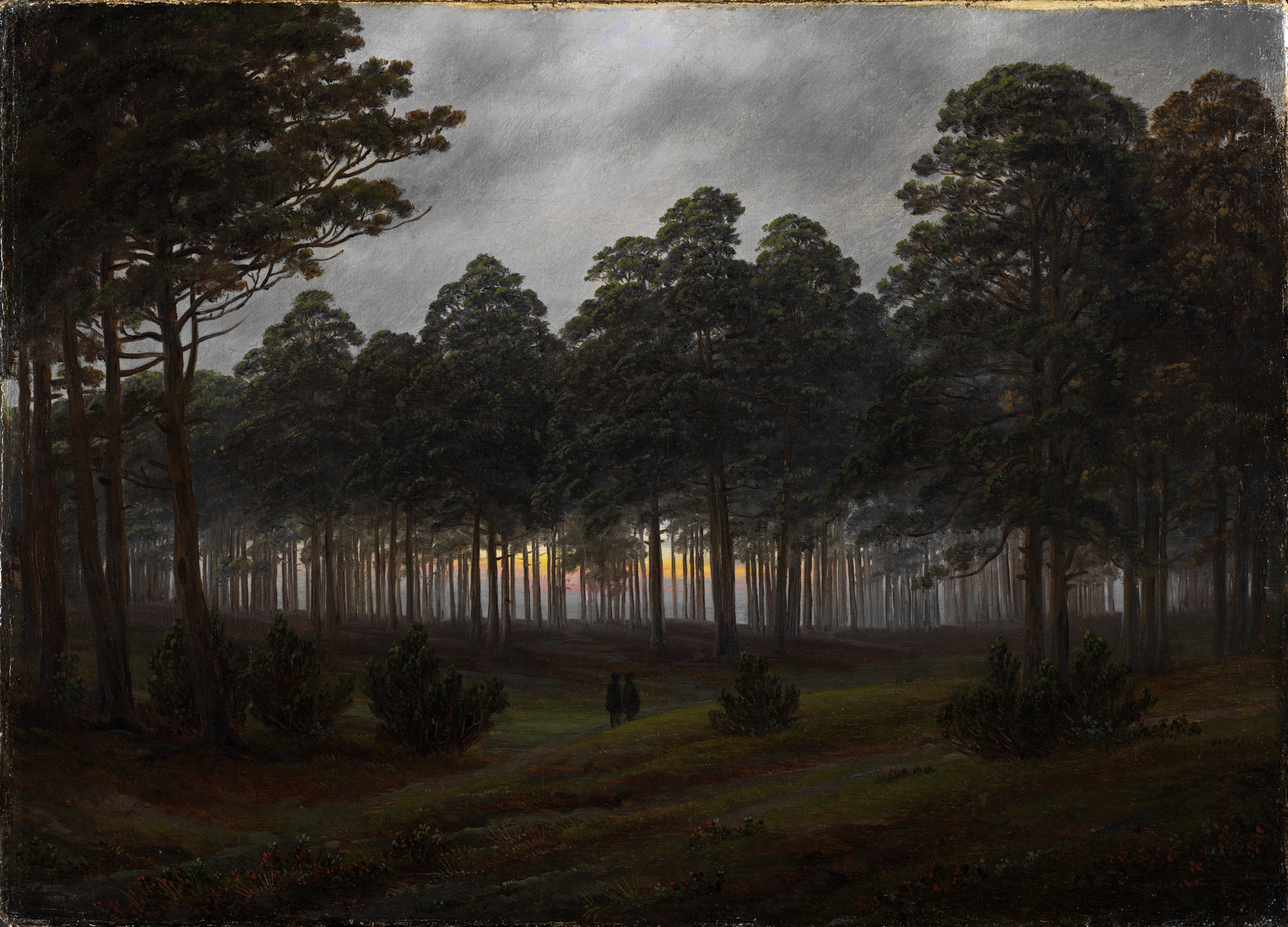
Cd cover art: Caspar David Friedrich (1774–1840): Tageszeitenzyklus: Der Abend. 1821. Öl auf Leinwand. 22 cm x 30.5 cm. Niedersächsisches Landesmuseum Hannover. Photo: Niedersächsisches Landesmuseum. Please click to enlarge the photo!


 Beethoven: The Complete Works (80 CD). Warner Classics / © 2019 Parlophone Records Limited. Also available on Spotify etc. I bought my box set from Fuga at Helsinki Music Centre.
    Ludwig van Beethoven 1770–1827.
    Beethoven 250 / corona lockdown listening.

From: CD 21/80  Piano Sonatas Nos. 16–20
Stephen Kovacevich, 1994 (Nos. 16–18) and 1999 (Nos. 19–20)

Opus 31 Nr. 1: Klaviersonate Nr. 16 in G-Dur (1802)
    Erster Satz: Allegro vivace, G-Dur, 2/4 Takt, 325 Takte
    Zweiter Satz: Adagio grazioso, C-Dur, 9/8 Takt, 119 Takte
    Dritter Satz: Rondo, Allegretto, G-Dur, alla breve, 275 Takte

AA: Like Beethoven's piano sonata no. 6 and piano sonata no. 10, the piano sonata no. 16 is a comic number. Alfred Brendel in his essay "Must classical music be entirely serious?" (in Music Sounded Out, 1990) singled out this sonata and stated that "only the comic intent makes it plausible". He also quoted Jean Paul who claimed that comedy is "the sublime in reverse".

Edwin Fischer and András Schiff find in the Adagio grazioso movement a parody of Italian opera. Before them, Romain Rolland had found in the entire sonata an "imitation of Italian theatre" and in the Adagio grazioso an affinity with Rossini's Il barbiere di Siviglia. Rossini's opera was published 15 years after this sonata. Perhaps the earlier phase of Italian opera buffa, whose success overwhelmed Beethoven in Vienna, already displayed similar bel canto features.

Schiff in his Guardian lecture compares the middle movement with Verdi's "Va pensiero" and "Bella figlia dell'amore", composed 40–50 years later. The spirit of opera buffa, dramma lirico and melodramma seems to have been alive so much earlier that it is recognizable even in parody. If it is parody, is a good question. When an artist has a sense of humour, he does not take himself seriously even when he takes his subject seriously.

In the first movement the hands are struggling to play in unison. I am thinking about the horror movie The Hands of Orlac where a virtuoso pianist (Conrad Veidt) becomes a victim of a cruel accident, and a surgeon transplants a killer's hands on him. There is something jokingly mechanical in the movement, and I'm also reminded of the cuckoo motif favoured by many composers (also Beethoven later composed a "cuckoo sonata"), even J. E. Jonasson's earworm "Gökvalsen" ("The Cuckoo Waltz", 1918, most memorably used in the cinema by Akira Kurosawa in The Stray Dog).

The second movement is exaggerated and ornamental, like a "play within a play". I'm thinking about Chaplin's Burlesque on Carmen, Jean Renoir's Madame Bovary where the protagonist visits a provincial opera to see Lucia di Lammermoor, and George Cukor's Little Women, made in the same year, where Jo March visits the same opera in old New York during the Civil War. The scenes are both amusing and touching.

The third movement, Rondo allegretto, starts with a breezy theme that has a fleeting resemblance with the famous Boccherini minuet (from his opus G 275) known to cinephiles from The Ladykillers and the music box of Two Rode Together. 

For Anton Rubinstein, this was Beethoven's weakest sonata, but probably he did not get the joke. It's about relaxation, flexing one's muscles, overcoming the horrible adversities that the composer was facing in these gloomy years. The composer refuses to get depressed and faces fate with a smile. The piece must be played with wit and panache, like Alfred Brendel, Emil Gilels, Daniel Barenboim and András Schiff have done.

Sunday, August 09, 2020

Mälarpirater (1923) (2019 digital restoration by Svenska Filminstitutet)


Gustaf Molander: Mälarpirater (1923) with Albert Christiernsson (Erik Schalén) and Einar Hansen (Georg Schalén).

Gustaf Molander: Mälarpirater (1923) with Einar Hansen (Georg Schalén), Albert Christiernsson (Erik Schalén) and Tom Walter (Fabian Scholke). My screenshot from Bonner Sommerkino digital.

Gustaf Molander: Mälarpirater (1923) with Inga Tidblad (Rose). My screenshot from Bonner Sommerkino digital.

Gustaf Molander: Mälarpirater (1923). Art title design by Alva Lundin. My screenshot from Bonner Sommerkino digital.

Mälarpirater : Ett pojkäventyr i 6 akter / Mälarin sissit / Die Mälarpiraten.
    SE 1923. PC: AB Svensk Filmindustri.
    D+SC: Gustaf Molander – based on the novel (1911) by Sigfrid Siwertz – in Finnish: Määlarin risteilijät, translated by Simo Pakarinen (Otava, 1939). Cin: Axel Lindblom. AD: Ragnar Brattén. M for Röda Kvarn's Orchestra (18 players): Rudolf Sahlberg. Intertitle design: Alva Lundin.
    C: Einar Hanson (Georg Schalén, son of the editor Karl Schalén), Albert Christiernsson (Erik, Georg's brother, 11), Tom Walter (Fabian Scholke), Nils Arehn (the Count of Tollerö), Inga Tidblad (Rose, daughter of the Count), Georg Grönroos (Mayor Konrad Schalén), Tekla Sjöblom (Mrs. Schalén), Georg Blomstedt (salmon merchant Anakreon Vinquist), Carl Browallius (Nicander), Albert Ståhl (Scholke, master sweep, Fabian's father), Tyra Dörum (Mrs. Scholke), Justus Hagman (butler to the Count), Josua Bengtson (fisherman), Gustaf Aronsson (fisherman), Tyra Ryman (maid with Mayor Schalén), Julia Cederblad (funeral hyena), Julia Cæsar (funeral hyena), Anna Diedrich (Amalia, funeral hyena), Carl-Gunnar Wingård (adjugate teacher Arborelius), Gösta Hillberg (priest at the funeral).
    Studio: Filmstaden (Råsunda), early summer and summer 1923.
    Loc: Stockholm's archipelago, Trosa, Tyresö Castle.
    2129 m, 2190 m / 18 fps/ 106 min
    Urpremiär: 22 Oct 1923 Gävle, 107 min
    Finnish premiere: 17 May 1924 Helsinki: Kino-Palatsi, distributed by Suomen Biografi Osakeyhtiö at 1710 m.
    Digital restoration: 2019 Svenska Filminstitutet based on a nitrate print and a 35 mm duplicate negative.
    Corona lockdown viewings / Bonner Sommerkino: Internationale Stummfilmtage 2020 / Deutsche Untertitel von Andrea Kirchhartz.
    Vimeo link viewed at a forest retreat in Punkaharju on a large computer screen, 9 Aug 2020.
    Remakes: Mälarpirater (1959, D: Per G. Holmgren), Mälarpirater (1987, D: Allan Edwall).
    Sequel to the novel: Saltsjöpirater (1931): we meet Georg, Erik and Fabian again, now as grown-up men.

AA: Gustaf Molander's fourth feature film as a director is a rousing adventure film about three boys' escape from oppressive homes to the freedom of the wide open Lake Mälaren. Sweden's third biggest lake is located to the west from Stockholm. The young rebels break the law and land on a collision course with society.

Molander has an assured touch in mise-en-scène, the action scenes are thrilling, the locations (the lake and the castle) are impressive, and an exciting storm sequence is a high point. Molander had not yet found his trusted DP Åke Dahlqvist, but Axel Lindblom's cinematography in this movie is also brilliant.

The main trio is well cast. The established star Einar Hanson plays Georg Schalén, the orphaned son of the editor Karl Schalén. His little brother Erik is interpreted by Albert Christiernsson, who had played the protagonist as a child in Gunnar Hedes saga in which Hanson had his international breakthrough.

Georg and Erik refuse to listen to insulting remarks about their newly deceased father in their foster home. At the same time, their friend Fabian Scholke breaks free from his brutal father, a master sweep; Tom Walter's performance is memorable, original and close to tragedy in his "rebel without a cause" interpretation. Teamwork is essential for survival at the stormy lake, but a violent conflict of leadership puts all three boys in danger. Reconciliation is possible, but the underlying tension is never resolved.

The weaknesses of the movie include trite caricatures of most grown-up characters and failed attempts at parodic ghost visions and fantasy and horror elements. In his next film, a Fy & Bi vehicle, Molander displayed talent in farce, but here he fails to maintain a comic touch successfully. The only convincing grown-up characters are two old fishermen. Their presence feels genuine.

A refreshing addition by Molander is the character of Rose, played by Inga Tidblad in her breakthrough year in which she also appeared in the humoristic Norrtullsligan. Rose is a Hawksian woman, an outdoors type, in her element on horseback and in a canoe. Her intervention is decisive in rescuing the young outlaws before their adventure turns desperate.

The changes that Molander made to Sigfrid Siwertz's novel transformed the story towards the conventional Hollywood narrative. A benign Count saves the brothers from their fosterparents. A promise of love awakens between Georg and Rose, the daughter of the Count. There is something coy, predictable and mediocre in the fairy-tale conclusion.

The film is well cast. We meet as the Count Nils Arehn, familiar from the classics of the golden age of Swedish cinema. Georg Grönroos had launched his film career in some of Sjöström and Stiller's first films. Tekla Sjöblom had debuted with Georg af Klercker, and her film career lasted until the birth of Nordic Noir (her final film role was in the Maria Lang adaptation Ljuvlig är sommarnatten). Georg Blomstedt was also an established presence in classics of the golden age.

The graphic design of Alva Lundin's art titles is attractive, and the restoration looks fine.

BEYOND THE JUMP BREAK: DATA FROM BONNER SOMMERKINO AND SVENSK FILMDATABAS:

Thursday, August 06, 2020

Eden (Ulla Heikkilä, 2020)


Ulla Heikkilä: Eden (2020). Bruno Baer (Panu), Linnea Skog (Jenna), Aamu Milonoff (Aliisa), Amos Brotherus (Sampo).

FI © 2020 Tekele Productions. P: Miia Haavisto.
    D+SC: Ulla Heikkilä. Cin: Pietari Peltola. PD: Juha-Matti Toppinen. Cost: Roosa Marttiini. Makeup: Kaisu Hölttä. M: Babel (Karin Mäkiranta, Mikko Pykäri). S: Arttu Hokkanen. ED: Hanna Kuirinlahti. Line P: Marja Pihlaja. Script editor: Jan Forsström.
    C: Aamu Milonoff (Aliisa), Linnea Skog (Jenna), Bruno Baer (Panu), Amos Brotherus (Sampo), Pinja Hiiva (Jutta), Jere Ristseppä (Esa), Tommi Korpela (Juhani), Satu Tuuli Karhu (Tiina).
    Nooa Salonen (Ilmari), Alisa Röyttä (Ella), Irina Pulkka (Sari), Ona Huczkowski (Maryam), Elsa Brotherus (Emilia), Anna Kauppinen (Kreeta), Amadou Abdoulrahman-Coulibaly (Hasim), Vanotit Muyau (Bilal).
    Essi Patrakka (Lola), Elina Knihtilä (Leena), Jani Volanen (Asko), Minna Haapkylä (Kristiina), Juho Milonoff (Jyrki), Siru Summanen (Nela), Pietu Kukkonen (Myrsky), Inka Liukkonen (Sarkku), Toni Nikka (Kari), Matias Löfberg (Tuomas), Edit Viljamaa (Iisa), Sela Rubinstein (Ruusa), Onni Vesikallio (Nestori), Pablo Ounaskari (Ville), Irina Pulkka (Sari), Yasmin Najjar (Silja), Pyry Vaismaa (Matti), Severi Vilkko (Santtu), Laura Birn (Laura), Sirkka Tanttu (Aliisan mummo), Raisa Karimo (Aliisan sisko)
    Loc: Kurssikeskus Hvittorp (Kirkkonummi), June–July 2019.
    In memory of Pauli Heikkilä and Pirkko Haavisto.
    92 min
    Translations: Aretta Vähälä, Anna-Maija Lehmus.
    Premiere: 7 Aug 2020, distributor: Nordisk Film.
    A Vimeo screener viewed at a forest retreat in Punkaharju on a tv set, 6 Aug 2020.

 AA: Eden is an assured feature film debut from director Ulla Heikkilä. She displays a keen sense of psychology and a talent of satirical observation in contemporary life. These have already been hallmarks in her short films Golgotha (2016), #sovitus (2017) and Let Her Speak (2019).

As the director and the critics have incredulously noticed, Eden is the first film about a beloved Finnish institution, the rippileiri – the confirmation camp. Hardly any works of literary fiction have focused on it, either, although it is a rewarding subject in many ways. It's about coming of age. It's about a generational experience. It's a dramatic stage for the clash of contemporary life with ancient faith.

When Lutheran youth reaches the age of 15, confirmation instruction is offered.  The tradition dates back to Reformation, but the rippileiri arrangement is a Finnish innovation from the year 1936. In the course of a six-month confirmation instruction, it is optional, but the rippileiri has become so popular that it has defied even secularization as a rite of passage, a fixture of youth culture and even an export article copied in Sweden, Norway and Germany.

In previous centuries, confirmation instruction was different. In Aleksis Kivi's novel Seven Brothers (1870), the brothers run away from the harsh discipline of the confirmation school to live as outlaws in the forest. But affirmation of baptism is a condition for Christian marriage. You must master the tenets of faith, and to achieve that, you must know to read and write. All this to qualify to marry (naimalupa).

In Aleksis Kivi's times the confirmation school with locked doors, corporal punishment and yelled inquisitions may have had affinities with the concentration camp, but since the establishment of the rippileiri it may have started to resemble the Garden of Eden, Terrestrial Paradise. The locations are often the most beautiful, such as Lapland or Punkaharju – or Hvittorp, as in Ulla Heikkilä's movie.

Ulla Heikkilä captures special qualities of the rippileiri experience: summer camp circumstances, a life-affirming approach, an atmosphere of dignity and respect, welcoming young people on equal terms, an open and relaxed attitude to criticism, and a seriousness in meeting the biggest questions in life. 

Eden is an ensemble piece, and there is a fine sense of unanimisme in conveying the growing communal spirit of the young protagonists, though they are all different and full of conflicts and insecurities. The main parts are played by Linnea Skog (Jenna), Aamu Milonoff (Aliisa), Bruno Baer (Panu) and Amos Brotherus (Sampo). This is a tale of "Disorder and early sorrow", Unordnung und frühes Leid, to quote the title of a story by Thomas Mann.

Heikkilä has a fine sense of humour in her dramatic setpieces, and the audience is caught in the thrill of making sense in the modern world of Genesis, the Tree of Life and the Tree of Knowledge of Good and Evil. Sex, a topic everybody is interested in, is introduced by a beautiful passage from the Song of Songs. An enactment of the Christian wedding ceremony is an eagerly expected part of the agenda.

All this is so out of touch with today's views about science and gender that the trappings appear as historical relics. We may smile and we may laugh, because there is something ridiculous in the spectacle. But there is more than meets the eye beyond the quaint surface. In all cultures even humble objects may convey a sense of the sacred.

Two priests carry the main charge. The seasoned veteran Juhani (Tommi Korpela) represents a relaxed and easy-going approach, understanding very well the confusion of the young confirmands. The newcomer Tiina (Satu Tuuli Karhu) would prefer a higher voltage of religious passion. She proposes starting each morning with a flag ritual, but to her chagrin everybody votes her down. She transforms a storehouse into a field chapel, which proves popular for private retreat and worship.

Towards the finale, Tiina stages "a Way of Atonement", an imitatio Christi, complete with everybody taking turns in hanging on the cross. Such a dramatization seems controversial (too "hard core" for Juhani), but provokes emotional reactions. Powerful religious experiences and conversions were common in confirmation schools in the past, but today they are avoided. Tiina comes to repent the turmoil she has caused, but her lingering questions about the lost sense of the sacred and the mystery remain. And she has managed to shake the confirmands deeply.

The topics are great. "Life is God's speech". "The visible is timebound, the invisible is eternal". "The search is the reason why we are here". Drama, even clumsy and ridiculous, even hide-and-seek, a ball game, a dance contest or a wedding enactment, can contribute to our quest.

The Genesis motif has topical and alarming implications: the Expulsion from Paradise, Noah's Flood and the Tower of Babel. We inherited Eden, and we are busy destroying it. Everybody knows this, and the Greta Thunberg generation of young people cannot go on living like we have done. "Our family does not fly anymore", says one of the young ones. "Does anything matter any more?", comments another. Heikkilä does not push this issue, but for me, the lingering impact of Eden is a look of profound unrest on the young people's faces.

The structure of the movie and the rippileiri camp itself are divided into the seven days of the week like the Creation. The graphic design, including the chapter titles for the days, are appealing, and a special feature in the closing credit sequence is a montage of actual confirmation age photographs of the cast and the crew.

Lauluja rakkaudesta / Still Into You


Anu Kuivalainen: Lauluja rakkaudesta / Still Into You (2020). Ritva Oksanen – Sirkka & Yki – Ahti & Paavo.
 

Sånger om kärlek.
    FI © 2020 BonsaiFilms Oy. P: Anu Kuivalainen, Marianne Mäkelä.
    D+SC: Anu Kuivalainen. Cin: Saija-Mäki-Nevala. With: Marita Hällfors, Jarkko T. Laine, Mauri Lähdesmäki. Post production: Whitepoint Digital Oy. Digital effects: Jouko Manninen. Sound design and music: Janne Laine. S recording: Pirkko Tiitinen. ED: Mervi Junkkonen.
    A documentary film featuring:
Ahti & Paavo
Sirkka & Yki
Raija
Ritva [Oksanen]
Maricca & Antti
Risto & Pirjo
    Performer, songs and poems: Ritva Oksanen. Piano, arrangements: Pedro Hietanen.
    Poems: Aino Suhola: "Old Woman's Prayer" and "Of People and Computers"
    Sunlines "Helmiradion diskoristeilyt", TYKS neurokirurgian osasto.
    Songs include: "Akselin ja Elinan häävalssi", "Syvä kuin meri", "Kultainen nuoruus", "Hiljaiset sillat", "Minä olen muistanut", "Born To Be Alive", "Niin paljon kuuluu rakkauteen", "Itke sydämein", "Syli", "Sisältäni portin löysin".
    Film clip: Hän tuli ikkunasta (1952).
    In memory of Pirjo.
    70 min
    Translations: Tiina Kinnunen. Translations of poems and songs: Maria Lyytinen.
    Premiere: 7 Aug 2020, released by Arto Heiskanen.
    A Vimeo screener viewed at a forest retreat in Punkaharju on a tv set, 6 Aug 2020.

AA: Lauluja rakkaudesta / Still Into You is a candid and tender documentary quest into love at a venerable age.

We meet Sirkka and Yki, a "young pair", who have found each other just a few years ago. There are Ahti and Paavo, two men happily in love. Maricca is a passionate woman in love with a much younger man, Antti. We also follow the last act of a long marriage. Risto accompanies his wife Pirjo to the final journey.

Anu Kuivalainen's previous film Sielunmetsä / Into the Forest I Go was a pantheistic survey into the love affair of Finns with the forest. I can presently totally identify with that film, watching Kuivalainen's new film and blogging about it in the forest myself.

The new film is much more intimate, and both the film-maker and the people featuring in it are generous in letting us accompany them in such private moments.

The need for love at an advanced age is a theme that has been getting more prominence in recent times. Michael Haneke's Amour was a trendsetter, and there have been several mainstream entertainment films on the theme such as Song for Marion. This year, Teräsleidit / Ladies of Steel was a big hit in Finland. All this reflects changing demographics in "developed" countries.

The title of Kuivalainen's movie is "Songs of Love" in literal translation, and popular songs are important for all main characters. There is also a professional singer and performer, Ritva Oksanen, continuing her career at age 80. She recites satirical poems by Aino Suhola about the paradox that our life ideal is to stay healthy and live long, but there is a subtext about people in an advanced age being an "expense to society".

The message of the movie is life-affirming. Protagonists in the movie declare that they are living the best times of their life*. They are active in exercise, trekking in Lapland, dancing, even indulging in burlesque. Looks aren't everything. When looks are gone, you may get deeper in love. You no longer love appearances and discover essences.

Ritva Oksanen has chosen to stay solo, because she refuses to become a servant to a man. But desire never dies, and the longing of the skin is imperishable. In Sielunmetsä the director herself performed the traditional Nordic "swimming job" as a pantheistic union with nature. In the finale of the present movie Ritva Oksanen exposes her al fresco beauty in a similar scene. The film ends with a montage of the sublime nature and the wild rivers of Lapland. It is a Tolstoyan feeling: facing death, when the end is near, we return to nature in a final embrace. In the closing song Ritva Oksanen sings Mikko Alatalo's "Syli" [Love Records, 1975, "Take Me In Your Arms"], with Pedro Hietanen at the piano.

* Cicero would have agreed: see Cato maior de senectute.

BEYOND THE JUMP BREAK: THE OFFICIAL SYNOPSIS FROM THE FILMIKAMARI WEBSITE:

Wednesday, August 05, 2020

Beethoven 250: Piano Sonata No. 15 "Pastorale" (Stephen Kovacevich, 1998)


Julius Schmid (1854–1935): Ludwig van Beethoven beim Spaziergang in der Natur. Gemälde. The painting was used as cover art for The Etude magazine in February 1909.

Beethoven: The Complete Works (80 CD). Warner Classics / © 2019 Parlophone Records Limited. Also available on Spotify etc. I bought my box set from Fuga at Helsinki Music Centre.
    Ludwig van Beethoven 1770–1827.
    Beethoven 250 / corona lockdown listening.

From: CD 20/80  Piano Sonatas Nos. 12–15
Stephen Kovacevich, 1999 (Nos. 12–14) and 1998 (No. 15)

Opus 28: Klaviersonate Nr. 15 in D-Dur „Pastorale“ (1801)
    Grande Sonate pour le Pianoforte.
    Joseph Edlem von Sonnenfels gewidmet.
    1. Satz: Allegro, D-Dur, 3⁄4, 461 Takte
    2. Satz: Andante, d-Moll, 2⁄4, 99 Takte
    3. Satz: Scherzo, Allegro vivace, D-Dur, 3⁄4, 94 Takte
    4. Satz: Rondo, Allegro ma non troppo, D-Dur, 6⁄8, 210 Takte
The title "Pastorale" was given without consulting the composer, but he did not object to it.

AA: "The sonata is an essentially dramatic art form, combining the emotional range and vivid presentation of a full-sized stage drama with the terseness of a short story", wrote Donald Tovey, but after several pathbreaking sonatas, Opus 28: Klaviersonate Nr. 15 in D-Dur, is a kind of a reset, a breather.  There is nothing revolutionary here, no mountain tops, no thunderstorms, no heroic adventures.

Among Beethoven's symphonies, the even numbers are often such breathers, and I have a particular fondness for them, because they are not played to death, yet they are as wonderful as the most famous ones when you get to know them.

In the continuum of Beethoven's piano sonatas, the distinction of Nr. 15 is the absence of drama. It offers a full experience of being without showy external effects.

The year 1801 was Beethoven's most active in piano sonatas. He composed four in one year, and the D Major sonata was the last of them. It is a genial piece, displaying some of the same moods as the sunny Second Symphony and the lovely Spring Sonata for violin and piano (Op. 24), both also from 1801.

The D Major sonata is very laid back, avoiding drama and contrast. Melodically, it is enjoyable light entertainment, and the depths of the experience emerge from the sonority. Joachim Kaiser called it "idyllic and generous", "in medium style" but not mediocre, about identity and moving forward.

The Andante was Beethoven's own favourite movement among his piano sonatas, and for years he loved to play it among friends. There is a special joy of improvisation and sense of play in some of the passages. There are parallels to the freedom of jazz. It is a funeral march performed as a dance tune.

The sonata continues in a humoristic mood, and the leisurely atmosphere changes only in the rousing finale where the pianist has the opportunity to take us by surprise.

I listened to various interpretations, including Stephen Kovacevich (immaculate), Artur Schnabel (takes shortcuts), Wilhelm Kempff (halting), Vladimir Sofronizki (good), Emil Gilels (too slow), Igor Levit (brilliant) and Grigori Sokolov (profound).

András Schiff in his inspired Guardian Lecture finds that the title "Pastorale" "can be excused" and finds here many similarities with the Pastoral Symphony: "mehr Empfindung als Tonmalerei". In the opening "timpani strokes" he recognizes an affinity with the beginning of the Violin Concerto. The form is conventional, but "the sound world is revolutionary", it sounds like Schubert, "all these inner voices", "like a murmuring forest". Beethoven "always wanted the piano to sing and speak". Schiff also analyzes Beethoven's methods of foreshortening and inversion in recurrent motifs. In the Andante Schiff observes the contrast to the Moonlight sonata with its emphatic use of pedals. Here it is ostinato sempre staccato. In the third movement, the Scherzo, Beethoven composes four different ways to harmonize a very simple menuet theme. The fourth movement, the Rondo, begins with a "swinging bagpipe drone", from which the piano proceeds to express the impact of a whole orchestra playing. The Bachian development section foreshadows the late Beethoven. The simple music is intricately polyphonic, with a wonderful chromaticism. The brilliant coda is very difficult to play, "to annoy the amateurs".